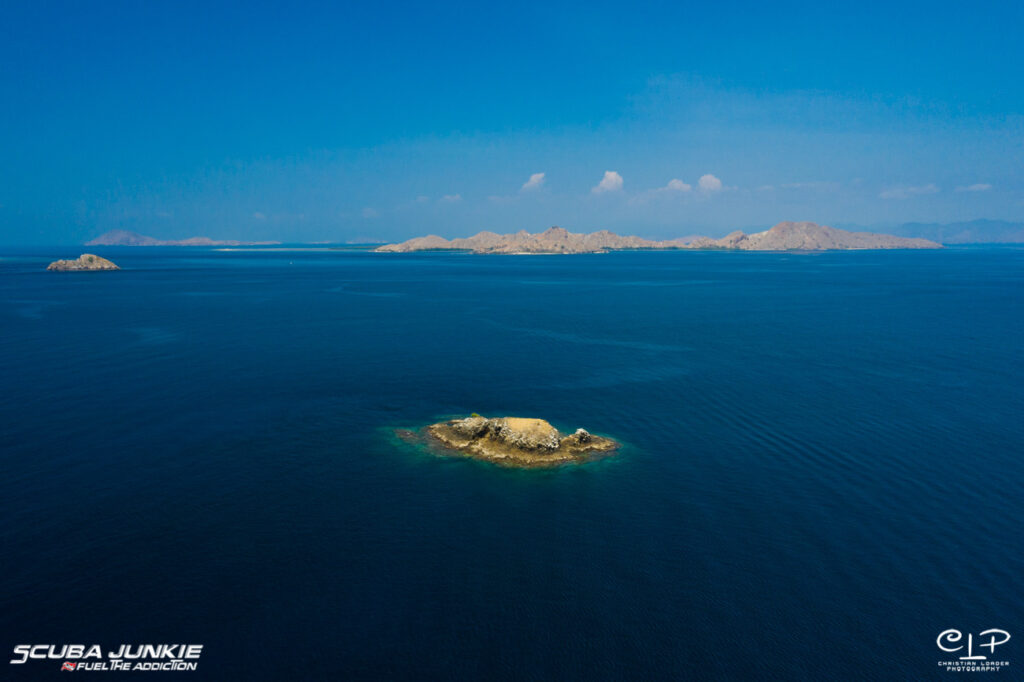
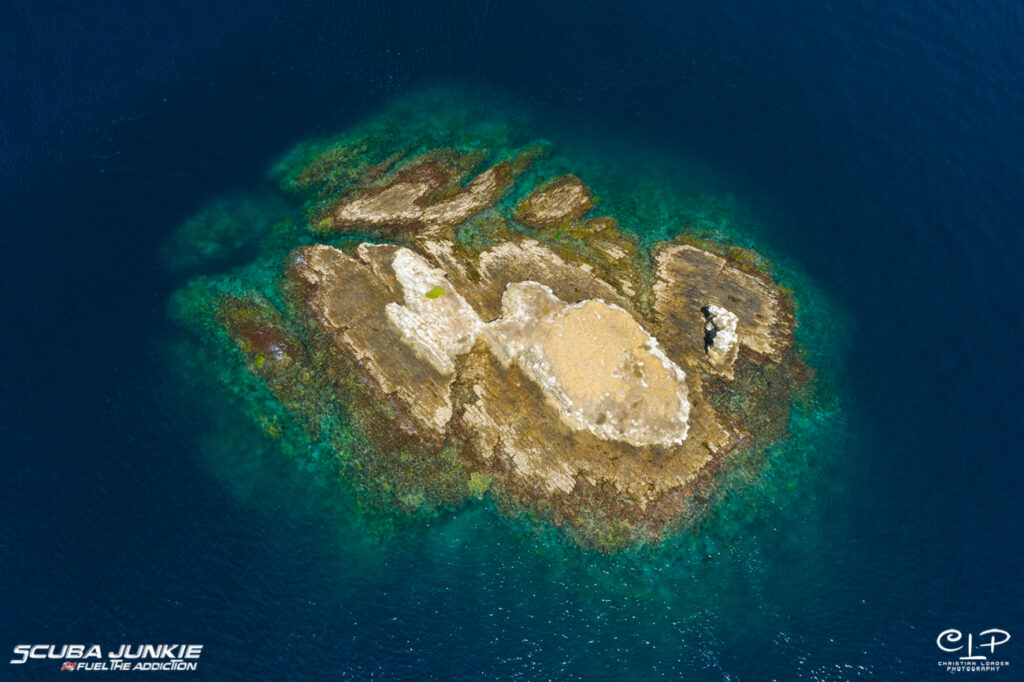
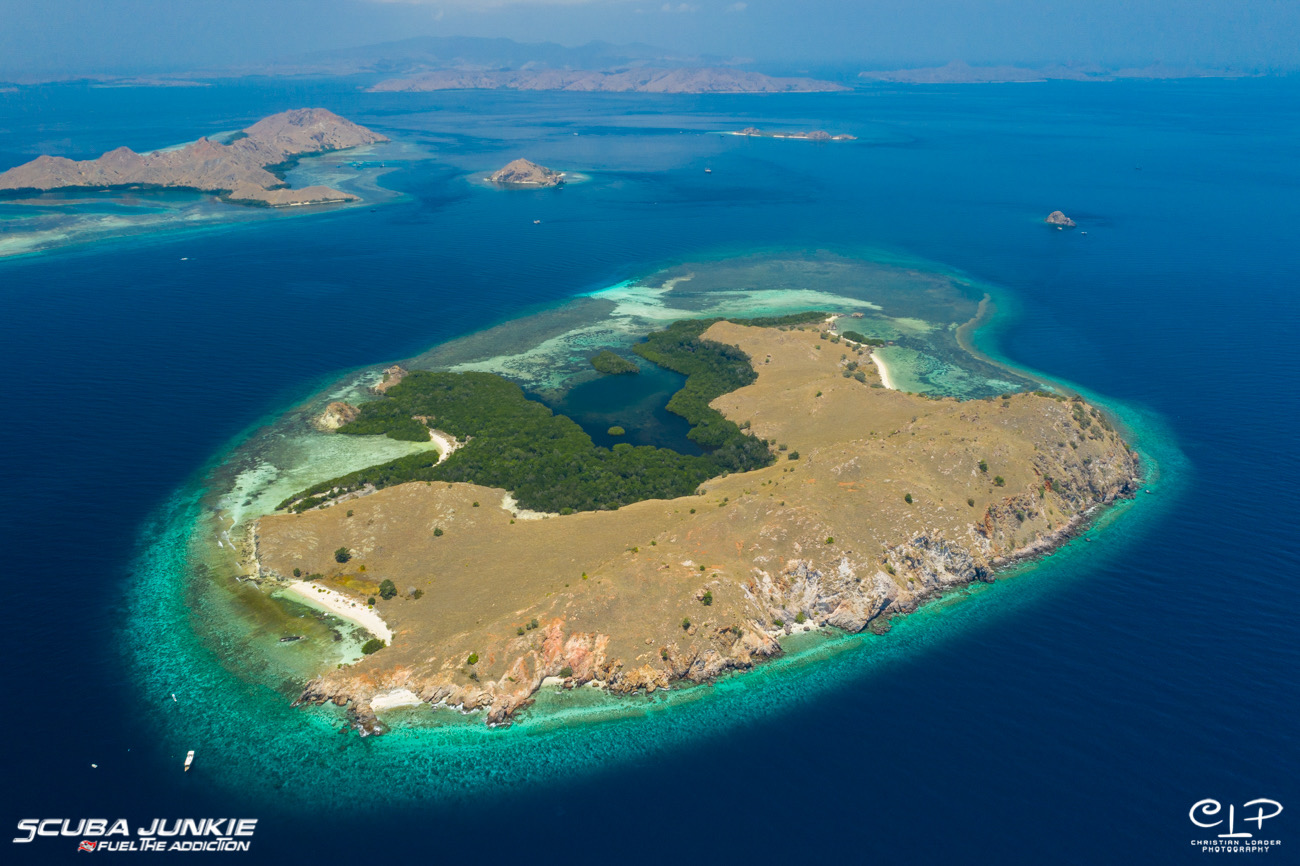
Batu Bolong means “Hollow Rock” in Bahasa Indonesian. It gets it name from the iconic arch on the western edge of the rock that has a large hole in the middle of it. Batu Bolong is regularly voted one of the world’s best dive sites – and with great reason too! This small rock protruding from the depths of the Lintah Strait doesn’t look like much from the surface, but once you sink below the surface another world comes to life!
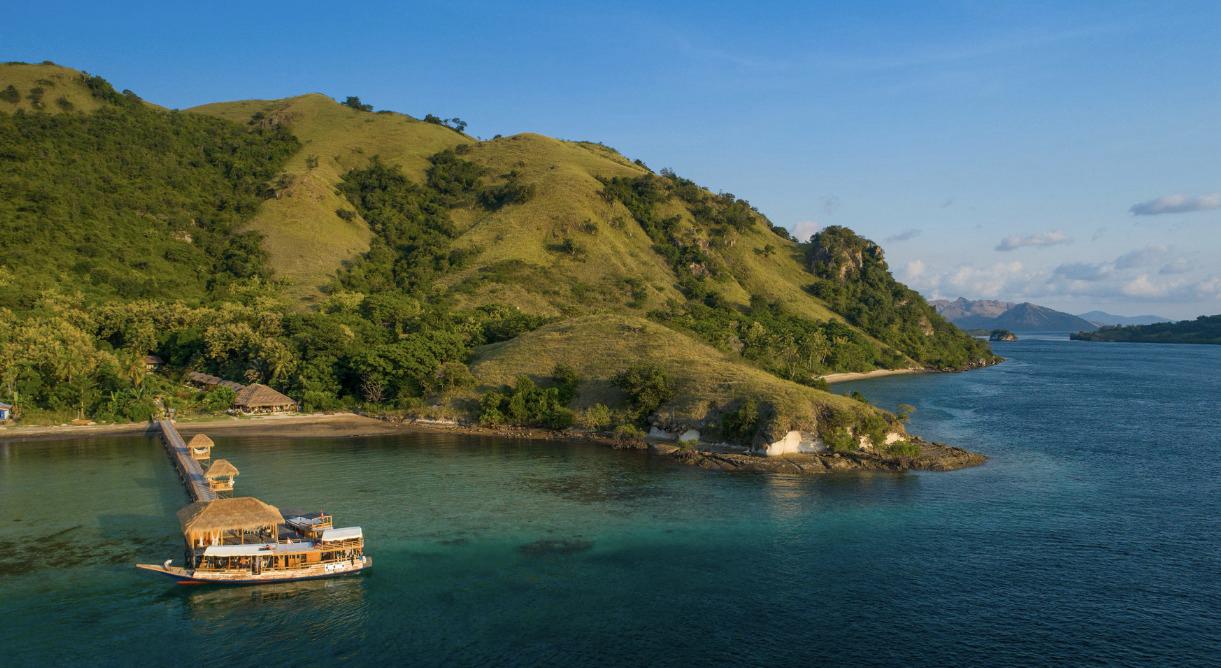
Batu Bolong can be found in Central area of Komodo National Park and sits in the middle of the Lintah Strait between the island of Komodo, to the west, and Tatawa Besar, to the east. The Lintah Strait is a deep channel of water that has ferociously strong currents. The name Lintah means ‘leech’ as in years gone by boat captains would talk of the Strait ‘sucking’ the power out of their vessels as they found their engines to be no match for the powerful currents that run through here.
2. Topography & Depth
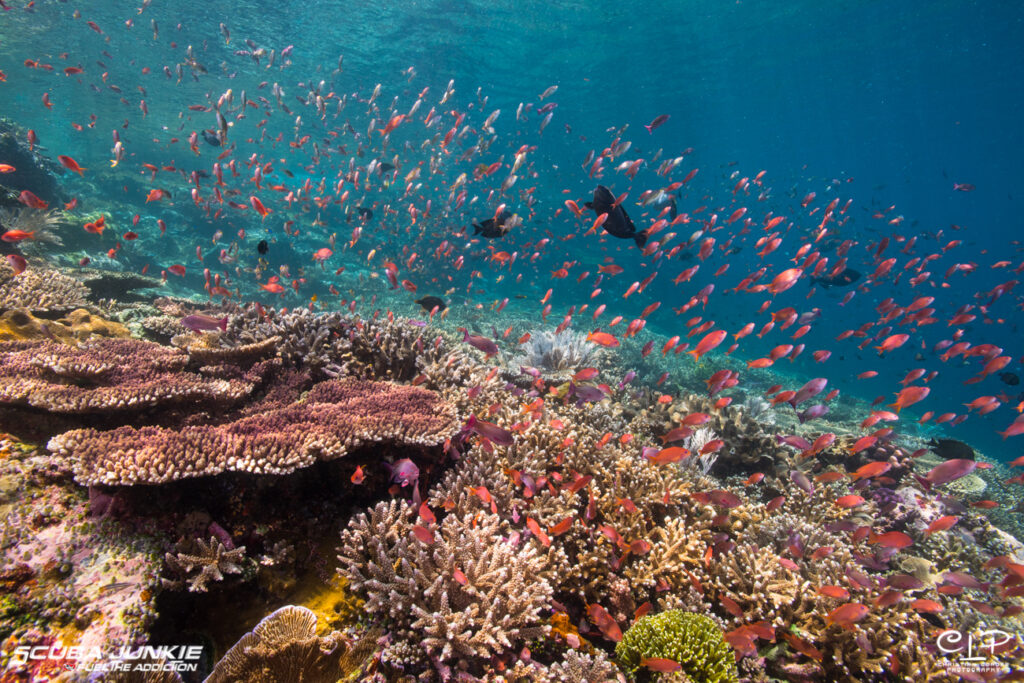
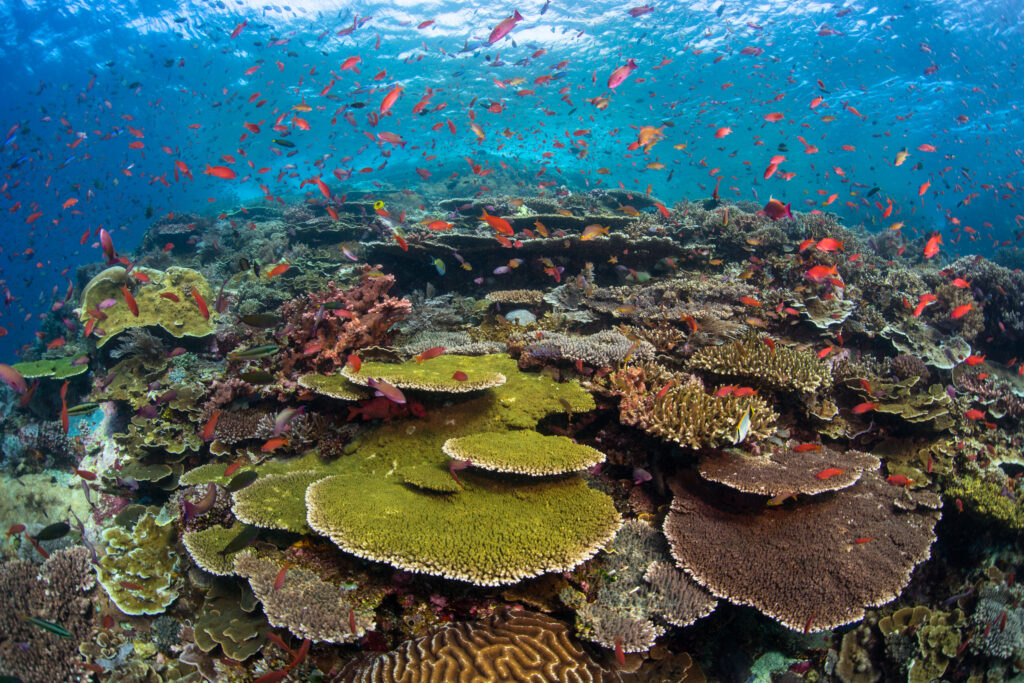
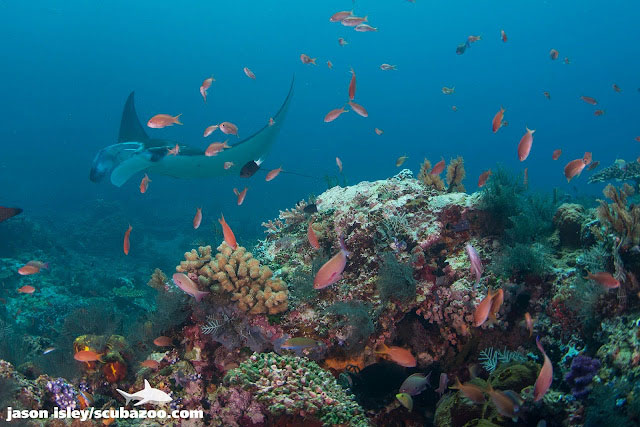
The pinnacle of Batu Bolong is haven for marine life in a body of water that offers depths to 90 + metres. Beneath the waves, Batu Bolong reveals a dramatic underwater landscape – often referred to as “fish soup” (not the edible kind!) due to the abundance of marine life that can be found here.
The rocky pinnacle is covered in hard and soft corals that are home to the millions of sea creatures that call this place their home!
3. Currents & Dive Strategy
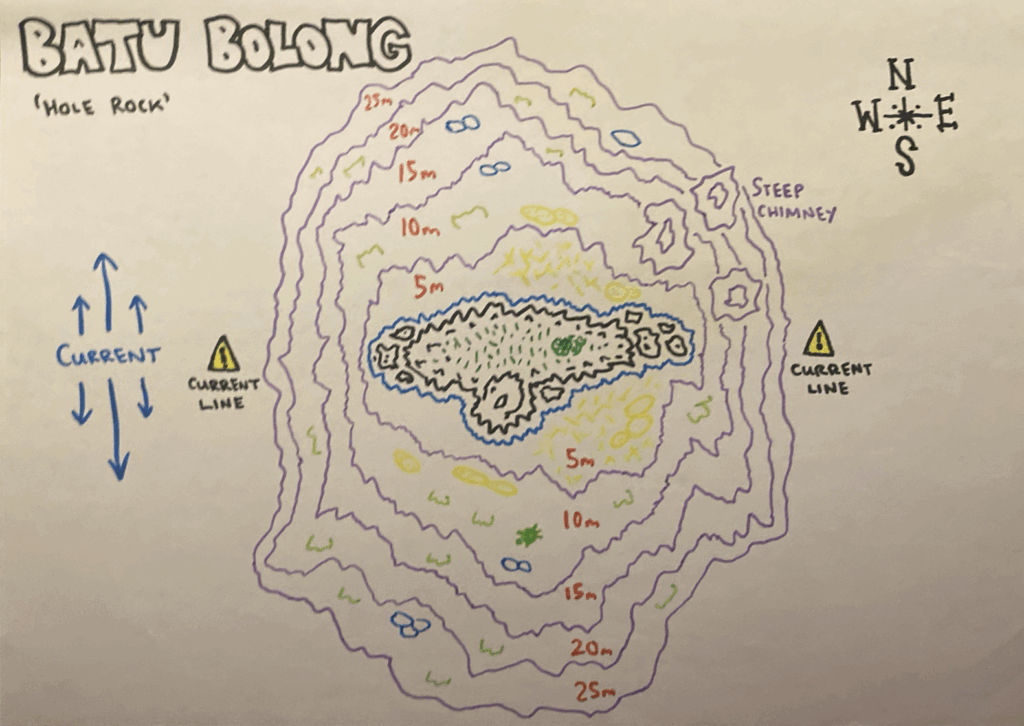
Batu Bolong can also be known as “Current City” for good reason too. As the strong currents hit one side of this pinnacle the waters can loop back around to form eddies. Eddies create the whirlpool affect that can often be seen on the surface. When approaching Batu Bolong the current lines can run for kilometres and can look very daunting to the untrained eye.
We dive this site based on these current lines and what they are doing. As divers we always dive on the lee (protected side) of the pinnacle in between the current lines. The wider the current lines the more space we will have along the pinnacle.
As with all dives, but particularly important at this dive site, we encourage our divers to always stay behind their guides and at the same level as us. We know where the current lines run on this site by understanding the topography, reading the water movement, fish action and turbidity. Along with the muscle memory of having done many many many dives we have done here!!!
We prefer to dive Batu Bolong when we can see strong wide current lines that means we will have more space underwater. We head deep first, usually around the middle of the rock, and then zigzag our way back and forth across the lee side. The pinnacle is much wider underwater than it is at the surface!
Tips to Stay Safe:
Listen closely to your dive site briefing – the guide will talk about the currents and what to expect.
Stay behind your guide at all times.
Stay at the same level as your dive guides (currents can do diffferent things at different depths because of the topography)
Stay close to your guide.
Stay close to the reef.
Follow any instructions your guide gives you underwater.
Maintain neutral buoyancy, watch where your fins are, try not to touch the reef
On the surface it is important to stay close together as a group. Listen to your guide for instructions on how the boat will pick you up.
4. Marine Life & Biodiversity
Batu Bolong is a living, breathing mosaic of marine life from the very big to the very small:
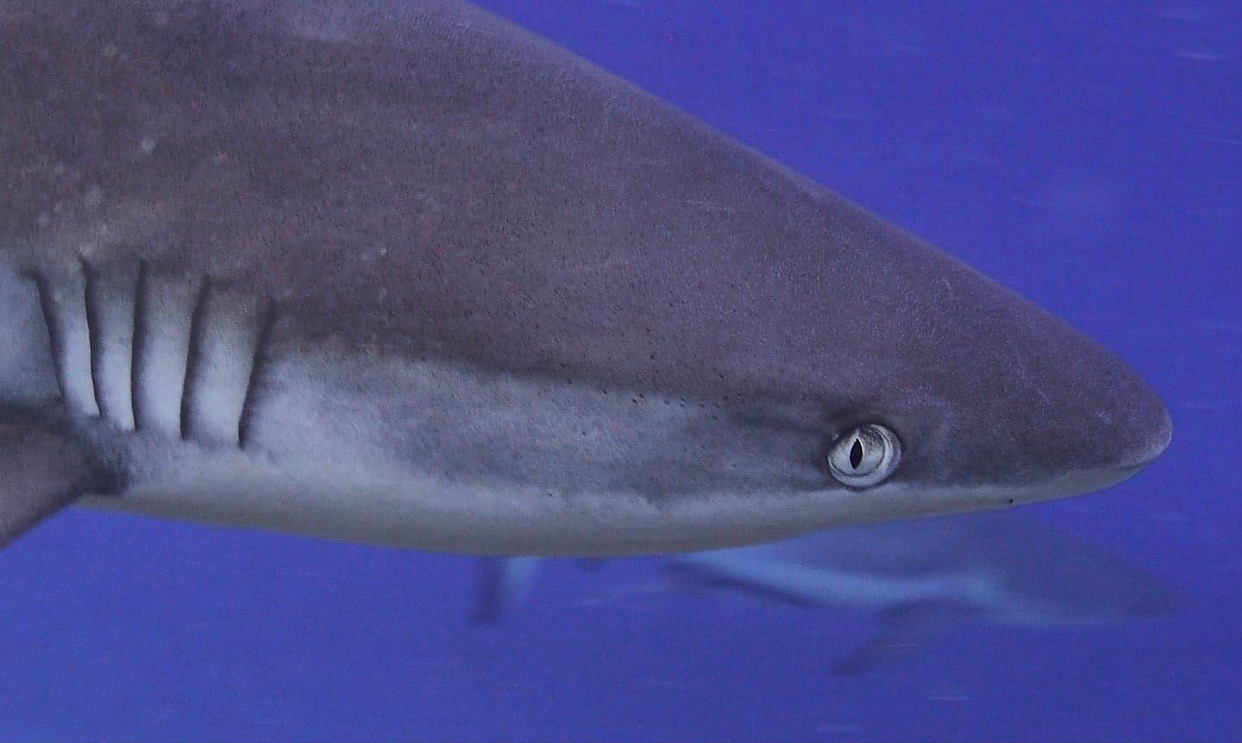
Large pelagics:
Reef sharks – white tip & grey reef are the most common
Hunting giant trevally
Tuna
Napoleon (humphead) wrasse
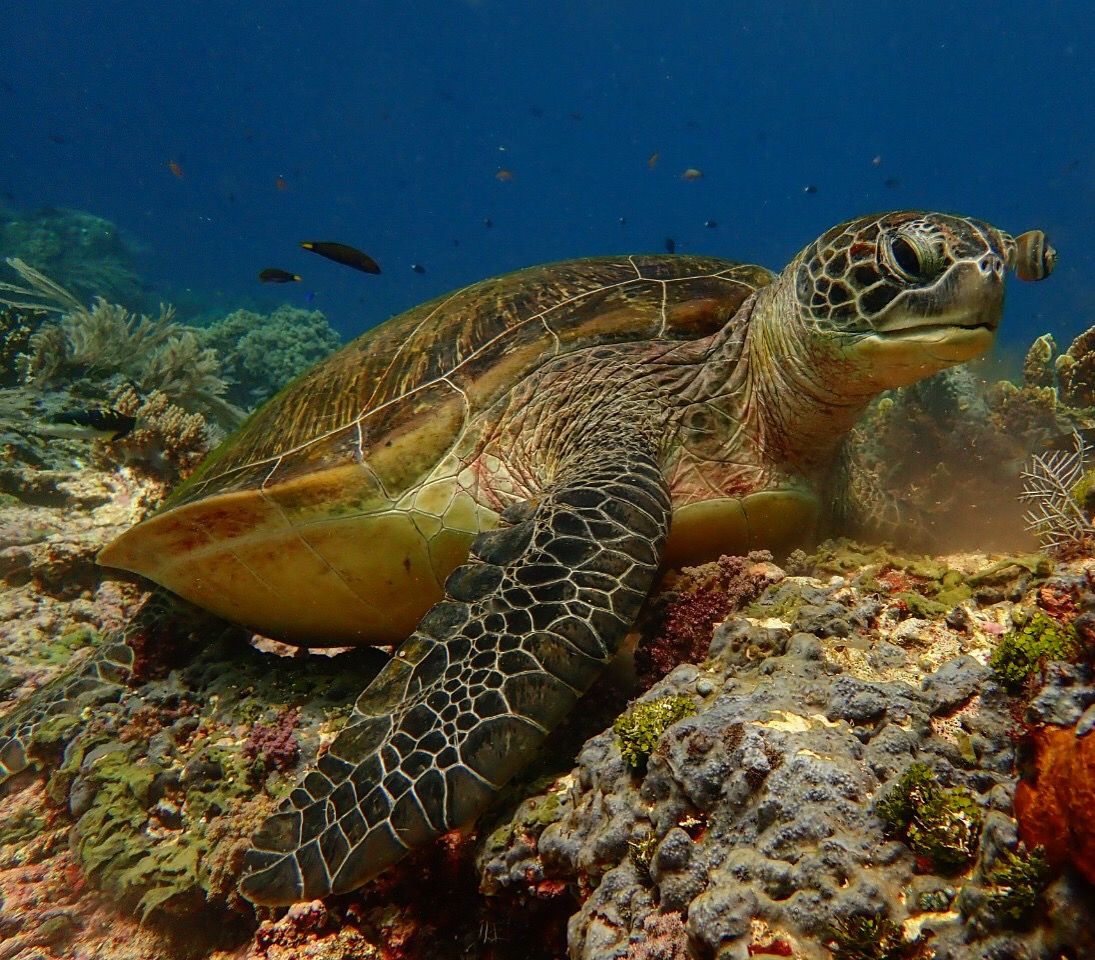
Turtles:
Hawksbill
Green
Reef fish and macro life:
Blankets of Anthias!!
Surgeonfish
Sweetlips
Butterflyfish
Emperor fish
Nudibranchs
Orangutan crabs
And so much more!!!!!
The Rare Something Special:
Mantas
Eagle Rays
Dolphins
Whalesharks
5. Ideal Conditions & Timing
Best season: Dry season April to November; best visibility from June to August
Visibility: Generally excellent, ranging from 15 to over 30 meters
Water temperature: 24–29 °C
Final Thoughts
Batu Bolong is not just a dive—it’s a live underwater symphony. Every moment brings something new: swirling schools, predatory drama, and breathtaking coral architecture. It’s complete sensory overload – in the very best possible way.
For those who respect the currents and come prepared, this “underwater city” will reward you with memories that will last a lifetime.
Quick Reference Table
Feature
Details
Location
Lintah Strait, Central Komodo
Depth
5 – 30 m (max up to 90 m)
Currents
Moderate to very strong Dive on the lee side
Marine Life
Everything!!!
Topography
Pinnacle, steep walls, slopes, deep gullies
Vis & Temp
Visibility ~ 15–30 m+ Temp ~ 24–29 °C
Best Time
April – Nov (peak June – Aug)
about us
We provide daily dive trips and dive courses around the Komodo National Park.
Looking for tips and tricks about diving, marine life or what to do in Indonesia? Follow us on our blog for weekly updates from the team!