
Menu
Other locations

With so much to offer and so many different dive sites it is easy to be overhwelmed when planning your dive holiday. Many regions famous for diving are seasonal and not possible to visit all year around. Luckily here in Komodo we are diving all day every day all year around!!!
There is no ‘bad’ time to visit the Komodo National Park, but the best time to visit Komodo very much depends on what are your priorities as a diver. Is it crystal clear visibility? Warm water? Quiet dive sites? Lots of mantas? Or all of the above?!
Komodo is possible ALL year round which means we can enjoy all this incredible area offers at any time of the year!
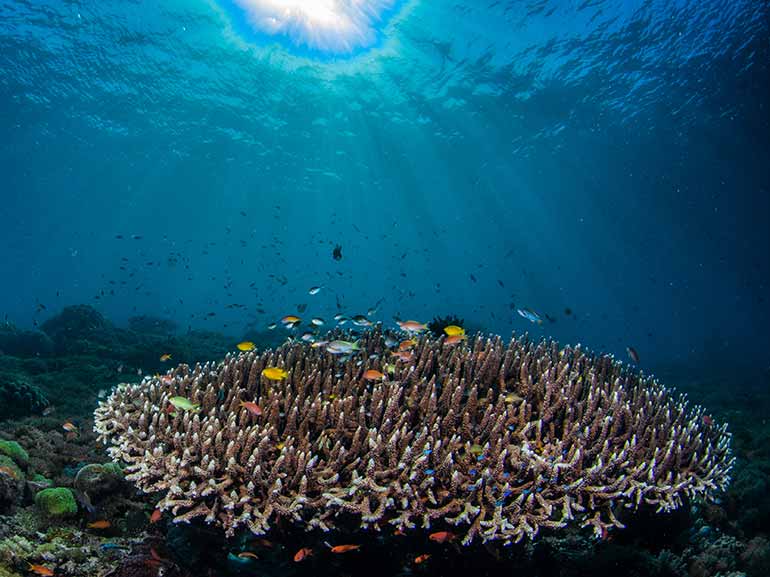
There are, however better times to visit if you are aiming for something in particular so we thought we would tell you a little more about the seasons and the diving here so you are better prepped to plan you adventure!
Komodo National Park is located between the islands of Sumbawa and Flores in the Lesser Sunda Islands. The Park itself consists of the 3 main islands of Komodo, Rinca & Padar. There are however about 26 smaller islands which make up this region. The National Park is 1,733 km2 and the majority of that area is taken up by the marine waters.
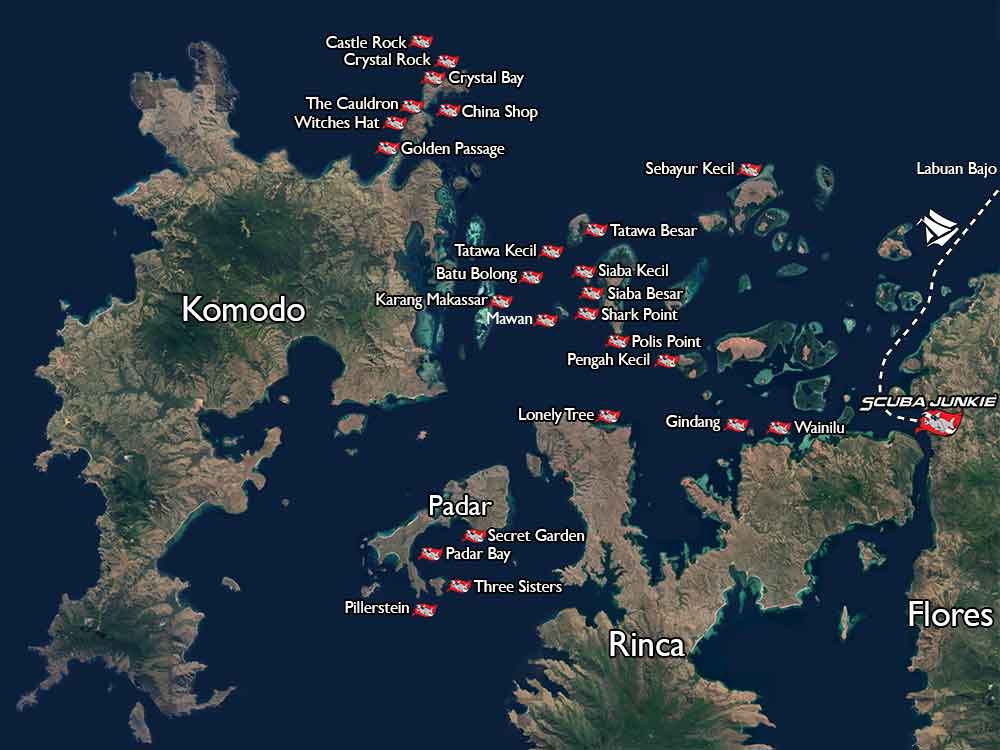
The diving in Komodo is commonly divided into 3 areas – Central, North and South. So let’s explain a little more about the different areas and when is the best time to visit Komodo depending on where you want to go and what you want to see.
Best Time to Visit Komodo – Central Sites
These sites are the sites that sit between the east coasts of Komodo & Rinca Islands and the eastern boundary of the National Park. Famous dive sites you have probably heard of in this area are Batu Bolong, Manta Point, Mawan and Tatawa Kecil. There are many many more!!
Central Komodo is accessible all year around. The conditions do vary a little throughout the year and we will come onto that a little bit later. The sites in this area really do offer something for everyone! Mantas frequent these central sites all year around, but for sure are seen in bigger numbers between September – May. We also get lots of reef sharks, green and hawksbill turtles, a huge variety of reef fish and stunning coral reefs. There are also a few fantastic macro / muck dives in this area where we will spend time looking for blue ring octopus, frogfish, nudibranch, ghost pipefish, pygmy cuttlefish and all the other little critters that find their homes here.
Best Time to Visit Komodo – Northern Sites
The north of the National Park is considered the area to the north east of Komodo Island. This area is much more exposed than the central sites as the islands are facing the open ocean. This does also mean these sites are usually great places to see “the big stuff.”
The dive sites can be found in and around the islands of Komodo, Gili Lawa Laut (Island close to the sea) and Gilia Lawa Darat (island close to the land – close to Komodo Island!). Some of the most famous sites in Komodo can be found here. We have The Cauldron / Shot Gun, Castle Rock, Crystal Rock and Golden Passage to name but a few.
Much of the diving at these northern dive sites does involve some current and it usually results in action packed dives with plenty of reef sharks and big schools of fish!
The Northern sites are best dived between March / April – October / November time as this is when the sites offer the best visibility and calmest sea conditions. For the remainder of the year the visibility can drop off quite a bit in this part of the National Park and the swell increases, but as this happens in the North of the Park the Southern sites open up!!
Best Time to Visit Komodo – Southern Sites
These sites are found to the south west of Komodo & Rinca Island with a number of popular dive sites being around Padar Island too.
The window for diving the southern sites in terms of great visibility and calm conditions is much shorter than the north. The southern sites are usually best dived between October – March. The reason for this is that during the rest of the year the visibility drops off and there can be often strong winds resulting in rough seas coming from the south.
The southern sites around Padar Island are famous for their topography with more of a rocky / wall topography and sites like Pillarstein where there are some fantastic swim throughs. The sites of Padar Bay and Secret Garden are home to corals that are not found in the central and northern sites and are also great places to look for frogfish, seahorses, pipefish and other smaller treasures! Small schools of devil rays can often be seen in the shallows at Secret Garden.
Here at Scuba Junkie our location means we can access these Southern sites during this time of year. The majority of the dive centres departing from Labuan Bajo are not able to offer these trips as they are too far away from the dive sites making it logically difficult. This usually means that we are often the only divers at these sites.
Dry Season / Wet Season
Indonesia sits on the equator which means we have 2 seasons here – the dry season and the wet season! The dry season usually lasts from March – October, but of course this can vary a little year to year. Dry season in this area means little to no rain and the islands become very arid giving most a brownish desert look.
The water temp this time of year ranges from 26-29 degrees with the warmest temperatures in July / August. The visibility also peaks in these months with 25-35 metre visibility on the majority of dive sites. Although the water is warm and the visibility is excellent we do see less mantas around the Park at this time of year as they often move further south to be in the more nutrient rich water and escape the busy boat traffic of high season!
The wet season usually runs from November – March. People are often worried about the term ‘wet season’ as it makes them think of all day every day monsoon rains! This certainly isn’t the case here in Komodo. Yes it does rain of course but it is common for the rain to start in the afternoons and the majority of rain fall occurring overnight. The days usually remain very sunny with blue skies!
Due to the sometimes heavy rain fall the visibility does drop off at this time of year with average visibility of 10-20m to be expected on most sites.
However this is a usually an excellent time to see mantas as they love the nutrient rich water that flows into the region at this time of year. It is not unusual to have dives with 30-40 mantas flying around during this season!! The water temperature at this time of year averages between 22-26 degrees so if you get a little chilly an extra vest or hood is worth bringing!
What to take away:
Best Time to Visit Komodo – Anytime is a great time – ALL year around!!!
Best Time to Visit Komodo – Best chances to see lots of mantas: September – May
Best Time to Visit Komodo – Visibility: June – September (peaking in July & August)
Best Time to Visit Komodo – Warmest water: July – August (peaking in July & August)
Best Time to Visit Komodo – Dive Central Sites: All year around
Best Time to Visit Komodo – Dive Northern Sites: March/April – October/November
Best Time to Visit Komodo – Dive Southern Sites: October/November – Feb/March
Best Time to Visit Komodo – Quietest Dive Sites: Nov – June
Contact us now to help plan your trip to Komodo and let us help you choose when the best time to visit Komodo is for you!
Dive Komodo as a beginner??? Is it ok? This is a question many people ask us when considering a diving holiday to Komodo. A very fair question given the reputation that Komodo has! We welcome divers of all levels here at Scuba Junkie and to dive Komodo does not require hundreds of dives as many are led to believe.
We teach PADI courses here from DSD all the way through to Divemaster. If you can learn to dive here in Komodo then you can come and fun dive Komodo just as easily!! There are so many dive sites in Komodo that each and everyone offers something different to every one. Not just in terms of what you can see, but also the conditions that you might expect to get when in the water.
Komodo National Park offers world class diving on stunningly beautiful coral reefs with the chance to see a huge array of megafauna, fish life and macro treasures on almost a daily basis. What makes this area so incredibly healthy and vibrant is a combination of factors.
Komodo (although a lot more accessible than it used to be) is found between the islands of Flores and Sumbawa where historically there has been minimal boat traffic & human settlements of any great size. The remote location has mean the region has been unimpacted by humans for many years.
More importantly Komodo sits on the shelf of the Indonesian archielpelago between the Pacific and Indian Ocean. The Indonesian Throughflow Current runs right through this area. That coupled with the fact that Trade Winds and currents run in opposite directions here all add to the strong currents that we get in this region. You can read a little more about this here.
The strong currents ensure fresh nutrient rich water is constantly running in and out of the region and continue to keep the area vibrant and healthy for marine life and coral reefs to be able to thrive.
One of the first questions newer divers ask is can I dive Komodo as a beginner? If you have wondered this you are not alone.
Komodo is widely known to have some of the most challenging diving in the world and this can be the case, but every dive is different and the way in which we choose to dive different sites impacts greatly on the experience of our guests underwater. Many of our guests expect to having super strong currents on every single dive, but once you have been here and dived Komodo for yourself you realise that this is not the case!
Scuba Junkie Komodo has been around since 2015!! Our beautiful resort situated on the coast of Flores and overlooking the islands of Komodo National Park has been catering for all levels of divers for 10 years now. We recently just celebrated our 10th anniversary and we pride ourselves on being long standing experts in this region. If you want to dive Komodo who better to dive with than the people who have worked and lived in this region for such a very long time!!
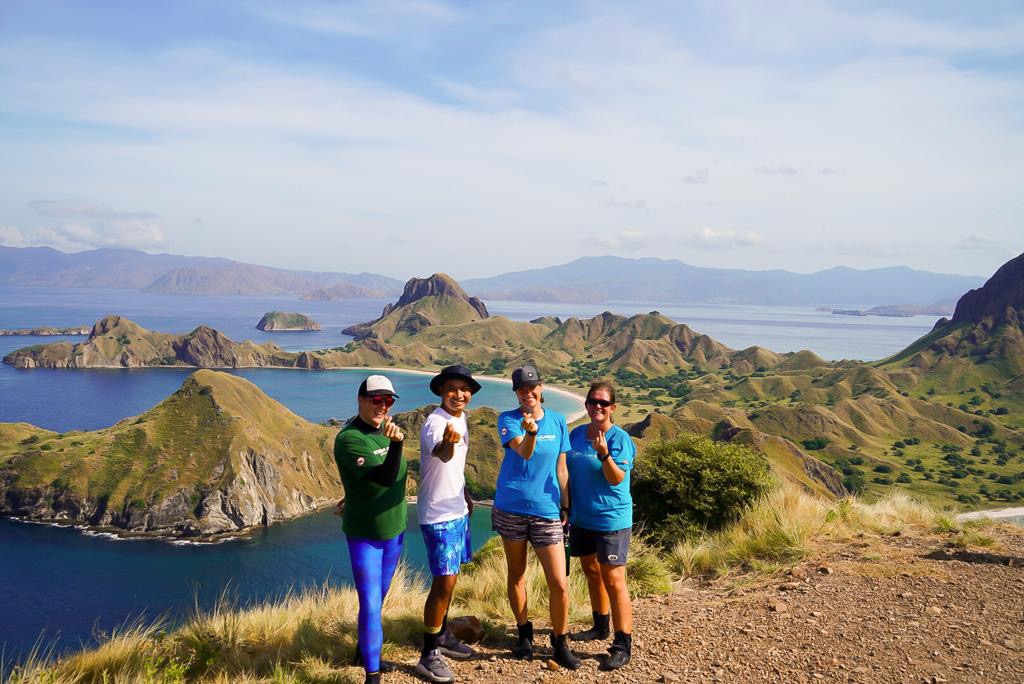
Our Dive Crew know these waters very well and many of our crew have worked for us for years now. The majority of our crew are local to the area and have grown up living on the waters of Komodo National Park. When we say they know the waters like the back of their hand we are not exaggerating! We are very proud of our crew and the knowledge they have about this area.
Some familiar faces such as Yadi, Fauji, Indra and Rahma are all from the region. Yadi & Fauji are both from the island of Komodo, Indra is from Rinca Island and Rahma is from Warloka Village. These 4 Dive Guides, along with others, were born here and have grown up on these waters.
Many of our Dive Crew are Scuba Junkie trained – We offer both Divemaster and Instructor Training across our locations and many of our Dive Guides & PADI Instructors have completed their training with us. This ensure that right from the start our staff are trained to meet the high standards that we expect from all of our Crew.
Here are Scuba Junkie safety is of paramount importance to us and we have an expemplerary safety record. We want to ensure that our guests not only have an unforgettable experience but that you can do so in a safe and enjoyable way! As standard we keep our dive groups small with no more than 4 guests to 1 guide. We also ensure that divers of similar experience levels are grouped together. This allows our guides to have much better control over the safety of our guests and will only add to your enjoyment underwater with having small groups.
Komodo is famous for its currents and it’s one of the main reasons why we have such a wide diversity of healthy marine life here as well as some of the very best coral reefs you will see anywhere in the world! The constant movement of water helps to keep the area nutrient rich and healthy. Some of the dive sites we do in Komodo we deliberately time it so we are jumping in when there is a good strong current, but there are plenty of other sites where we are deliberately diving and timing it in a way to totally avoid the current and for some dive sites there is no current at all.
Dive sites such as The Cauldron / Shotgun and Siaba Kecil are fun to dive with current because that is where the thrill comes from! The adrenaline rush of cruising along a reef and watching the world go by is a feeling like no other! Another famous Komodo dive site is Batu Bolong. Also known for strong currents this pinnacle sits in the middle of the Lintah Strait. Yes the current can be strong, but here we always dive the lee side which means we are diving the side that is protected or hidden from the current.
The way we choose the dive sites depends very much on what the current is doing. We are able to understand what the current will be doing each day as our dive boats are out in the National Park every day of the year so our dive crew & boat crew know what to expect. Anyone who knows Komodo and does dive Komodo on a regular basis will tell you that the currents here are predictable.
Of course nature can surprise us, but it is possible to understand the water flow and current movement to be wellable to predict what will be happening on the individual dive sites. This knowledge and experience of our Dive Crew makes it easy for you to dive Komodo in a safe and enjoyable way without having to worry about what is going to happen.
Things YOU can do if you are feeling nervous to dive Komodo:
As we mentioned we do teach Open Water Courses here in Komodo and we have many guests come to dive with us that have very little diving experience so you are not alone in terms of your experience levels and I can assure you that our dive guides will take excellent care of you!
Komodo is famous for the currents we get here, but as we have said not all dives are crazy, current dives! We will never ask you to dive a site that you do not feel comfortable with. Ultimately it is your choice if you feel ready, but we can assure you that if you choose to come diving with us in Komodo we will take excellent care for you and the time you spend here will give you memories that will last a lifetime!!
To find our more about diving in Komodo and the packages that we offer please get in touch.
And a little about the history!
How to get to Komodo is often a question we get asked so read on to find out a little about the history of Komodo National Park as well as important information on where we are and how to get here!!
Komodo National Park is situated in the beautiful island archipelago of Indonesia. The National Park encompasses the group of islands that are found between the islands of Sumbawa & Flores. The area is just west of Flores Island and can be accessed through the main town of Labuan Bajo, Flores.
The National Park is made up of 3 major islands – Komodo, Rinca & Padar as well as a number of smaller islands. Official records vary (depending on what they deem to be an island!) but there are roughly 25 other islands within the region.
Komodo National Park or KNP is classified as a UNESCO World Heritage Site since 1991 due to the unique ecosystem and incredible variety of life that can be found here.
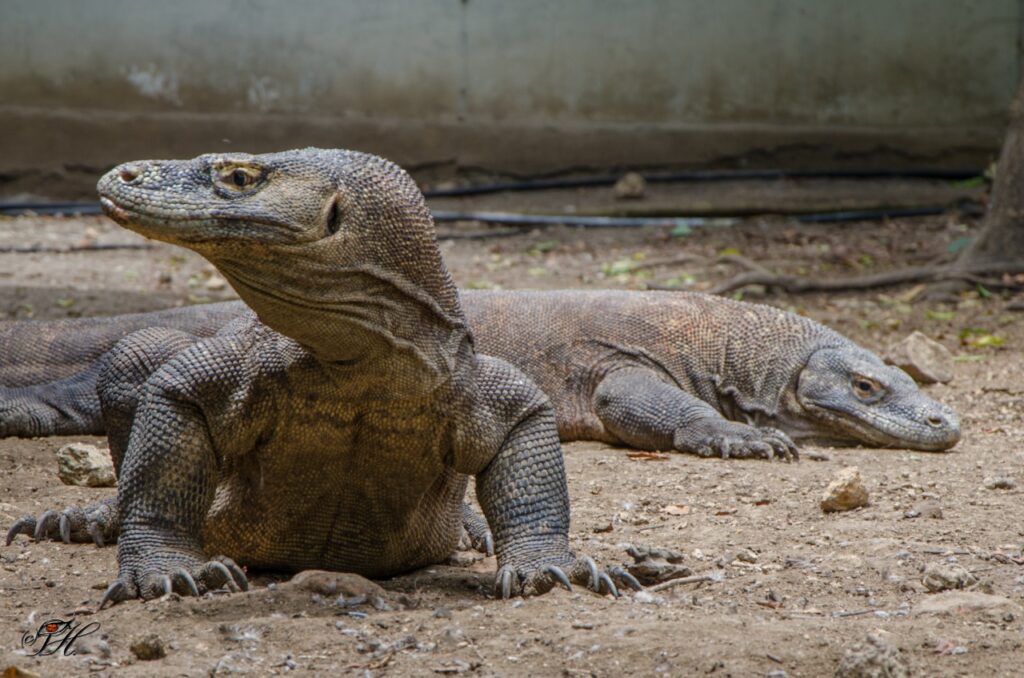
The best known residents of Komodo National Park are the Varanus Komodoensis or Komodo Dragon !!
These magnificent beasts are endemic to the region and can be found throughout the National Park, but most famously inhabit the islands of Komodo & Rinca where visitors can head out trekking with Rangers to try & see these prehistoric animals.
It is thought that there are just over 5000 Komodo Dragons left in the world so their protection is of paramount importance. The Komodo Dragon is the largest living lizard growing to an average size of 3m. They are the reason for the area originally being protected back in the 1980s. Komodo Dragons are known for their aggression and mating rituals and when you see them it really is like you are looking at a living dinosaur!
Human populations also inhabit the larger islands of Komodo, Rinca and Papagarang. These include the Ata Modo (original people of Komodo) as well as migrants from Bima, Manggarai, the Bajo and Bugis.
For generations, the Ata Modo and the island’s Komodo dragons have been living side by side. The Ata Modo believe that Komodo dragons are born from the same spiritual mother. According to local legend, Komodo Dragons are the sibling twins of humans. Long ago, a woman gave birth to twins – one was human and one was a Komodo…Both are seen as equal and deserving of respect. This has led to a spiritual bond between the Ata Modo & the Komodos.
One commonly held belief is that Komodo Dragons are the connection between the physical world and the spiritual one. The Ata Modo believe that Komodo Dragons protect the islands from harm and watch over the humans of the Ata Modo. In the language of Komodo the dragons are called “sebae” meaning twins.
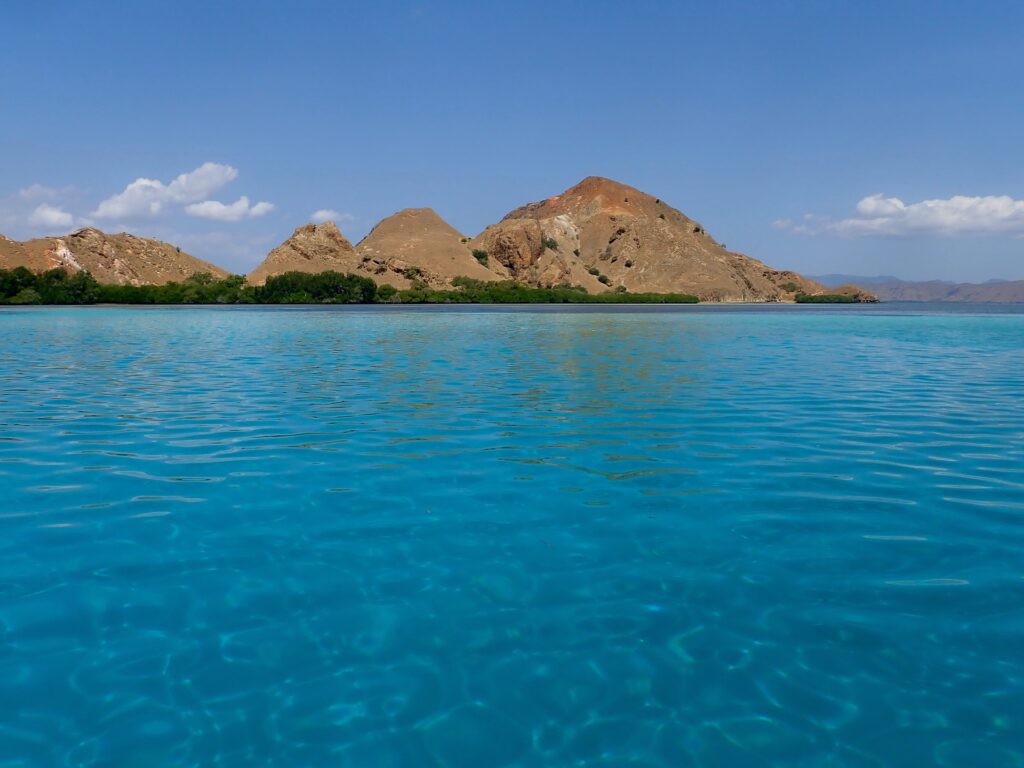
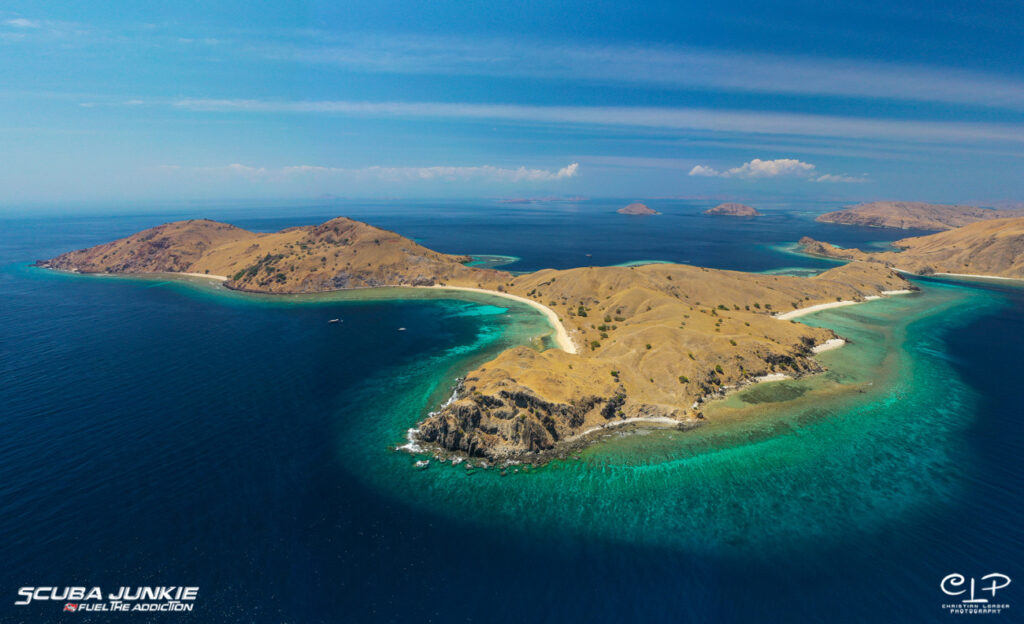
Komodo is situated in the Wallacea Biogeographical Region at the meeting point of 2 continental plates. The fauna and flora also offer something unique to the area and the rugged islands really are breathtaking when viewing them from our dive boats. In dry season the islands are arid and brown looking, but during rainy season they take on a vibrant green as the fauna and flora flourishes with the extra water!
Other famous residents of the National Park (from our perspective!) are the majestic Mantas, the sharks, the turtles, the octopus, the weird and wonderful such as frogfish, ghost pipefish, blue ring octopus, nudibranchs and of course the incredibly vibrant reefs and hundreds of reef fish we encounter on every single dive.
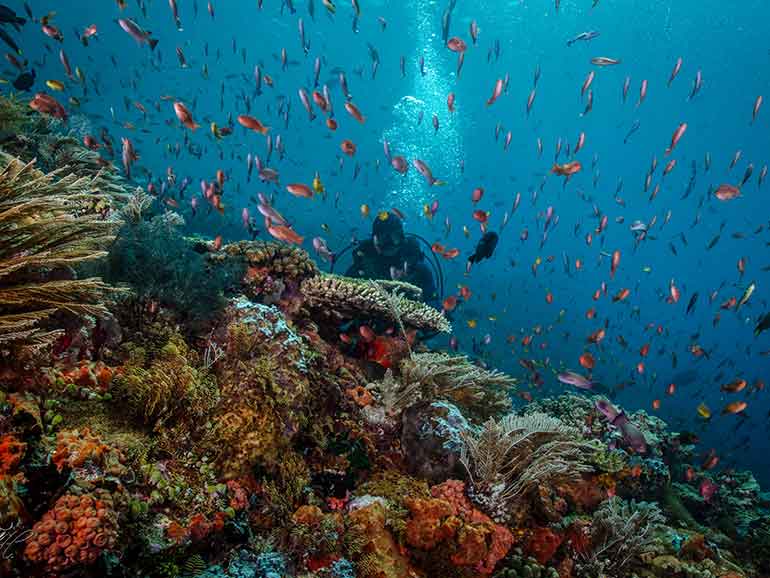
To find out more about the best time to dive in Komodo check out our blog at Scuba Junkie Liveaboards.
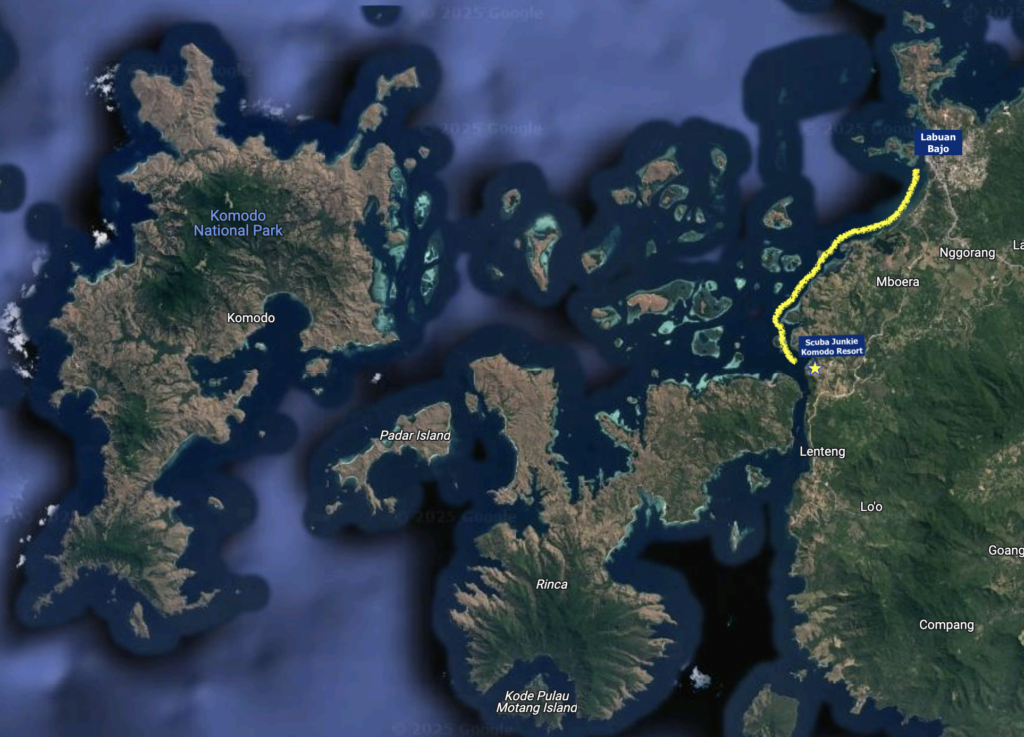
Our Scuba Junkie Komodo resort is based right on the edge of Komodo National Park. We are still on the island of Flores about 20km south west of Labuan Bajo. We are nestled in the quiet bay of Warloka and share the bay with the village of the same name. This village is a 20 minute walk from the resort. There is also a small ‘kampung’ or village next door. A lot of our staff actually come from the village of Warloka or the kampung next door to us.
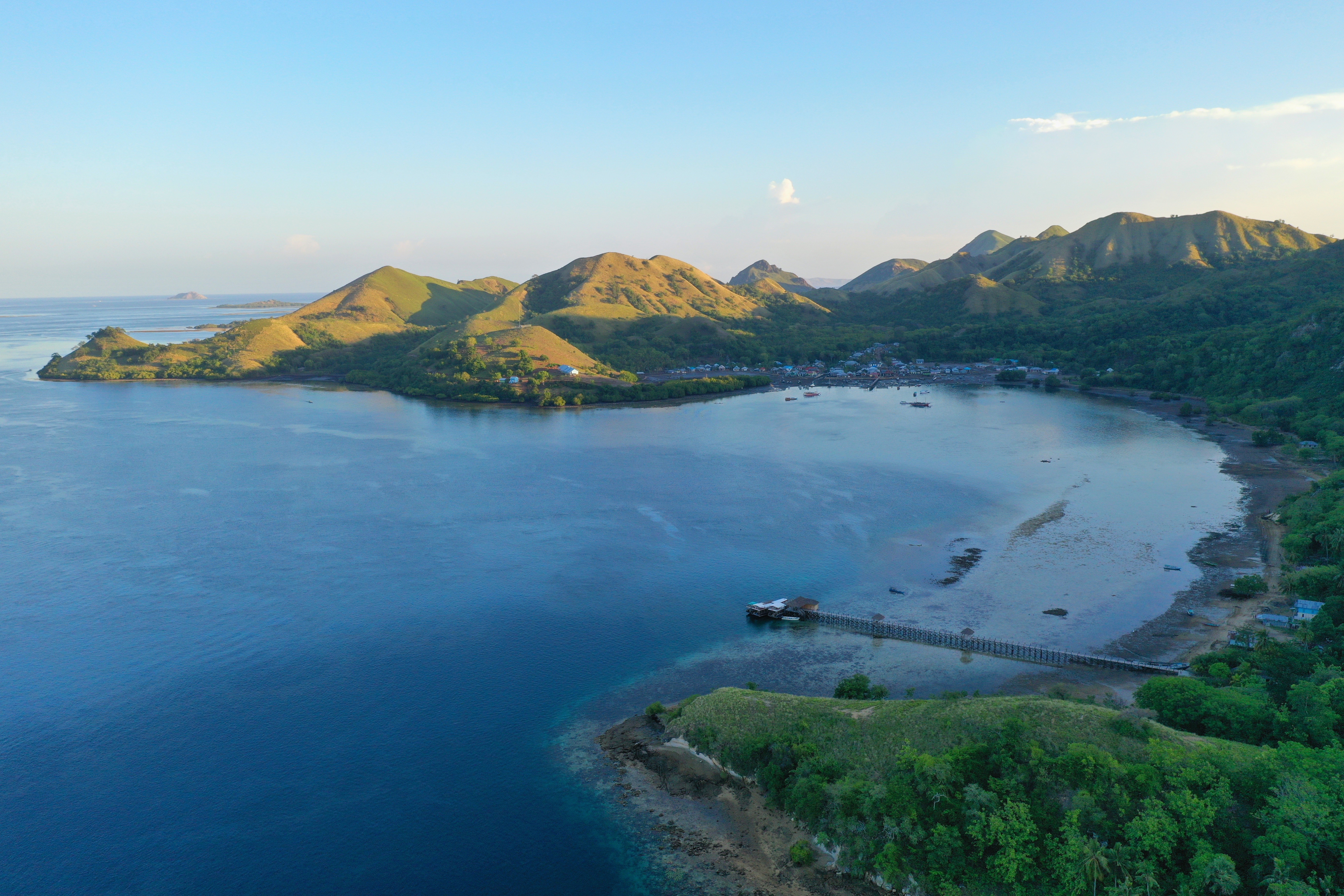
Our resort is right on the waters edge overlooking Komodo National Park. The view is spectacular with the islands of Rinca and Komodo both visible from our decking and jetty area. The resort is next to the Molo Strait which is a narrow, shallow strait between the islands of Flores and Rinca. As a result of the topography of the bay and the narrow Molo Strait we can get some very strong currents in front of the resort. It is a lot of fun to wash the waters gushing under the jetty like a river as the water is funnelled through the strait.
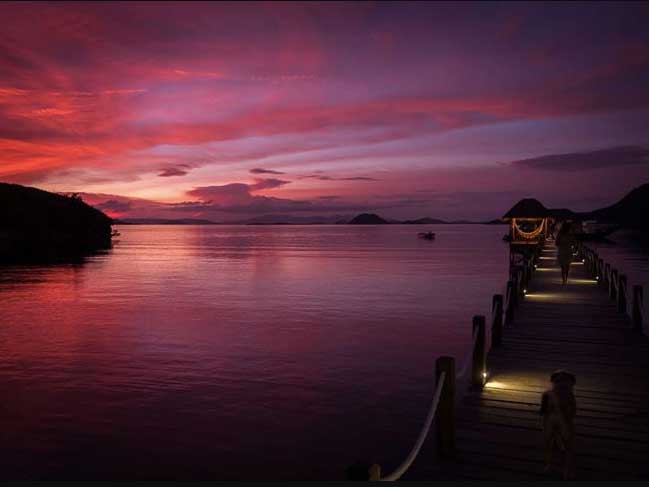
Being west facing means we also get the most epic sunset views! Our resort really is the perfect place to unwind after diving!
How to get to Komodo?
Labuan Bajo is located on the westernmost tip of Flores Island. What once was a small fishing village has exploded in recent years with the development of an international airport, re-design of the harbour area as well as road improvements and the fast growing hospitality and food sector.
How to get to Komodo – Domestic Routes
There are regular flights to Labuan Bajo from both the international hubs of Denpasar, Bali and Jakarta. Both routes offer a couple of flights per day with the main operators being Batik Air, Air Asia, Citilink and Garuda. Smaller airlines such as Wings & Lion Air tend to operate in the busier months of July – September.
Batik Air currently offers 15kg extra check in luggage for dive gear which is a great bonus for those of you bringing your own gear! Air Asia, Citilink and Garuda also offer check in luggage as standard, but not additional for dive gear. The smaller airlines usually require you to book check in luggage as extra.
Flights from Denpasar Bali take about 50 minutes and the flight time from Jakarta is about 1 hour 30 minutes.
Flights from Bali are more frequent and using this as your international arrival / departure point means you could also add a trip to Scuba Junkie Penida to your journey and avail of our Special Combo Discounts!
How to get to Komodo – International Routes
As of 2024 Air Asia have introduced direct flights from Kuala Lumpur, Malaysia. These flights are currently operating x 3 per week:
Flying into Labuan Bajo from KL makes a Combo Trip with Scuba Junkie Sipadan or Scuba Junkie Sangalaki a lot easier to do with reduced travel time between the locations.
In very exciting news – Jet Star are also commencing direct flights from Singapore to Labuan Bajo starting on 20 March 2025!! This is fantastic news for our international guests who may want to bypass Bali and Jakarta & get straight to Komodo! Currently Jetstar are operating these flights x 2 per week, but we hope this will become more regular in the future.
How to get to Komodo – Other Options
It is also possible to fly into Labuan Bajo from the airport of Surabaya and Maumere. These routes are operated by some of the smaller airlines. Please do be aware that these routes are often delayed or cancelled and can be unreliable.
It is also possible to come to Labuan Bajo by ferry / boat trip.
The Pelni ferry departs from Benoa in Bali and stops at Lombok & Bima along the way. This is the local Indonesia ferry company and it is possible to purchase simple ride on tickets or cabins. The journey time using this method takes about 38 hours if you start in Bali.
There are also a number of companies that offer boat trips from Lombok to Labuan Bajo. These are usually 3 night trips that will include some island stops and snorkeling along the way.
Arrival in Labuan Bajo
A big advantage of Labuan Bajo town is that everything is in very close proximity to each other! The airport is literally a 6-7 minute taxi ride to the main street where our office can be found. On arrival at our Scuba Junkie Office our staff will be ready to greet you and ensure that we have everything we need to ensure a smooth check in.
You will be asked to provide a copy of your passport, visa, dive cert & dive insurance as well as complete our standard liability release form if you have not already done so via email. Our staff will also request the cash payment for your Komodo National Park Permits.
How to get to Scuba Junkie Resort
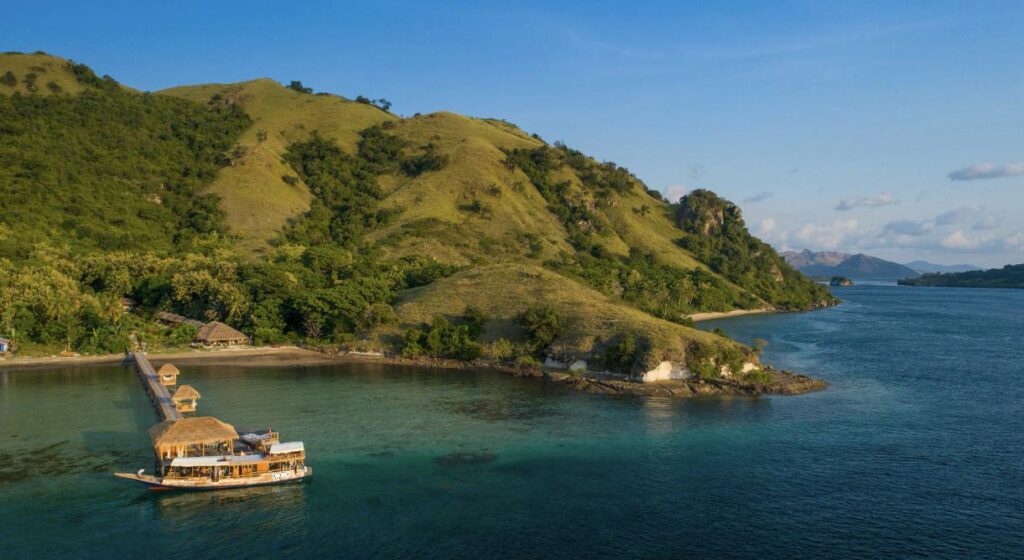
Our resort is only accessible by boat. Google maps is a little inaccurate here, but we do get asked this a lot because of the route on the map! Our transfer boat leaves from the harbour in Labuan Bajo at 14.30 each day. Our staff will walk with you to the boat once everyone is present and ready to depart.
We encourage all of our guests to arrive in Labuan Bajo prior to 14.00 to ensure you are in time for this transfer.
If you are not able to arrive in time then we can arrange for a private transfer to the resort. Please note that this option is time limited so please ask our bookings team if you have more questions about this option.
**Please note that for the flight arrival from KL that lands at 14.25 a private transfer will be required. Currently with the flight arrival from Singapore it is not possible to come to the resort the same day.
As mentioned there is no road access directly to the resort. The road will only take you as far as the village of Warloka. The journey by road from Labuan Bajo to Warloka only takes about 35 minutes. Warloka is a local village positioned in the same bay as the resort. The road itself is newly built and in excellent condition.
However the short journey from Warloka to the resort can be tricky. The route from Warloka to the resort is along the beach / waterfront and takes about 20 minutes on foot. The beach is quite muddy and rocky so not always an easy walk. If the tide is low the walk is more muddy / sinky sand and at very high tide there are points you would need to walk through water about ankle deep. This is not so easy with luggage which is why we do not offer this option to our guests.
There are plans underway for a new jetty to be built at Warloka that will be able to cater for small passenger vessels. This will enable us to use this option in the future, but for now we choose to bring our guests by boat. It is a beautiful journey and will give you your first glimpses into the Komodo National Park as you travel along the coast of Flores to the resort. The boat journey to the resort takes about 1 hour 20 minutes.
When the time finally comes for you to leave us we recommend booking a flight after 11.00. This gives you 18+ hours No Fly Time (as recommended by DAN) as well as fitting well with our transfer boat which will get you back to Labuan Bajo harbour around 9.15 – 9.30.
Komodo National Park is a unique part of the world with so much to offer. Many of our guests return again and again because the level and consistency of the diving is unmatched anywhere else in the world! We hope that you too can come and visit us to experience first hand what this incredible region has to offer. How to get to Komodo should be the question on every scuba diver’s mind and we hope this blog has made the planning for your next adventure easier for you to achieve!
If you have more questions about How to get to Komodo or about any of the packages and diving that we offer please contact us here.