
Menu
Other locations

With so much to offer and so many different dive sites it is easy to be overhwelmed when planning your dive holiday. Many regions famous for diving are seasonal and not possible to visit all year around. Luckily here in Komodo we are diving all day every day all year around!!!
There is no ‘bad’ time to visit the Komodo National Park, but the best time to visit Komodo very much depends on what are your priorities as a diver. Is it crystal clear visibility? Warm water? Quiet dive sites? Lots of mantas? Or all of the above?!
Komodo is possible ALL year round which means we can enjoy all this incredible area offers at any time of the year!
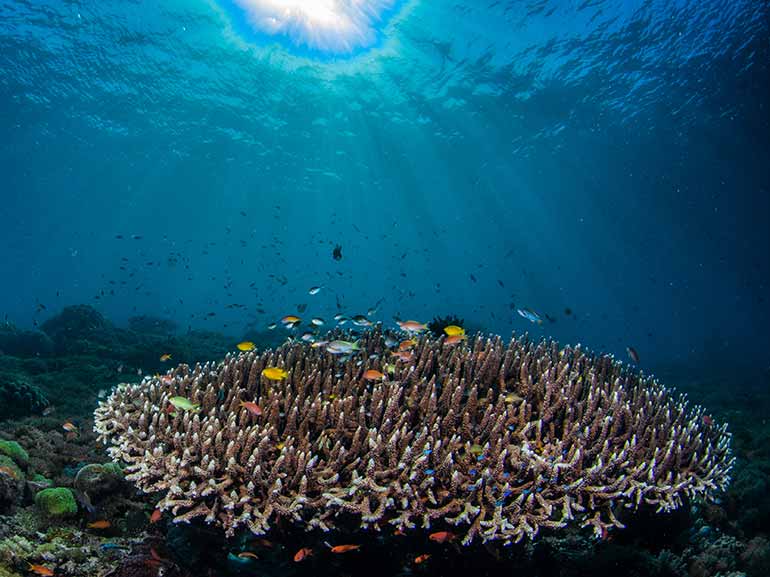
There are, however better times to visit if you are aiming for something in particular so we thought we would tell you a little more about the seasons and the diving here so you are better prepped to plan you adventure!
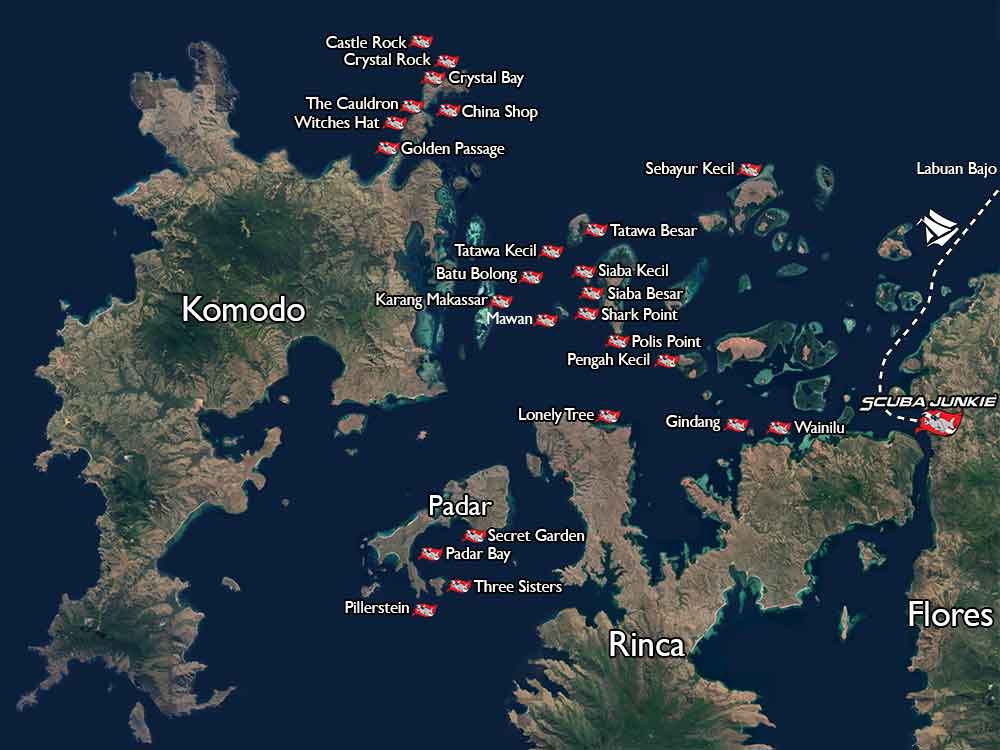
Komodo National Park is located between the islands of Sumbawa and Flores in the Lesser Sunda Islands. The Park itself consists of the 3 main islands of Komodo, Rinca & Padar. There are however about 26 smaller islands which make up this region. The National Park is 1,733 km2 and the majority of that area is taken up by the marine waters.
The diving in Komodo is commonly divided into 3 areas – Central, North and South. So let’s explain a little more about the different areas and when is the best time to visit Komodo depending on where you want to go and what you want to see.
Best Time to Visit Komodo – Central Sites
These sites are the sites that sit between the east coasts of Komodo & Rinca Islands and the eastern boundary of the National Park. Famous dive sites you have probably heard of in this area are Batu Bolong, Manta Point, Mawan and Tatawa Kecil. There are many many more!!
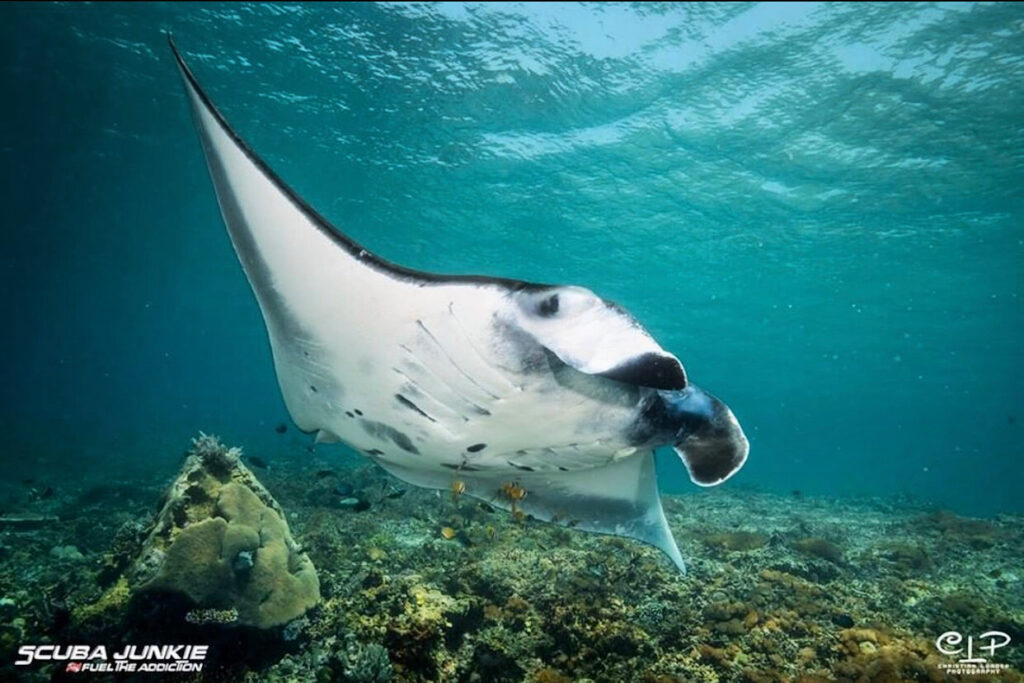
Central Komodo is accessible all year around. The conditions do vary a little throughout the year and we will come onto that a little bit later. The sites in this area really do offer something for everyone! Mantas frequent these central sites all year around, but for sure are seen in bigger numbers between September – May. We also get lots of reef sharks, green and hawksbill turtles, a huge variety of reef fish and stunning coral reefs. There are also a few fantastic macro / muck dives in this area where we will spend time looking for blue ring octopus, frogfish, nudibranch, ghost pipefish, pygmy cuttlefish and all the other little critters that find their homes here.
Best Time to Visit Komodo – Northern Sites
The north of the National Park is considered the area to the north east of Komodo Island. This area is much more exposed than the central sites as the islands are facing the open ocean. This does also mean these sites are usually great places to see “the big stuff.”
The dive sites can be found in and around the islands of Komodo, Gili Lawa Laut (Island close to the sea) and Gilia Lawa Darat (island close to the land – close to Komodo Island!). Some of the most famous sites in Komodo can be found here. We have The Cauldron / Shot Gun, Castle Rock, Crystal Rock and Golden Passage to name but a few.
Much of the diving at these northern dive sites does involve some current and it usually results in action packed dives with plenty of reef sharks and big schools of fish!
The Northern sites are best dived between March / April – October / November time as this is when the sites offer the best visibility and calmest sea conditions. For the remainder of the year the visibility can drop off quite a bit in this part of the National Park and the swell increases, but as this happens in the North of the Park the Southern sites open up!!
Best Time to Visit Komodo – Southern Sites
These sites are found to the south west of Komodo & Rinca Island with a number of popular dive sites being around Padar Island too.
The window for diving the southern sites in terms of great visibility and calm conditions is much shorter than the north. The southern sites are usually best dived between October – March. The reason for this is that during the rest of the year the visibility drops off and there can be often strong winds resulting in rough seas coming from the south.
The southern sites around Padar Island are famous for their topography with more of a rocky / wall topography and sites like Pillarstein where there are some fantastic swim throughs. The sites of Padar Bay and Secret Garden are home to corals that are not found in the central and northern sites and are also great places to look for frogfish, seahorses, pipefish and other smaller treasures! Small schools of devil rays can often be seen in the shallows at Secret Garden.
Here at Scuba Junkie our location means we can access these Southern sites during this time of year. The majority of the dive centres departing from Labuan Bajo are not able to offer these trips as they are too far away from the dive sites making it logically difficult. This usually means that we are often the only divers at these sites.
Dry Season / Wet Season
Indonesia sits on the equator which means we have 2 seasons here – the dry season and the wet season! The dry season usually lasts from March – October, but of course this can vary a little year to year. Dry season in this area means little to no rain and the islands become very arid giving most a brownish desert look.
The water temp this time of year ranges from 26-29 degrees with the warmest temperatures in July / August. The visibility also peaks in these months with 25-35 metre visibility on the majority of dive sites. Although the water is warm and the visibility is excellent we do see less mantas around the Park at this time of year as they often move further south to be in the more nutrient rich water and escape the busy boat traffic of high season!
The wet season usually runs from November – March. People are often worried about the term ‘wet season’ as it makes them think of all day every day monsoon rains! This certainly isn’t the case here in Komodo. Yes it does rain of course but it is common for the rain to start in the afternoons and the majority of rain fall occurring overnight. The days usually remain very sunny with blue skies!
Due to the sometimes heavy rain fall the visibility does drop off at this time of year with average visibility of 10-20m to be expected on most sites.
However this is a usually an excellent time to see mantas as they love the nutrient rich water that flows into the region at this time of year. It is not unusual to have dives with 30-40 mantas flying around during this season!! The water temperature at this time of year averages between 22-26 degrees so if you get a little chilly an extra vest or hood is worth bringing!
What to take away:
Best Time to Visit Komodo – Anytime is a great time – ALL year around!!!
Best Time to Visit Komodo – Best chances to see lots of mantas: September – May
Best Time to Visit Komodo – Visibility: June – September (peaking in July & August)
Best Time to Visit Komodo – Warmest water: July – August (peaking in July & August)
Best Time to Visit Komodo – Dive Central Sites: All year around
Best Time to Visit Komodo – Dive Northern Sites: March/April – October/November
Best Time to Visit Komodo – Dive Southern Sites: October/November – Feb/March
Best Time to Visit Komodo – Quietest Dive Sites: Nov – June
Contact us now to help plan your trip to Komodo and let us help you choose when the best time to visit Komodo is for you!
Tatawa Besar – Dive Site of the Month
Tatawa Besar means ‘big laugh’ in bahasa Indonesian and is one of Komodo National Park’s most picturesque dive sites. Known for its vibrant coral gardens, thriving marine life, and relaxed drift dives Tatawa Besar offers an unforgettable underwater experience suitable for all levels of divers
1. Location & Overview
Tatawa Besar is located in the central area of Komodo National Park, north east of Komodo Island. The island is dived on the north easterly side which faces the open ocean so there is always the chance to see something special gliding past in the blue!
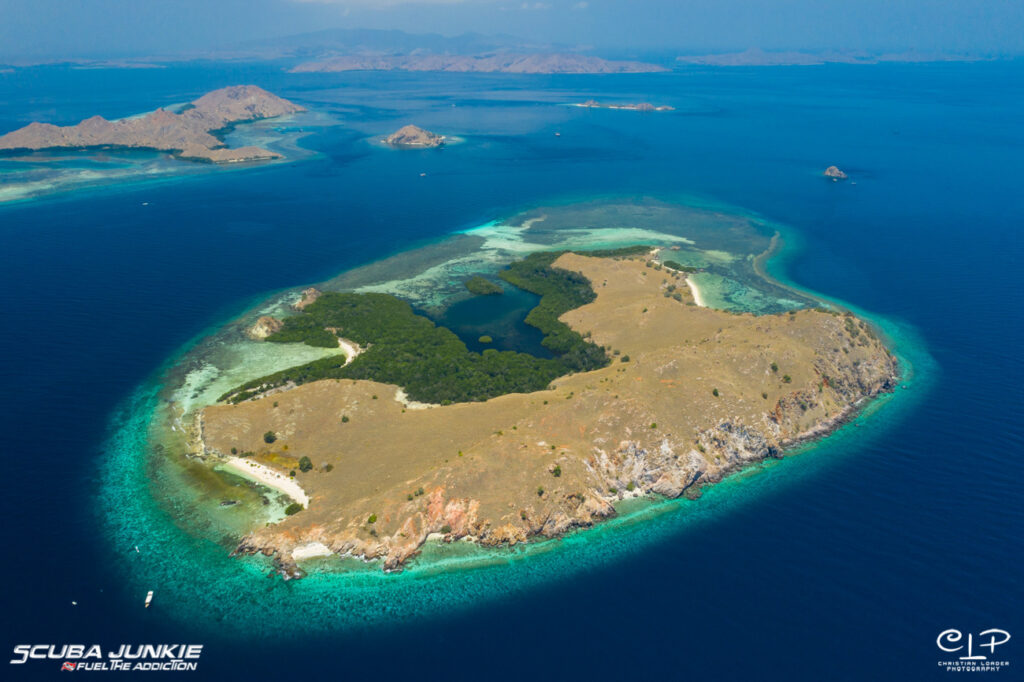
Tatawa Besar is one of the two ‘Tatawa’ islands in the area with the other smaller island being called Tatawa Kecil or ‘little laugh!!’ The island itself is a beautiful mix of arid rocky mass, white sand beaches and healthy mangroves.
This site is perfect for divers looking to combine vibrant coral scenery with the thrill of drifting alongside marine life, all with relatively minimal effort.
2. Topography & Depth
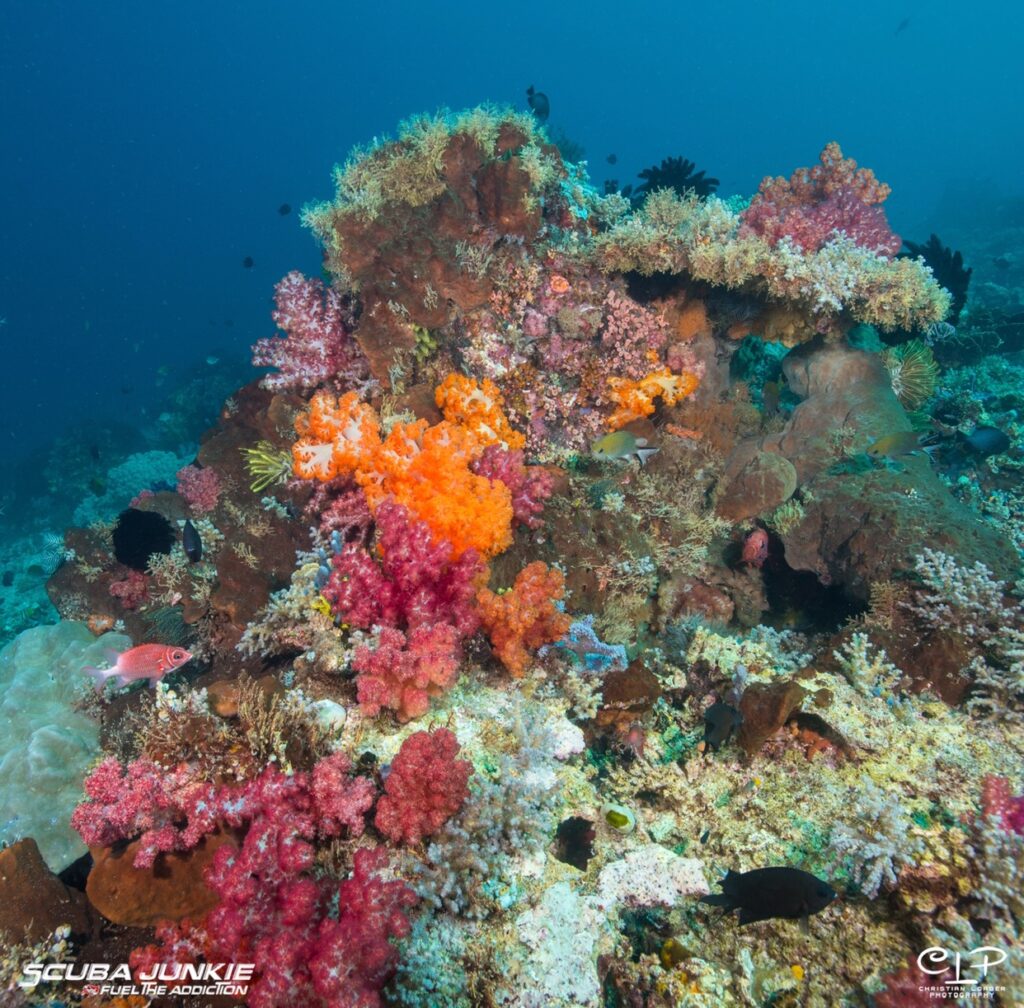
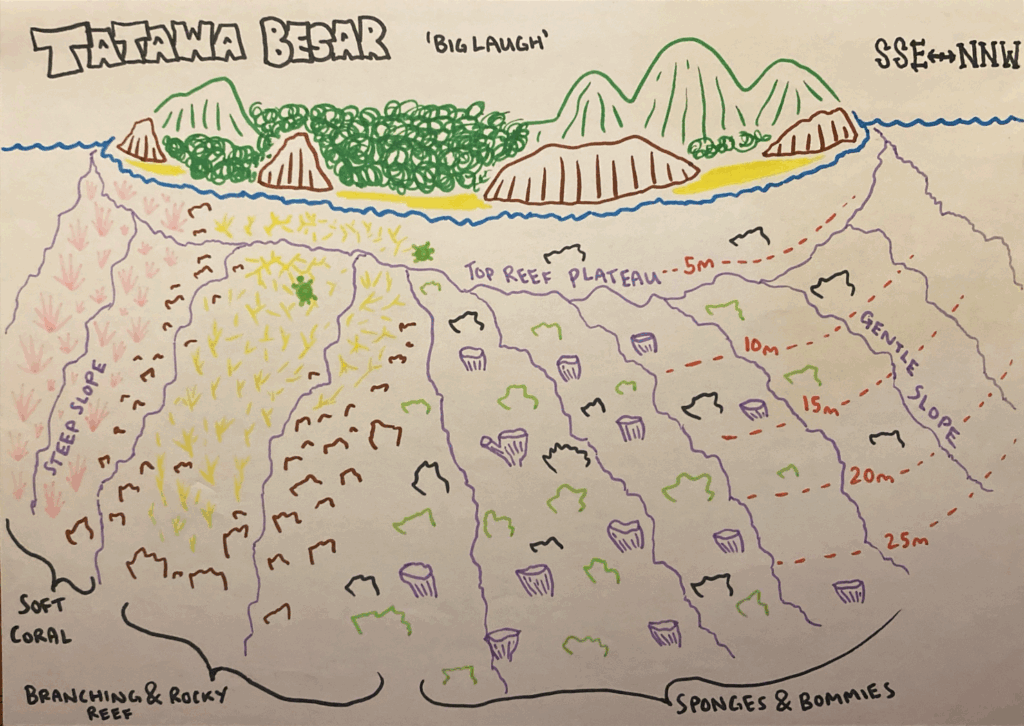
The dive site features a sloping coral reef that transitions into sandy patches and bommies. The shallow top reef in front of the white sandy beach is about 4-5 metres and this is often where our dive boat will drop us to start the dive. The top reef plateaus out from the island and then gently slopes to a depth of 35-40 meters.
In good visibility it is possible to see where the bottom spans out away from the sloping reef.
Hard corals dominate the topography, with expansive fields of table corals, soft corals, sponges, and sea fans.
The expanse of the shallow top reef and usually excellent visibility also makes this an excellent site for snorkeling.
3. Currents & Dive Strategy
Currents are a key feature of Tatawa Besar and can range from mild to strong. Most dives here are drift dives, but it is often considered one of the more relaxing drifts in the National Park. Although that doesn’t mean it still isn’t speedy at times!
We dive Tatawa Besar on a falling tide with the reef on our right shoulder. We drop north westerly tip and head in a south easterly direction. There can be parts of the reef where we experience some up & down current due to the changing topography but this can easily be countered for through changes in body and fin position.
Tips to Stay Safe:
4. Marine Life & Biodiversity
Tatawa Besar is rich in marine biodiversity and part of the Coral Triangle. The dive site is especially famous for the colourful corals including table top corals, giant sponges, fields of staghorn coral.
5. Ideal Conditions & Timing
Best season: April to November – The dry season provides the calmest conditions and best visibility.
Visibility: 15–30 metres. Especially good during the dry season (June to September).
Water temperature: 26 – 29°C
Final Thoughts
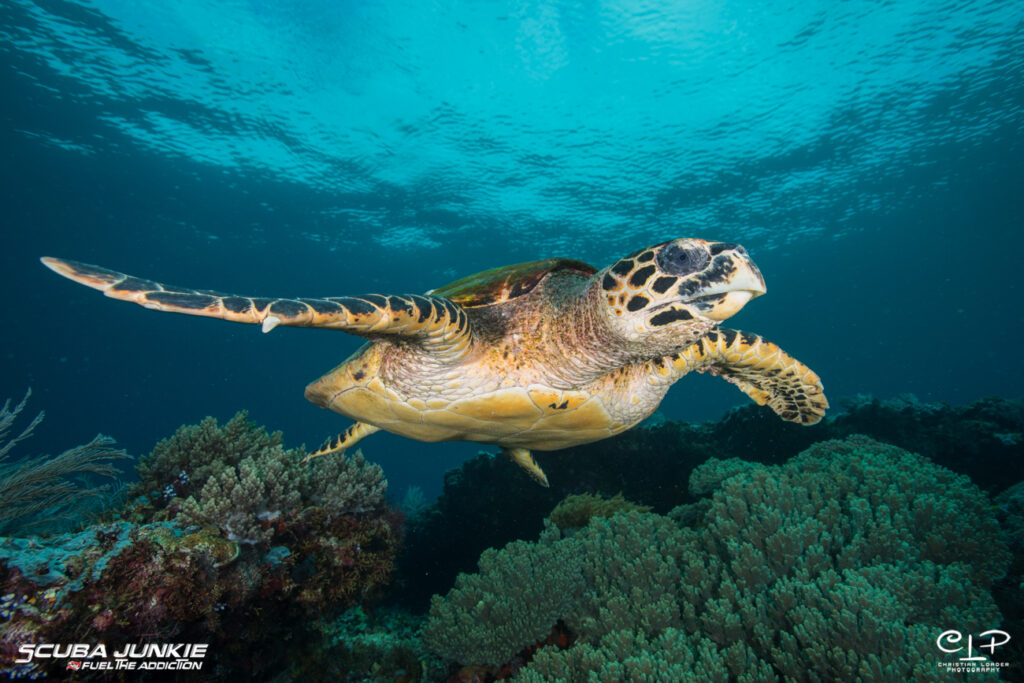
Tatawa Besar offers a scenic and colourful experience that will excite experienced divers, but is a little more relaxed for newer divers seeking there first drift experience. Whether you’re watching turtles cruise by, flying past vibrant coral gardens, or enjoying the sheer beauty of Komodo’s underwater landscapes, Tatawa Besar is a site you’ll want to revisit again & again! And remember always keep your eyes in the blue for ‘that something special’
Quick Reference Table
| Feature | Details |
| Location | Central Komodo |
| Depth | 5 – 40 meters |
| Currents | Mild to strong. Usually treated as a drift dive |
| Marine Life | Turtles, reef sharks, schooling fish, macro |
| Topography | Sloping reef, coral gardens, giant sponges, plenty of bommies |
| Vis & Temp | Visibility ~ 15–30 m+ Temp ~ 24–29 °C |
| Best Time | April – November |
Blacktip, Whitetip & Grey Reef Sharks
Reef sharks are among the most charismatic denizens of coral reefs. For many divers, seeing them can be the absolute highlight of any dive, but there is also much to think about in terms of their important roles in the underwater eco-system and the threats to their population.
In this blog we will delve a little deeper into what we know about the 3 most common species of reef sharks in Komodo National Park.
What are Reef Sharks
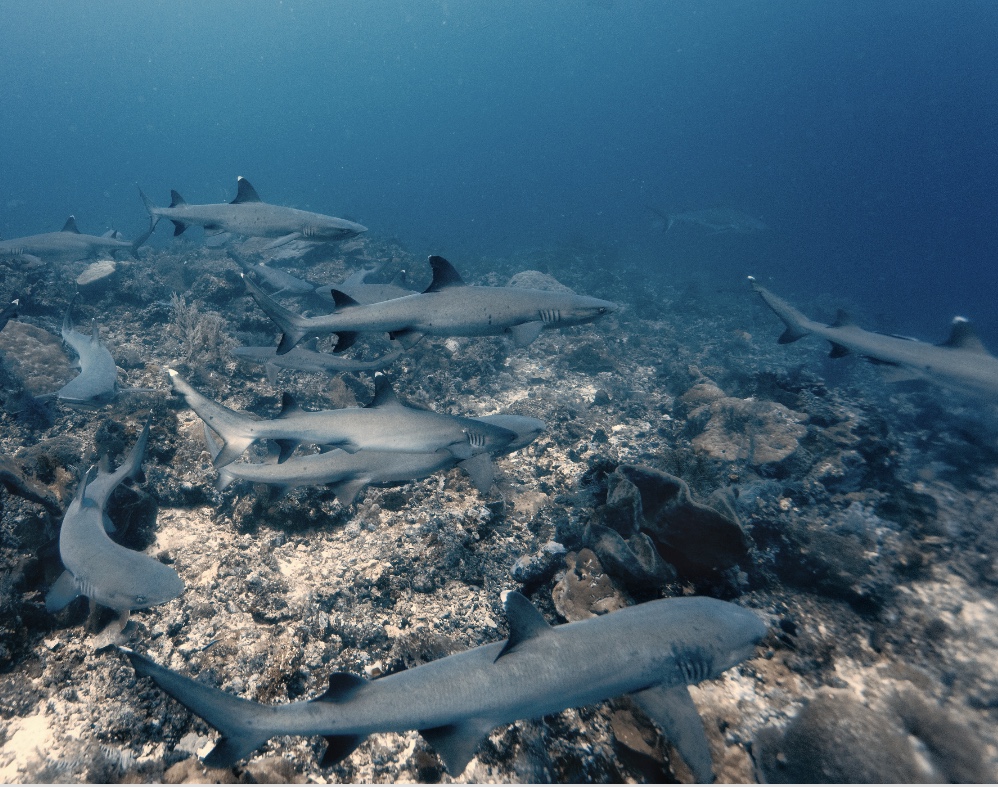
Reef sharks are carnivorous Requiem Sharks that live in tropical and subtropical waters – usually close to coral reef systems. The 3 most common types of sharks we see in Komodo are Whitetip, Blacktip & Grey Reef Sharks.
How to ID Reef Sharks
When you’re 20 meters underwater, the current is flowing & your excitement is running high, it’s not always easy to ID a shark cruising past, but was you understand the basic ID markers of each individual type of shark it does become a lot easier!
Here’s how to tell them apart at a glance:
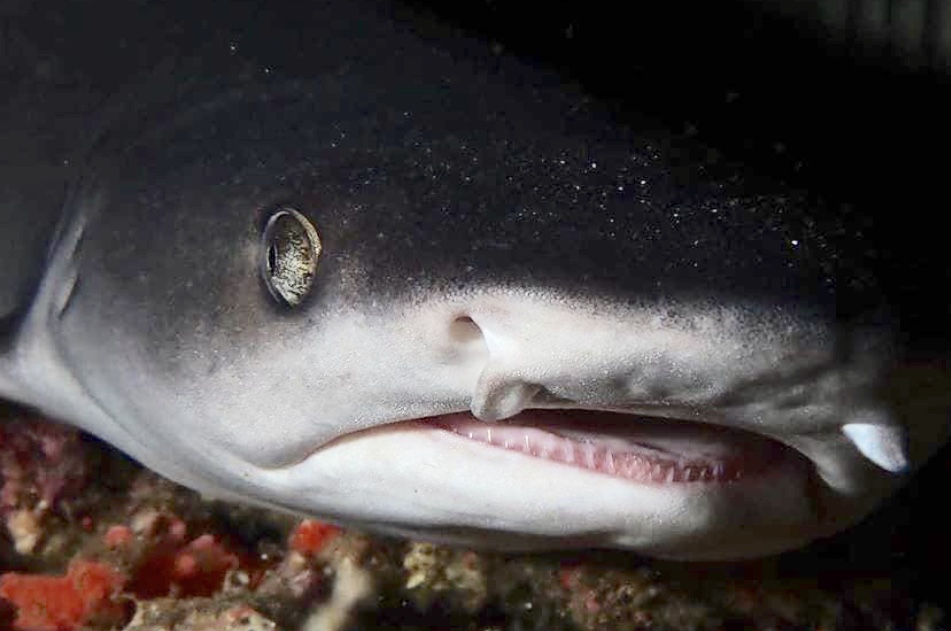
1. Whitetip Reef Shark
(Triaenodon obesus)
Key ID Features:
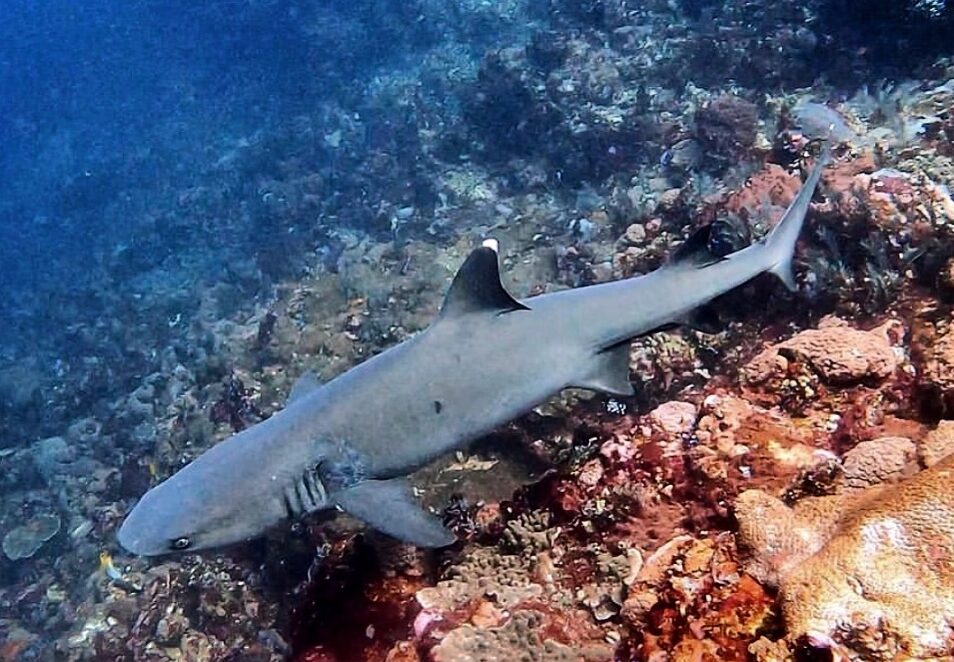
Size: Can grow to around 1.6 meters. In Komodo the common size tends to be around 1.2 meters.
Behaviour: Often can be seen “resting on the floor” Unlike other Requiem Sharks Whitetips use a method of breathing called buccal pumping which means the motion is caused by their jaw muscles to move the water over their gills. If you get close enough to a resting Whitetip you can see the jaw gently opening and closing or just moving slowly. Other Requiem Sharks rely on “ram ventilation” which means they must keep swimming to force the water through their gills.
Can often be found in the open, but tend to prefer to hide under table corals, rocky crevices, small caves if they can as this offers them protection while they rest. Especially the smaller pups!
Less mobile than some sharks. Small home ranges. Usually more active at night. Not aggressive towards humans. Very chilled sharks!
2. Blacktip Reef Shark
(Carcharhinus melanopterus)
Key ID Features:
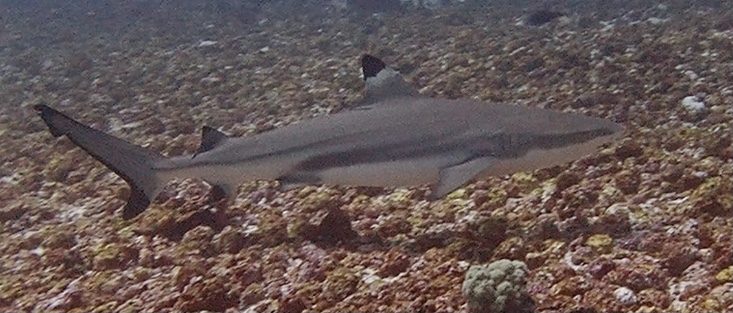
Size: Usually up to 1.6 meters.
Behaviour: They tend to be active swimmers, a little shy but may come in close to check out divers if they’re calm and still. You’ll often see them cruising in 2–5 meters of water at sandy reef edges or coral bommies. Juveniles are often seen in shallow areas or hiding under coral.
Often near shallow reefs and lagoons. Usually solitary or small groups. Usually stay within the same home range. Blacktips are more active, sometimes quite curious to divers so they will come closer to check you out!
3. Grey Reef Shark
(Carcharhinus amblyrhynchos)
Key ID Features:
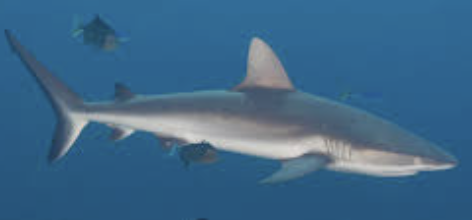
Size: Larger — up to 1.9 meters. Often seen in the 1.2–1.6 m range.
Behaviour: Often found patrolling reef edges or drop-offs. Moves in wide, slow circles or straight lines. Occasionally displays territorial behavior, especially if approached too closely.
More likely to see them in stronger currents and at deeper sites.
Often seen in groups (especially daytime), frequent drop‑offs, reef slopes. At night disperse more broadly to forage. Active sharks, with a larger home range. Can be territorial while hunting.
Quick ID Summary Table
| Feature | Whitetip Reef | Blacktip Reef | Grey Reef |
| Fin Markings | White tips on dorsal & tail only | Black tips on dorsal, tail, pectoral | No strong fin tips, slight white edge on tail |
| Body Color | Grey to brownish grey | Light grey, black bars near gills | Uniform dark grey |
| Snout Shape | Broad, flattened | Short, rounded | Pointed, angular |
| Size (Max) | ~1.6 m | ~1.6 m | Up to ~1.9 m |
| Day Behaviour | Can be resting or active | Active – often in shallow water | Cruising mid-water or reef edge |
| Seen At | Shallows, coral bommies | Shallows, coral bommies | Drop-offs, deeper walls |
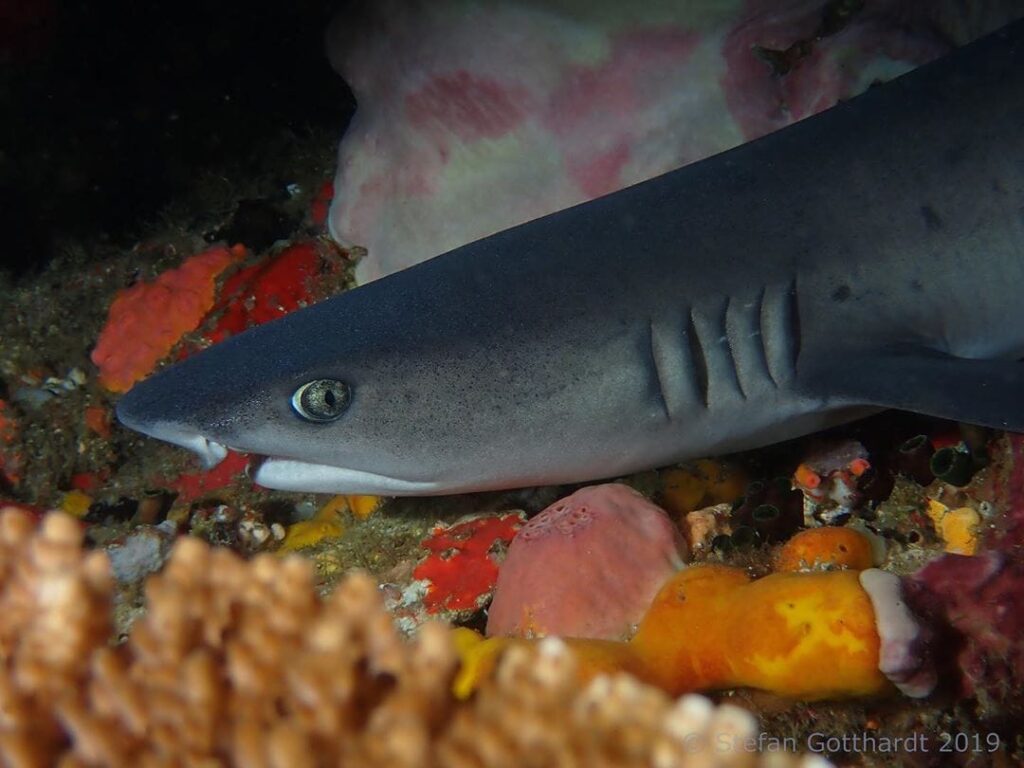
Tips for better IDs
Reef sharks like Whitetip, Blacktip, and Grey Reef Sharks combine graceful beauty with ecological importance. They have slow life histories: late maturity, low numbers of pups, long gestation periods—which makes them vulnerable.
| Trait | Whitetip Reef Shark (Triaenodon obesus) | Blacktip Reef Shark (Carcharhinus melanopterus) | Grey Reef Shark (Carcharhinus. amblyrhynchos) |
| Diet | Prefer small bottom dwelling prey. Fish, cephalopods, crustaceans. Hunt more actively at night/slack tide. Rest during day under overhangs. | Fish, cephalopods, crustaceans. Sometimes drive schools of fish (e.g. mullet) toward shore. | Fish and reef organisms. Generalist reef predator, often around drop‑offs and reef walls. |
| Reproduction (Gestation, Litter, Maturity) | Gestation ~10‑13 months. Litters of 1‑6 pups (often 2‑3). Sexual maturity reached around 8‑9 years, depending on region. | Viviparous (yolk‑sac placenta). Gestation varies with region: 7‑9 months (e.g. northern Australia), often ~10‑11 months in other areas, up to ~16 months reported in some cases. Litter size 2‑4 (occasionally more). Males mature earlier (~4 years) than females (~7‑8). | Viviparous. Gestation ~12‑14 months. Litter 1‑6 pups every other year. Maturity later (≈7 years) in many populations. |
| Lifespan | Lifespan less well documented, but implied to be long relative to time to maturity. | Typically around 10‑15 years, perhaps longer in favorable conditions. | Slower life history. Mature later with fewer offspring making them more vulnerable to human threats. Lifespan again not very well documented. |
Global Trends: Population Status & Threats
While precise global population numbers are hard to come by for these sharks, there are some strong indicators and studies that give a picture of their status and trends. Unfortunately the outlook for sharks does not look good. Sharks are victims of active fishing for human consumption and use in herbal medicine as well as the product of by catch with long line fishing and large trawler nets.
So though we may not always have precise numbers for each population, the trend is clear: these species are declining globally, sometimes rapidly, and the risk is increasing.
Local Snapshot: Komodo National Park
Komodo National Park (KNP) is one of the world’s treasure troves for marine biodiversity, including reef sharks.
These findings are just a snapshot of encounters in Komodo, but do offer insight into the fact that the shark population here is in a reasonably healthy state compare to other areas.
The increasing number of divers and tourism boats mean that there is more economic incentive to protect the sharks as the large number of divers visiting the area bring large inflows to cash to the region. But at the same time boat traffic, fishing pressure (legal/illegal) still cause massive risks. Management such as moorings, regulated dive quotas, and enforcement will be increasingly important as visitor numbers continue to increase in the area.
Due to the late sexual maturity and longer gestation periods even the loss of a small number of individuals can cause significant damage to the population as a whole. Without active protection numbers will continue to decline so our choices and impact as individuals is of the utmost importance.
Putting It Together: Implications for Scuba Divers in Komodo & Beyond
If you’re a diver concerned about reef sharks, here are some of the take‑aways, both encouraging and cautionary:
If current decline rates hold up, some reef shark populations may become functionally extinct in certain reefs – meaning they are so rare that their ecological role is greatly reduced or lost. Less sharks can lead to overpopulation of mid‑predators, changes in fish community structure, coral reef health issues. Sharks are apex or meso‑predators in reefs and help balance the system. To ensure Komodo (and reefs elsewhere) continue being places where divers can reliably see reef sharks, these are some essential conservation measures needed from government bodies:
Conclusion
Globally, reef sharks (well all sharks) are in decline, with many reefs no longer hosting them in meaningful numbers. Locally, in Komodo National Park, the situation is much better than many places — but the signs of pressure are evident.
For scuba divers, that means Komodo is still a very good place to see reef sharks. But these encounters are not guaranteed forever unless conservation efforts keeps pace. Diving with awareness, supporting sustainable tourism and conservation policies, and spreading the word all help to ensure that future divers (and marine life) will still get to enjoy these iconic sharks.
Our colleagues over at Scuba Junkie Penida have also written an awesome and highly informative piece on the Species of Sharks In Nusa Penida which are quite different to what he can see here in Komodo. If you are interested in finding out more about our Special Combo Options for both locations then contact us now.
If you have enjoyed this blog and would would like to learn a little more about these magnificent creatures then check out Shark Guardian’s 100 Facts about Sharks!!
Exploring Batu Bolong
1. Location & Overview
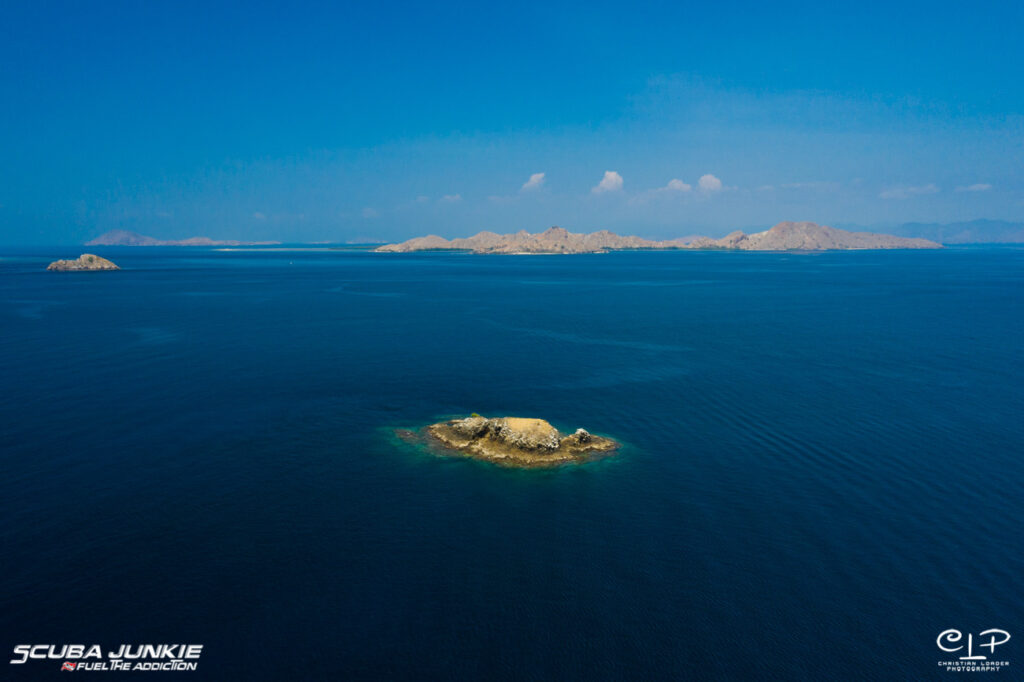
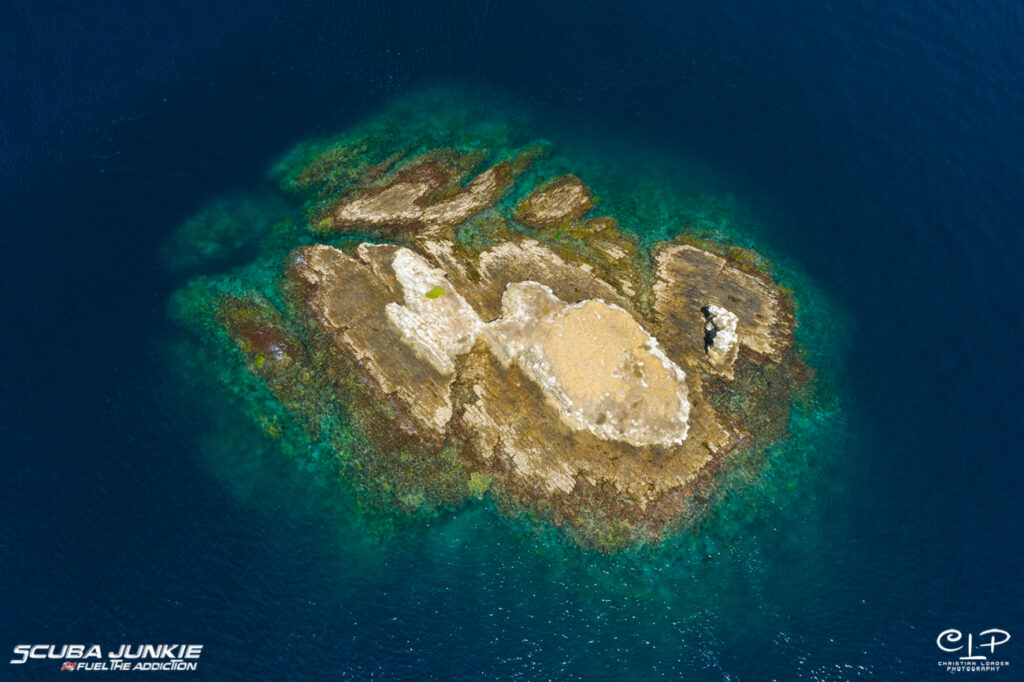
Batu Bolong means “Hollow Rock” in Bahasa Indonesian. It gets it name from the iconic arch on the western edge of the rock that has a large hole in the middle of it. Batu Bolong is regularly voted one of the world’s best dive sites – and with great reason too! This small rock protruding from the depths of the Lintah Strait doesn’t look like much from the surface, but once you sink below the surface another world comes to life!
Batu Bolong can be found in Central area of Komodo National Park and sits in the middle of the Lintah Strait between the island of Komodo, to the west, and Tatawa Besar, to the east. The Lintah Strait is a deep channel of water that has ferociously strong currents. The name Lintah means ‘leech’ as in years gone by boat captains would talk of the Strait ‘sucking’ the power out of their vessels as they found their engines to be no match for the powerful currents that run through here.
2. Topography & Depth
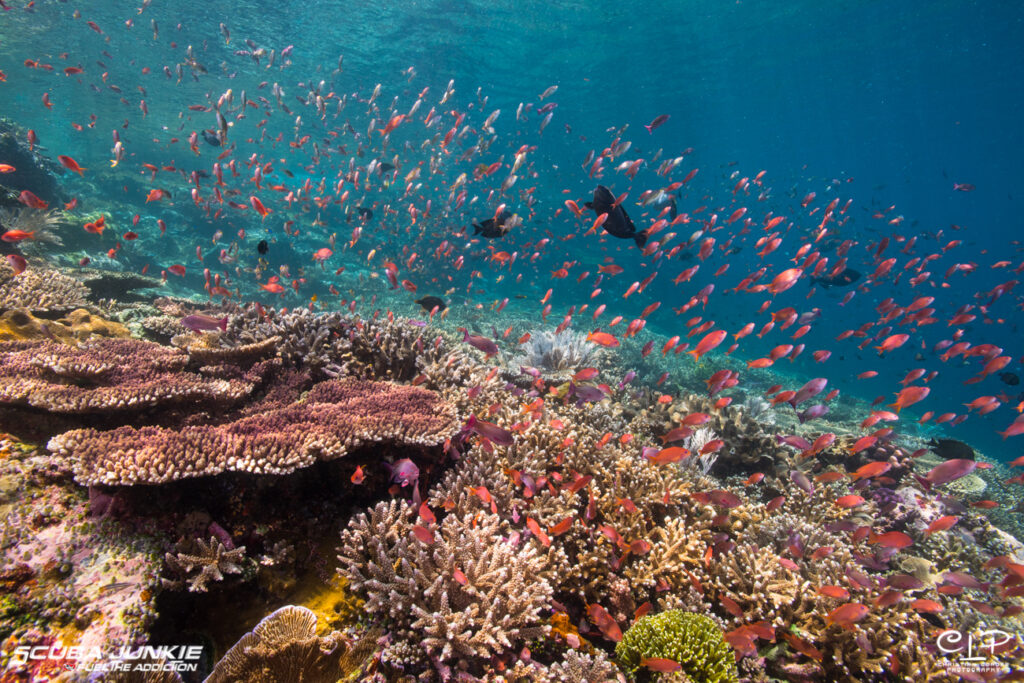
The pinnacle of Batu Bolong is haven for marine life in a body of water that offers depths to 90 + metres. Beneath the waves, Batu Bolong reveals a dramatic underwater landscape – often referred to as “fish soup” (not the edible kind!) due to the abundance of marine life that can be found here.
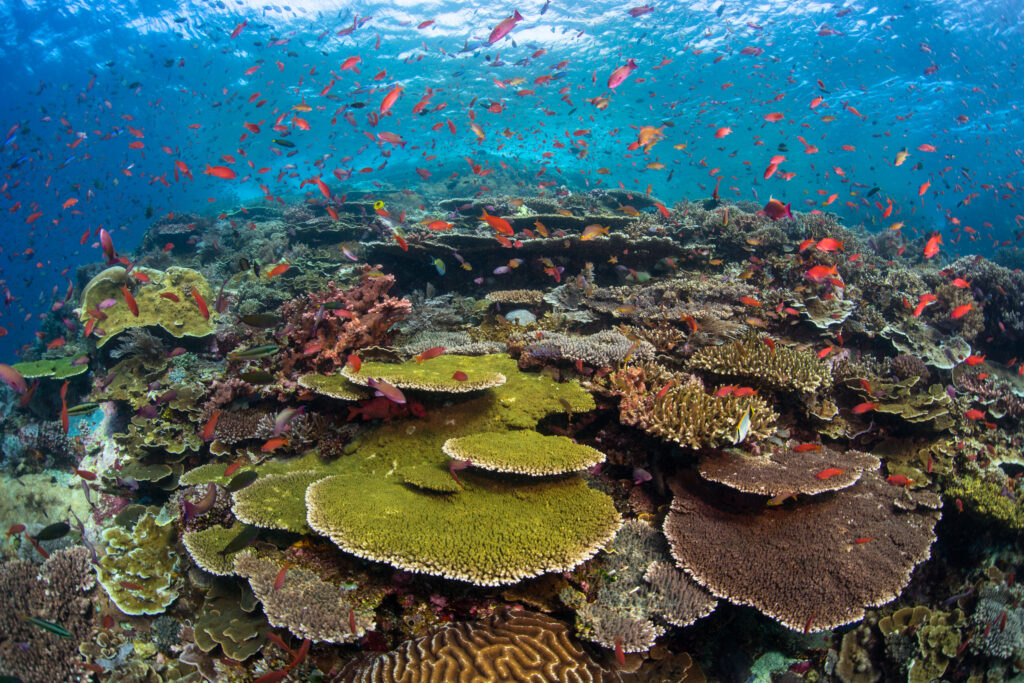
The rocky pinnacle is covered in hard and soft corals that are home to the millions of sea creatures that call this place their home!
3. Currents & Dive Strategy
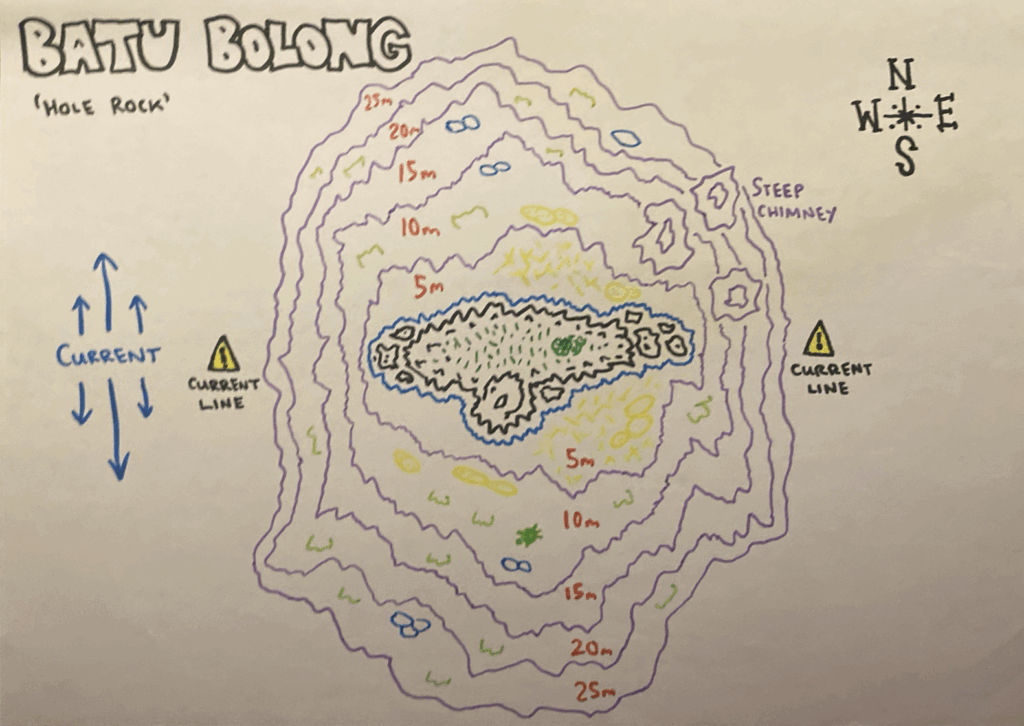
Batu Bolong can also be known as “Current City” for good reason too. As the strong currents hit one side of this pinnacle the waters can loop back around to form eddies. Eddies create the whirlpool affect that can often be seen on the surface. When approaching Batu Bolong the current lines can run for kilometres and can look very daunting to the untrained eye.
We dive this site based on these current lines and what they are doing. As divers we always dive on the lee (protected side) of the pinnacle in between the current lines. The wider the current lines the more space we will have along the pinnacle.
As with all dives, but particularly important at this dive site, we encourage our divers to always stay behind their guides and at the same level as us. We know where the current lines run on this site by understanding the topography, reading the water movement, fish action and turbidity. Along with the muscle memory of having done many many many dives we have done here!!!
We prefer to dive Batu Bolong when we can see strong wide current lines that means we will have more space underwater. We head deep first, usually around the middle of the rock, and then zigzag our way back and forth across the lee side. The pinnacle is much wider underwater than it is at the surface!
Tips to Stay Safe:
4. Marine Life & Biodiversity
Batu Bolong is a living, breathing mosaic of marine life from the very big to the very small:
5. Ideal Conditions & Timing
Final Thoughts
Batu Bolong is not just a dive—it’s a live underwater symphony. Every moment brings something new: swirling schools, predatory drama, and breathtaking coral architecture. It’s complete sensory overload – in the very best possible way.
For those who respect the currents and come prepared, this “underwater city” will reward you with memories that will last a lifetime.
Quick Reference Table
| Feature | Details |
| Location | Lintah Strait, Central Komodo |
| Depth | 5 – 30 m (max up to 90 m) |
| Currents | Moderate to very strong Dive on the lee side |
| Marine Life | Everything!!! |
| Topography | Pinnacle, steep walls, slopes, deep gullies |
| Vis & Temp | Visibility ~ 15–30 m+ Temp ~ 24–29 °C |
| Best Time | April – Nov (peak June – Aug) |
Starting your scuba diving journey is incredibly exciting, but it can also be overwhelming – especially when it comes to picking the right diving gear. With so many options available, it’s easy to get lost in the sea (pun intended!) of brands, models, and different features. The good news is we have you covered! You don’t need to buy everything at once, and making informed choices now will lead to more enjoyable and safer dives down the line. Dive shops will always have rental gear available, so you don’t need to spend fortune in one go and it also works as a good opportunity to try different styles and brands before you buy.
Like most divers though you will eventually want your own diving gear! You can choose what you want & get the size that fits you perfectly. You can get what works for you!
In this guide, we’ll break down the essentials and help give you some tips in choosing the best scuba diving gear for your needs as a new diver. (It’s not all about the colour!!)
1. Prioritise the Basics
When you’re just starting out, focus on buying diving gear that impacts comfort, fit and safety:
Mask
I think every diver would say this is your most important first buy!! A comfortable mask can make or break a dive!
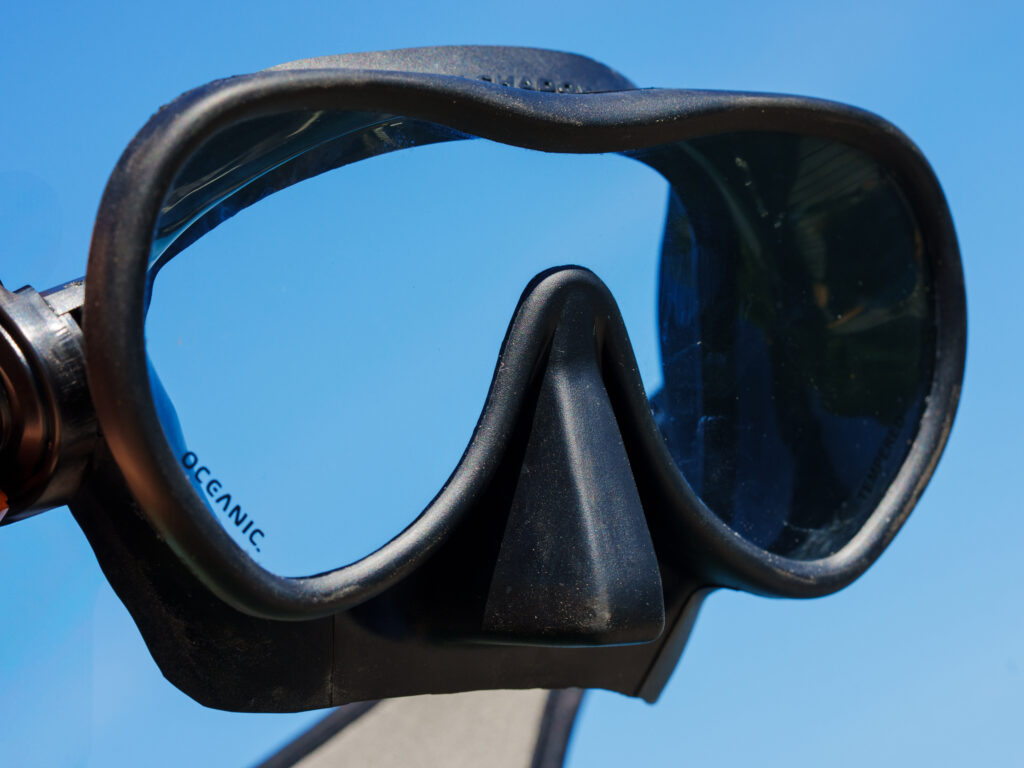
Otherwise perform a ‘fit test’ – place the mask on your face without the strap, inhale gently through your nose, look towards the ground and see if it stays in place. If it feels comfortable and doesn’t fall off it is a good fit for you!
Snorkel: A basic snorkel is fine. Dry or semi-dry snorkels are great for beginners as they prevent water from entering the tube.
Fins
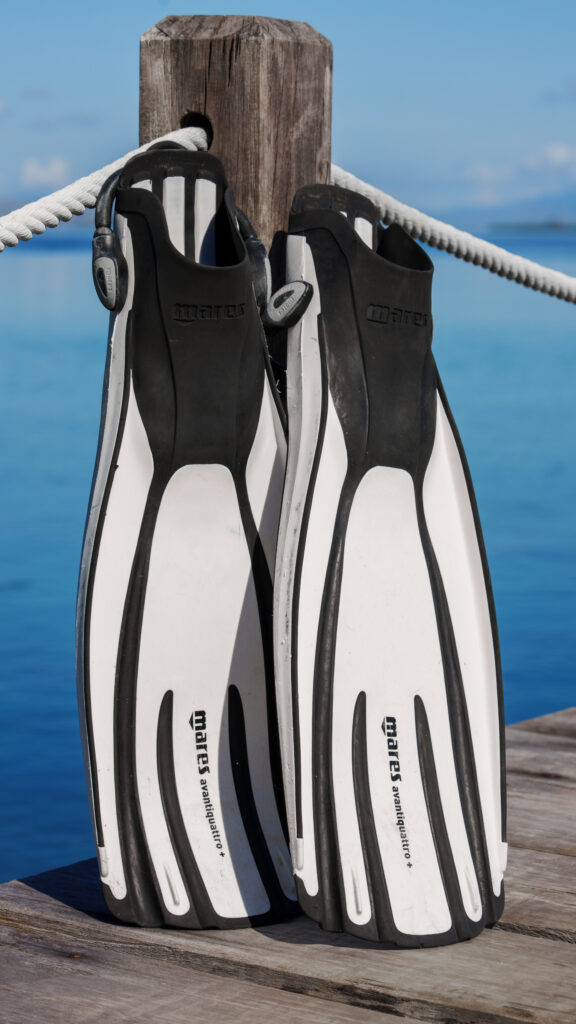
Closed-heel vs. open-heel:
Dive Computer
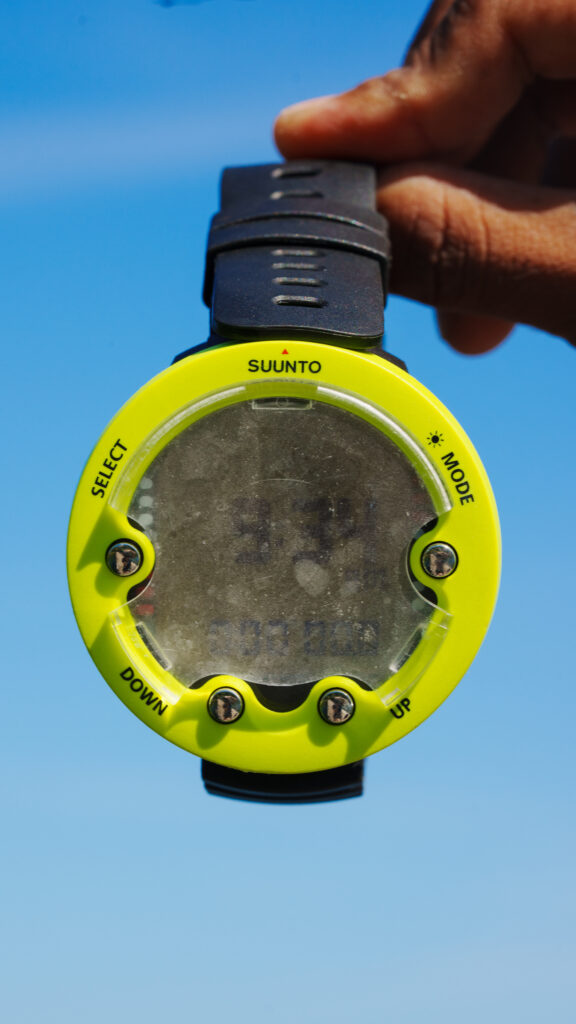
Dive Computers are an essential piece of dive gear that we would always recommend new divers to aim to buy sooner rather than later. When you first learn to dive you are taught all about the basics of diving and the safety elements you need to consider. Diving with a computer is an essential part of this.
Although dive computers (even the entry level styles) can be expensive they are so important if you are someone that sees lots of diving in your future.
Why it’s worth it: Computers track your current depth, your maximum depth, your bottom time, your NDLs (No-decompression limits). They will let you know your ascent rate, when you need to do a safety stop, monitor your surface interval times, no fly times and so much more.
Computers can help keep you safe while diving and are an essential piece of diving gear.
Like with everything some models are more affordable than others and will cover all you need when starting out. Suunto Zoop & Mares Puck Models are popular choices along with other great brands such as Garmin & Shearwater.
2. Invest in Your Comfort and Safety
Temperature controlling diving gear
Buoyancy Control Device (BCD)
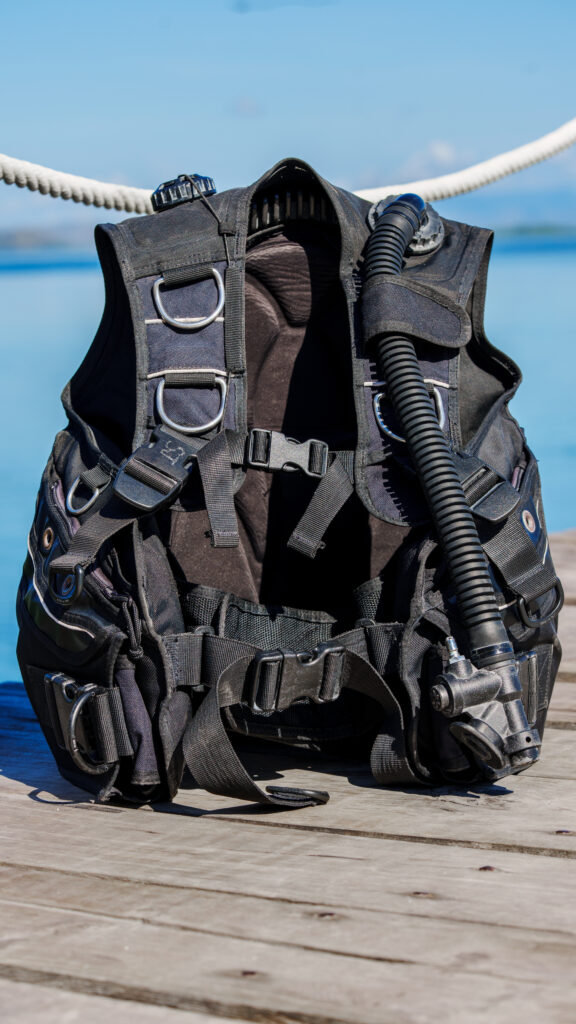
Regulators
3. Consider Your Diving Style and Future Goals
4. Don’t Forget These Extras
Surface Marker Buoy (SMB) & Reel
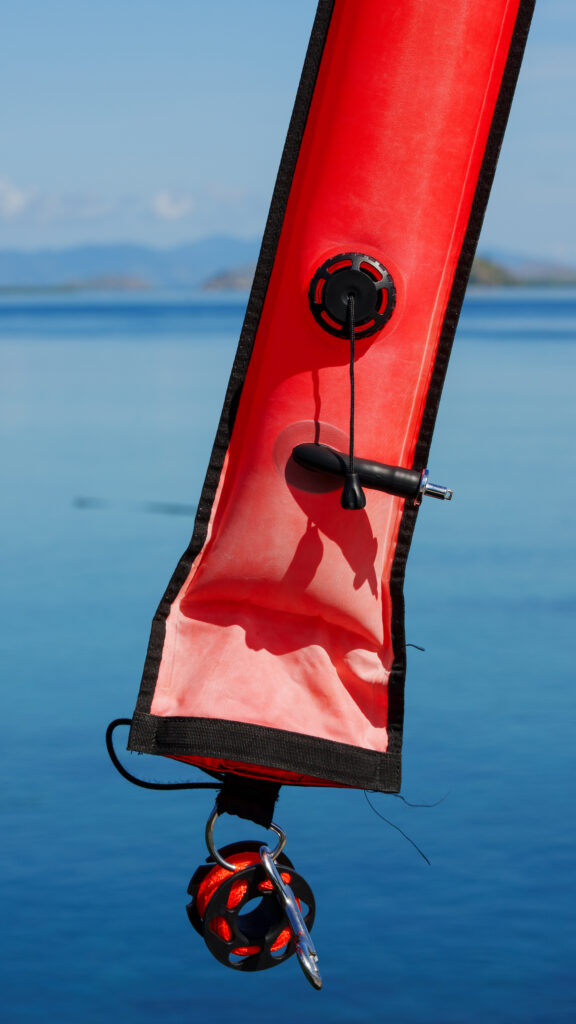
Pointy stick / Tang Banger
Other Useful Items
5. Try Before You Buy (When Possible)
Many dive shops allow you to rent or test gear before purchasing. Take advantage of this! Real-world experience with diving gear will tell you more than specs and someone’s opinion ever will.
6. Stick with Reputable Brands and Local Shops
While online deals can be tempting, nothing beats the guidance, service, and warranty support of a local dive shop where you can see, feel and try out the different diving gear in real life. Brands like Aqua Lung, Scubapro, Mares, Cressi, Apeks have solid reputations and wide availability of parts and servicing across most corners of the globe.
Final Thoughts
Choosing scuba diving gear is quite personal – what works for one diver might not work for another. Start with the essentials, focus on safety, fit and comfort. Build your diving gear slowly so you can choose what you want and need rather than impulse buying and regretting it later.
The right diving gear won’t just make diving more fun – it will make you safer and help you become a more confident diver.
If you would like any advice about diving gear or want to find out what we have for sale at our office and resort, please do drop us an email. We have you covered!
Whether you’re just starting out or have a quite a few dives under your belt, mastering buoyancy is one of the most valuable skills you can develop as a scuba diver. Not only does good control make diving more enjoyable, it also helps protect the marine environment, conserve air, and reduce fatigue underwater.
Have you ever envied your dive guide underwater?! Watched them glide along effortlessly, hold position while staring at the reef, looking like they are doing minimum effort while you follow along behind.
“How do I improve my buoyancy?” is a very commonly asked question so we thought we would share some tips. In this post, we’ll break down what buoyancy is, why it is so important for every diver to focus on and how to improve your skills to help you become a better diver.
What Is Buoyancy in Scuba Diving?
This is the force that allows you to float, sink, or hover underwater. In the simplest terms it is the balance between your weight and the amount of water you displace.
There are three types of buoyancy:
Achieving neutral buoyancy means you’re not fighting gravity or the surface – you’re simply suspended in water, gliding with ease and requiring minimum effort to hold your position.
Why It Matters
Tips to Improve Control
1. Fine-Tune Your Weighting
Many divers are over-weighted, especially beginners. Start by doing a buoyancy check at the surface with an empty BCD and half-full tank. You should float at eye level while holding a normal breath. When you exhale, you should slowly sink. You are taught this on your Open Water Course, but many people forget to do it after this!
✔️ Tip: Use your logbook to record how much weight you used in different environments and different set-ups. For example freshwater or salt water, a 5mm long wetsuit or shorts and a rashy and so on!
2. Practice Proper Breathing
Your lungs are a natural buoyancy control device. With each breath your body will move. A deep breath makes you rise slightly; a long exhale helps you descend. It is important to remember that the reaction of your position will be delayed so when you breathe in it will take a second before you start to raise up and the same when you exhale it will take a second for your position to lower again.
✔️ Tip: Try “breathing” – practice hovering just by adjusting your breath. Be patient. Learn the timing and be able to know how long the delay is between your breathing and your positioning.
3. Master Your Trim
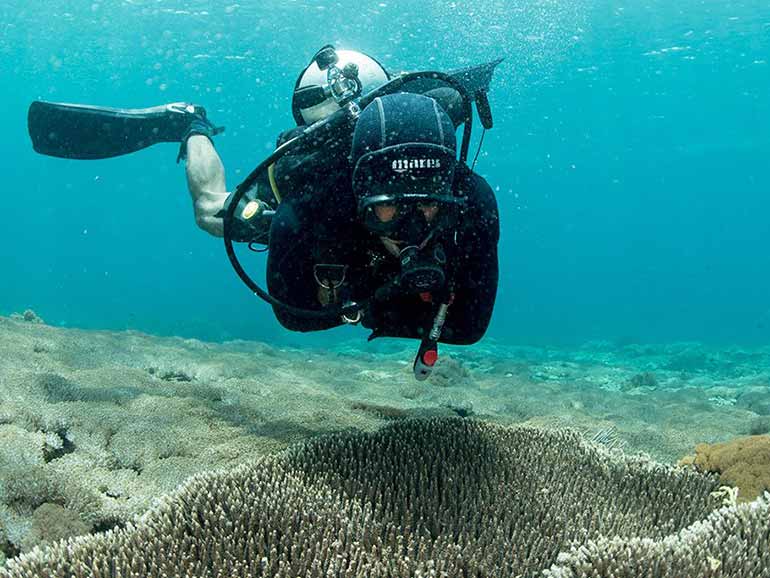
Trim refers to how your body is positioned underwater. Ideally, you want to be horizontal, like a torpedo. This makes you more streamlined and in control. Make sure your fins are up behind you and not dropping below. Bend your knees. Cross or hold your arms. Look ahead! Make sure your gear is stowed so nothing is dangling below you.
✔️ Tip: Make sure your BCD is securely fitted and that your weight-belt (if using the traditional belt is tight to your body). Adjust your weights so they are equal around your body. Try them in different places – at the back – the sides – the front. Figure out what works for you.
4. Use Your BCD Sparingly
Your BCD isn’t a lift bag – it’s there to make small adjustments. Avoid inflating/deflating too much. Use short, controlled bursts of air. Remember the delay. Be patient. Note the change in your position. Add or release more if needed. If you watch your guides they rarely use their BCD after the initial descent under the surface. Experienced divers will rely solely on their breathing to maintain neutral buoyancy and will avoid using their BCD. Fine tuning your buoyancy will stem from your improved breath control and using your BCD less!
✔️ Tip: Make adjustments slowly and wait a few seconds to feel the change.
5. Take a PPB Course
PADI’s Peak Performance Buoyancy (PPB) course is a game-changer. You’ll get real-time feedback on your technique and have a chance to practice in a controlled environment. Here we encourage all of our Advanced Open Water Course students to start out with PPB. We also offer the PPB Speciality Course. This is a great course that will really help you improve your skill underwater. It is also a lot of fun!!
6. Dive, Dive, Dive
There’s no substitute for experience. The more you dive, the better your body awareness and buoyancy control will become. For many the change is noticeable over time, but for sure the more attention you can pay in the beginning while you are diving the more quickly you will see improvements!
✔️ Tip: On every dive, practice your breathing, focus on your position, be aware of where you are, try to be still. All of these things can be done while you are enjoying your dive!!
Common Mistakes to Avoid
Final Thoughts
Buoyancy isn’t something you master overnight, but every dive is an opportunity to improve. With some patience, awareness, and practice, you’ll find yourself gliding through the water like a pro — conserving air, protecting reefs, and enjoying the true freedom of diving.
Diving in currents can feel intimidating for beginner scuba divers — and for good reason. Currents can change the pace, direction, and difficulty of a dive in ways that demand respect and preparation. But with the right techniques and mindset, diving in currents can also be one of the most exhilarating and rewarding underwater experiences. In our previous blog we talked about whether it it possible to Dive Komodo as a beginner. From that we had a lot of questions for more tips on what to do. So here are some extra tips for Diving in Currents as a newer diver.
1. Know Before You Go
Before the dive, ask your dive guide about the expected current conditions. Is it a drift dive? Will there be a down current, could there be up current? Knowing what to expect helps you mentally prepare for the dive and reduce the risk of surprises underwater! It can also help you to choose the right equipment and ensure the right kind of exposure protection. Pay close attention to the briefing as our Dive Crew will give you lots of tips during this.
2. Streamline Your Gear
Currents love to grab anything that sticks out or hangs loosely. Minimize drag by securing gauges, hoses, and accessories close to your body. Make sure straps are tight and everything feels secure. A streamlined profile reduces resistance. This helps to conserve energy and can also improve air consumption.
3. Use the Right Entry Technique
If it’s a strong current, your entry needs to be quick and controlled. Giant strides should be done promptly, and you should descend immediately with your group. Don’t linger on the surface, where the current is usually strongest. Our Guides will always check that everyone is fully kitted up, buddy checked and ready to go. They will give the ‘OK’ and jump into the water. Once they are in the divers need to jump in quick succession. Once everyone is in there will be a quick ok and we will all descend to see the magic below the surface!
4. Descend Quickly and Calmly
The faster you get to depth, the more stable your dive will feel. ALWAYS follow your guide. Equalise early and often. As soon as you start to descend remember to equalise – gently and often. Never force equalisation and don’t forget to do it right from the beginning of your descent. Do not wait until you feel pain or discomfort.
5. Stay Close to the Reef or Bottom
Currents are generally slower near the bottom and closer to the reef. By staying low and close to the reef (without touching it!), you can find natural protection and avoid being swept away. Hiding behind bommies or rocks can aso offer added protection.
6. Use Proper Kicking Technique
Use slow, deliberate frog kicks or modified flutter kicks to conserve energy. Don’t fight the current — instead, work with it. If it’s a drift dive, let the current carry you and enjoy the ride! Watch your guide, they won’t kick very much on a drift dive! The more you kick the faster you will go. Get streamlined. Stay controlled and this will help you all to move at the same speed as everyone else in your group.
7. Keep an Eye on Your Air and Depth
Fighting a current or swimming against it can cause you to use more air. Monitor your air consumption closely and stay within your limits. Inform your buddy or guide early if you’re using air faster than expected. This applies to every dive, but especially when there are stronger currents.
8. Use Visual References
When it feels like the water is moving around you, it’s easy to become disoriented. Keep your eyes on the reef, sand, or nearby divers to maintain a better sense of direction and depth. This will also help you to feel more in control.
9. Practice Good Buoyancy
Neutral buoyancy is your best friend when diving in currents. Overweighting makes you work harder, while being too light may cause you to drift unpredictably. Great bouyancy will also result in improved air consumption. It will make diving in all conditions easier and result in more enjoyable diving not just when you are diving in currents.
10. Consider additional training such as the PADI Drift Diver Speciality Course or the PADI Peak Performance Bouyancy Speciality Course
These courses is a valuable way to learn more about diving in currents, improving your skills and awareness underwater, perfecting your bouyancy and positioning as well as much more. We offer both of these courses here in Komodo. eLearning is sent to you in advance and the practical elements are taught here at dive sites in the Komodo National Park.
You can also speak with our Dive Crew. Ask for tips and tricks. Watch what they do underwater. Watch their positions and try to replicate it!!
Bonus Tips:
Stay Calm and Breathe
Diving in Currents can be surprising, especially for the first time, but panic is your biggest enemy. If you feel overwhelmed, stop, take deep breaths, and signal your buddy. Trust your training and take things one kick at a time. Soon diving in currents will feel natural and easy.
Consider your Gear
Consider purchasing an SMB (Surface Marker Buoy) and learn how to use it. We give all of our guests SMBS with their dive gear, but we would always encourage you to have your own. If you don’t know how to use an SMB with a reel, then chat to our Dive Crew and they will be happy to show you.
Final Thoughts
Diving in currents for the first time does not have to be a scary experience. Do your research. Ask questions. Be prepared. Currents are a natural part of the ocean’s rhythm — and learning to dive in them opens up incredible dive sites around the world. With good preparation, strong buddy communication, and a calm approach, you’ll find yourself gliding with the current instead of fighting it.
Stay safe, stay aware, and enjoy the ride!
Have you got any tips questions about diving in currents? Contact us now and we can help answer any questions you may have.
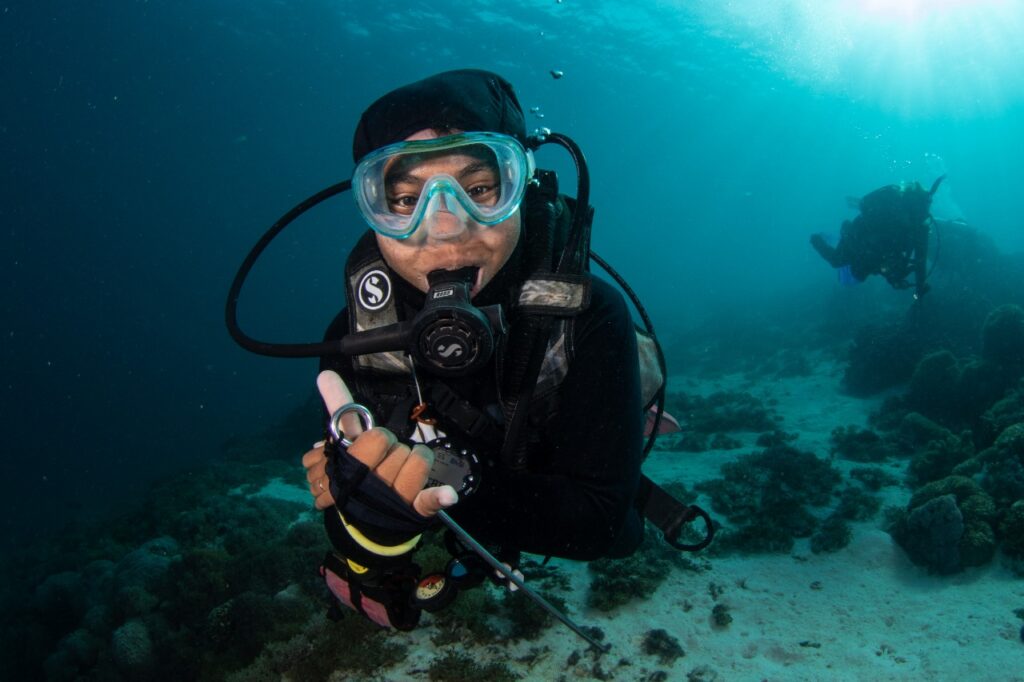
Dive Komodo as a beginner??? Is it ok? This is a question many people ask us when considering a diving holiday to Komodo. A very fair question given the reputation that Komodo has! We welcome divers of all levels here at Scuba Junkie and to dive Komodo does not require hundreds of dives as many are led to believe.
We teach PADI courses here from DSD all the way through to Divemaster. If you can learn to dive here in Komodo then you can come and fun dive Komodo just as easily!! There are so many dive sites in Komodo that each and everyone offers something different to every one. Not just in terms of what you can see, but also the conditions that you might expect to get when in the water.
Komodo National Park offers world class diving on stunningly beautiful coral reefs with the chance to see a huge array of megafauna, fish life and macro treasures on almost a daily basis. What makes this area so incredibly healthy and vibrant is a combination of factors.
Komodo (although a lot more accessible than it used to be) is found between the islands of Flores and Sumbawa where historically there has been minimal boat traffic & human settlements of any great size. The remote location has mean the region has been unimpacted by humans for many years.
More importantly Komodo sits on the shelf of the Indonesian archielpelago between the Pacific and Indian Ocean. The Indonesian Throughflow Current runs right through this area. That coupled with the fact that Trade Winds and currents run in opposite directions here all add to the strong currents that we get in this region. You can read a little more about this here.
The strong currents ensure fresh nutrient rich water is constantly running in and out of the region and continue to keep the area vibrant and healthy for marine life and coral reefs to be able to thrive.
One of the first questions newer divers ask is can I dive Komodo as a beginner? If you have wondered this you are not alone.
Komodo is widely known to have some of the most challenging diving in the world and this can be the case, but every dive is different and the way in which we choose to dive different sites impacts greatly on the experience of our guests underwater. Many of our guests expect to having super strong currents on every single dive, but once you have been here and dived Komodo for yourself you realise that this is not the case!
Scuba Junkie Komodo has been around since 2015!! Our beautiful resort situated on the coast of Flores and overlooking the islands of Komodo National Park has been catering for all levels of divers for 10 years now. We recently just celebrated our 10th anniversary and we pride ourselves on being long standing experts in this region. If you want to dive Komodo who better to dive with than the people who have worked and lived in this region for such a very long time!!
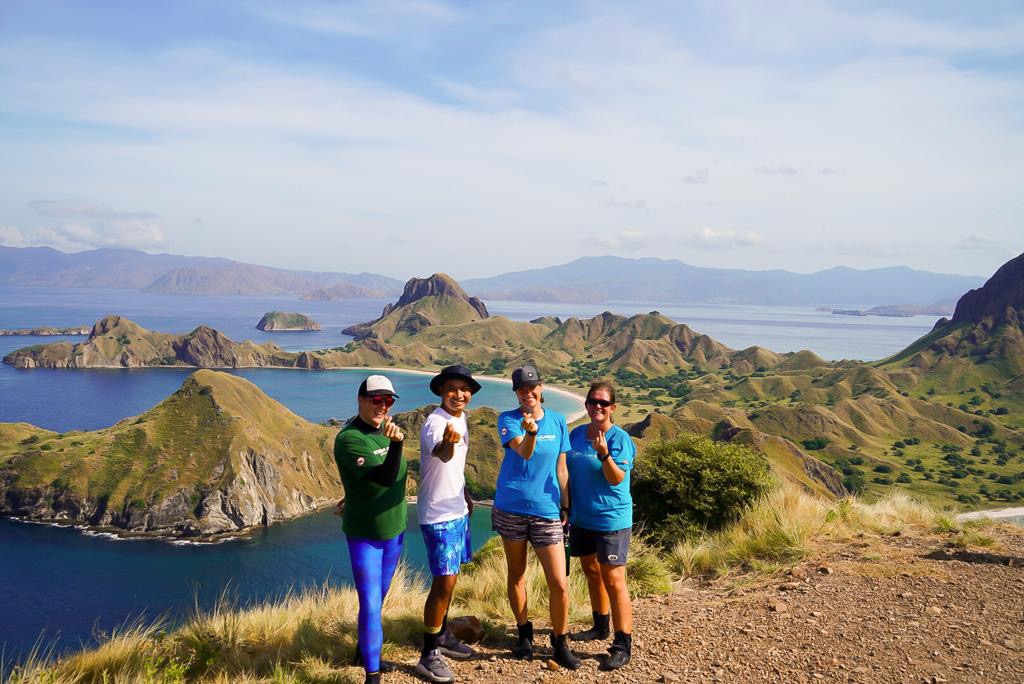
Our Dive Crew know these waters very well and many of our crew have worked for us for years now. The majority of our crew are local to the area and have grown up living on the waters of Komodo National Park. When we say they know the waters like the back of their hand we are not exaggerating! We are very proud of our crew and the knowledge they have about this area.
Some familiar faces such as Yadi, Fauji, Indra and Rahma are all from the region. Yadi & Fauji are both from the island of Komodo, Indra is from Rinca Island and Rahma is from Warloka Village. These 4 Dive Guides, along with others, were born here and have grown up on these waters.
Many of our Dive Crew are Scuba Junkie trained – We offer both Divemaster and Instructor Training across our locations and many of our Dive Guides & PADI Instructors have completed their training with us. This ensure that right from the start our staff are trained to meet the high standards that we expect from all of our Crew.
Here are Scuba Junkie safety is of paramount importance to us and we have an expemplerary safety record. We want to ensure that our guests not only have an unforgettable experience but that you can do so in a safe and enjoyable way! As standard we keep our dive groups small with no more than 4 guests to 1 guide. We also ensure that divers of similar experience levels are grouped together. This allows our guides to have much better control over the safety of our guests and will only add to your enjoyment underwater with having small groups.
Komodo is famous for its currents and it’s one of the main reasons why we have such a wide diversity of healthy marine life here as well as some of the very best coral reefs you will see anywhere in the world! The constant movement of water helps to keep the area nutrient rich and healthy. Some of the dive sites we do in Komodo we deliberately time it so we are jumping in when there is a good strong current, but there are plenty of other sites where we are deliberately diving and timing it in a way to totally avoid the current and for some dive sites there is no current at all.
Dive sites such as The Cauldron / Shotgun and Siaba Kecil are fun to dive with current because that is where the thrill comes from! The adrenaline rush of cruising along a reef and watching the world go by is a feeling like no other! Another famous Komodo dive site is Batu Bolong. Also known for strong currents this pinnacle sits in the middle of the Lintah Strait. Yes the current can be strong, but here we always dive the lee side which means we are diving the side that is protected or hidden from the current.
The way we choose the dive sites depends very much on what the current is doing. We are able to understand what the current will be doing each day as our dive boats are out in the National Park every day of the year so our dive crew & boat crew know what to expect. Anyone who knows Komodo and does dive Komodo on a regular basis will tell you that the currents here are predictable.
Of course nature can surprise us, but it is possible to understand the water flow and current movement to be wellable to predict what will be happening on the individual dive sites. This knowledge and experience of our Dive Crew makes it easy for you to dive Komodo in a safe and enjoyable way without having to worry about what is going to happen.
Things YOU can do if you are feeling nervous to dive Komodo:
As we mentioned we do teach Open Water Courses here in Komodo and we have many guests come to dive with us that have very little diving experience so you are not alone in terms of your experience levels and I can assure you that our dive guides will take excellent care of you!
Komodo is famous for the currents we get here, but as we have said not all dives are crazy, current dives! We will never ask you to dive a site that you do not feel comfortable with. Ultimately it is your choice if you feel ready, but we can assure you that if you choose to come diving with us in Komodo we will take excellent care for you and the time you spend here will give you memories that will last a lifetime!!
To find our more about diving in Komodo and the packages that we offer please get in touch.
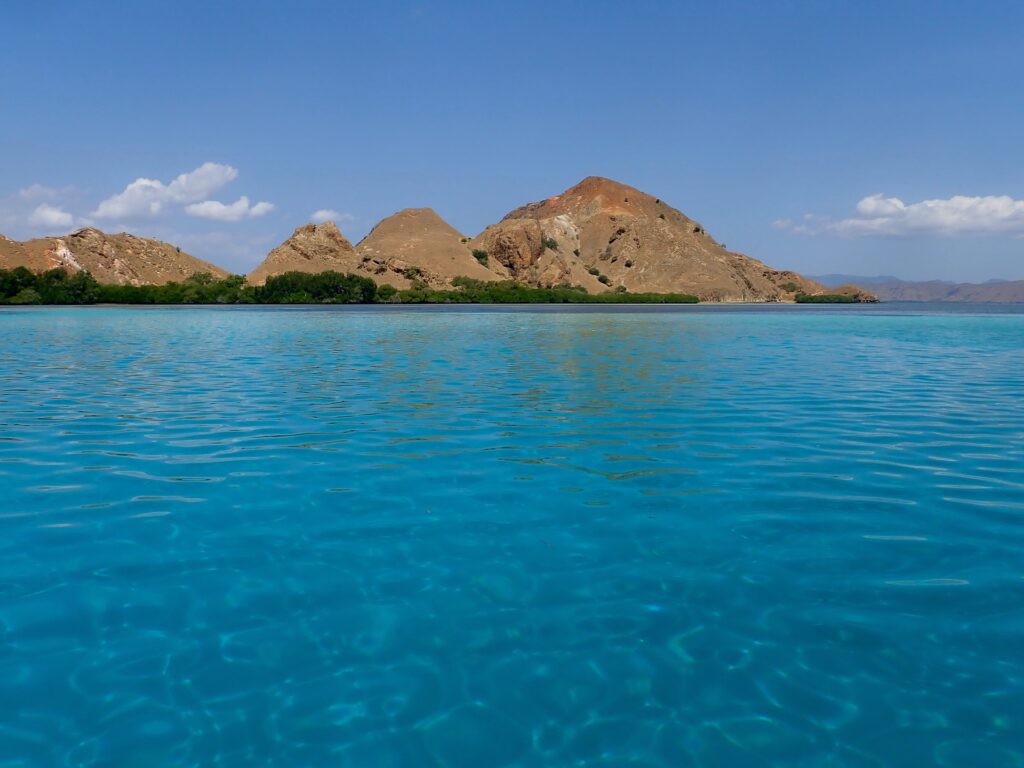
The Blue Ring Octopus is on almost every diver’s bucket list and if it isn’t on yours it should be!!
This small octopus is without doubt a stunning creature to see and many divers choose to go to special places just to see them. So let’s dive in and learn a little more about these incredible animals!
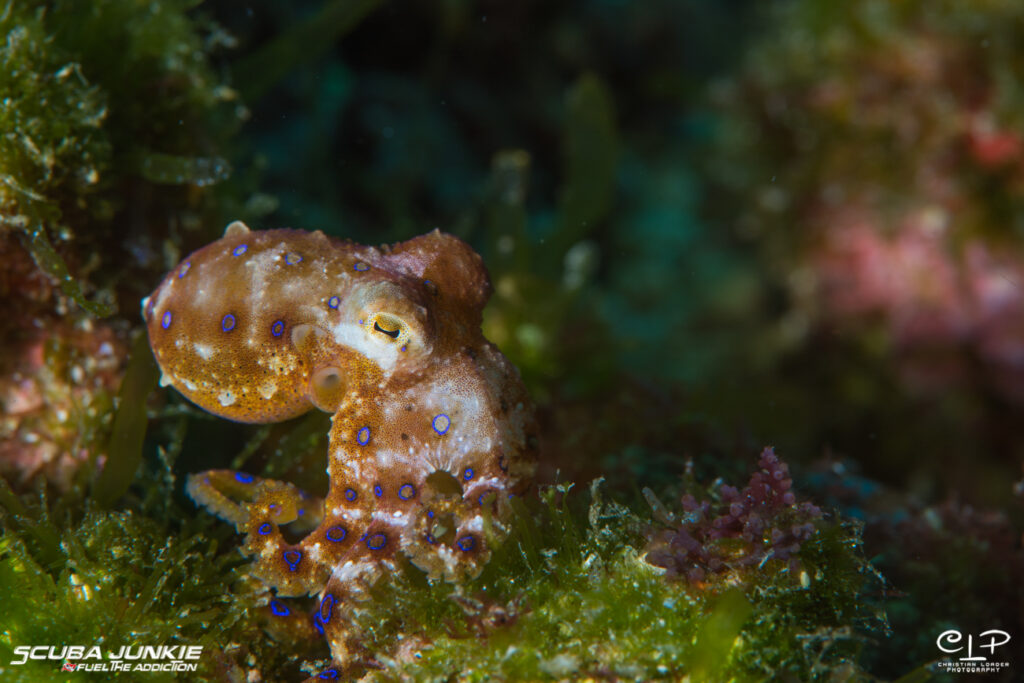
Blue Ring Octopus are part of the genus; Hapalochlaena and actually refer to a group of species rather than a single one.
They are part of the Class Cephalopodea. The name Cephalopod comes from the Greek words ‘kephalos’ for head and ‘podos’ for foot. They that get their name because their limbs are attached to their head!
These small octopus get their name from the iridescent blue rings that cover their body. When they feel under threat these blue rings flash to ward off predators. These blue rings are an example of aposematism, where animals use bright colours to warn off other animals / predators, but unlike other animals that posess this method of defence the rings of the Blue Ring Octopus only light up & flash when they feel under threat. The remainder of the time they are still visible, but just barely. (If you can get close enough for a look!)
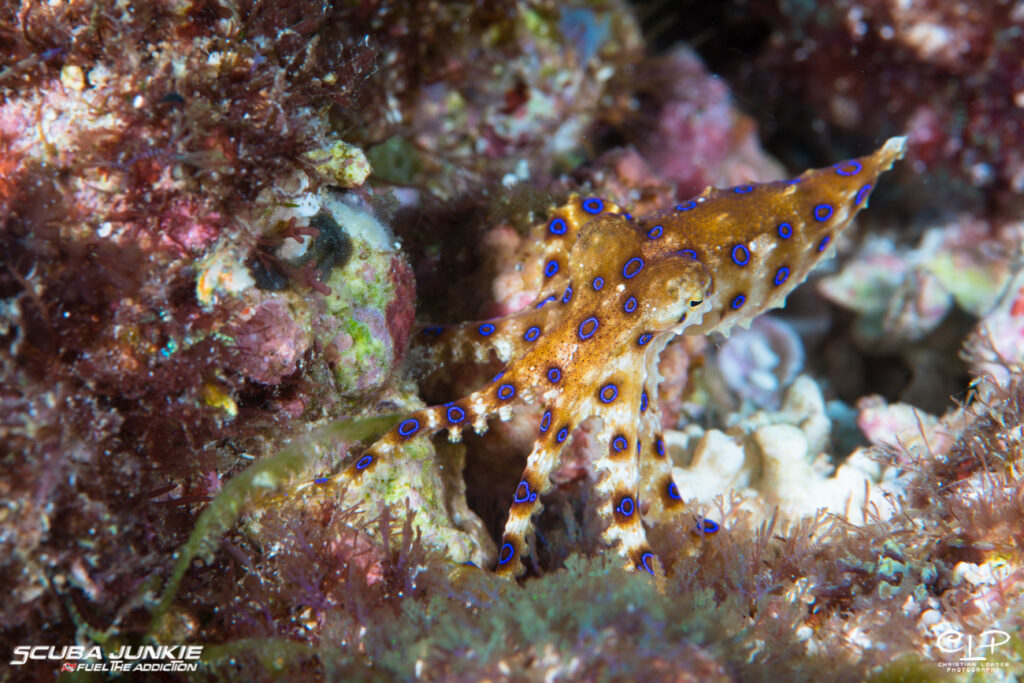
Blue Ring Octopus have been found in the Pacific and Indian Oceans and tend to inhabit rocky or algae areas so are most commonly found on dive sites that we would class as muck-diving or macro sites. Here in Komodo we tend to see Blue Rings on the dive sites of Karang Makassar (or Manta Point), Gindang & Waenilu, but we have also spotted them at Batu Bolong and Shark Point!
Blue Ring Octopus are small so it really does take a keen eye to spot them. They tend to be nocturnal in nature often coming out at night to hunt. They spend a lot of time tucked under algae, or hiding under crevices to avoid being seen by potential predators.
Did you know there is more than just one Blue Ring Octopus?! There is thought to be 10 different species of Blue Ring Octopus, but only 4 have been named.
The Greater Blue-Ringed Octopus (Hapalochlaena Lunulata)
This is the one we see here in Komodo. It is found, not only here in Indonesia but also, in the Philippines, Vanuatu, Solomon Islands and Papua New Guinea. It tends to prefer the shallows can is found up to about 20m deep.
The Southern Blue-Ringed Octopus (Hapalochlaena Maculosa)
This Blue Ring lives in water up to 50 m deep. They have only been seen along the Southern coast of Australia and Tasmania. This Blue Ring is much bigger than the Greater Blue-Ringed Octopus (even though the name would suggest otherwise) as it can be about 22cm long (including the legs). The Greater Blue-Ringed Octopus is about 12cm.
The Blue-Lined Octopus (Hapalochlaena Fasciata)
This one is a little different as it has iridescent lines alone it’s mantle (the back of the head that gives it the octopus shape), but it still has the classic blue rings on its limbs. This octopus is found in Eastern Australia and is about 15cm long.
Hapalochlaena Nierstraszi (No common name)
This species of Blue Ring has only ever been recorded twice. The first time in 1938 in the Andaman Islands and then a second time in 2013 in Southeast India. There is very little know about it.
As I have said this animal gets its name from the iridescent blue rings on its body. These beautifully vibrant rings are not just for show. They are a warning. If the warning is not heeded the Blue Ring Octopus can release tetrodotoxin (TTX) from its salivary glands. TTX is neurotoxic & blocks the transmission of nerve impulses. This stops muscles being able to contract and can have a deadly outcome for the victim. Paralysis will occur as the toxin takes affect and death is due to respiratory failure as the muscles fail to work. This can occur in just a few minutes of exposure.
Some studies state that TTX is 1000 times more toxic than cyanide. Blue Rings can inject this into their victims through a bite. There is no known antidote for TTX.
Thankfully incidents of humans being bitten by Blue Ring Octopus are very rare, with most of these little creatures choosing to move away and hide away from danger rather than aggressively attack!

Blue Ring Octopus feed on smaller animals such as small crabs and shrimp. They are masters of camouflage & ambush. They will hide until their prey is within reach and then the will ‘leap’ out and wrap around them with their limbs. They make a small hole in the shell and inject venom (different to what they use for predators) into the hole causing paralysis of the victim. This allows the octopus to suck out the tasty meal and leave the empy shell or exoskeleton behind.
Mating is quite a sad affair as it results in the death of both the male & the female. Blue Ring Octopus live for about 2 years and like with other octopus they usually reach sexual maturity before 1 year. One of the limbs of the male is specially adapted for mating. The male inserts this into the oviduct of the female to release the sperm. Once this is complete the male dies.
The female will then carry the sperm until she is ready to lay her eggs. When the female has laid her eggs she will guard them until they hatch. This usually takes about 50 days. Once the eggs hatch the female usually dies too as she does not hunt or eat during this time putting all of her energy into protecting her eggs.
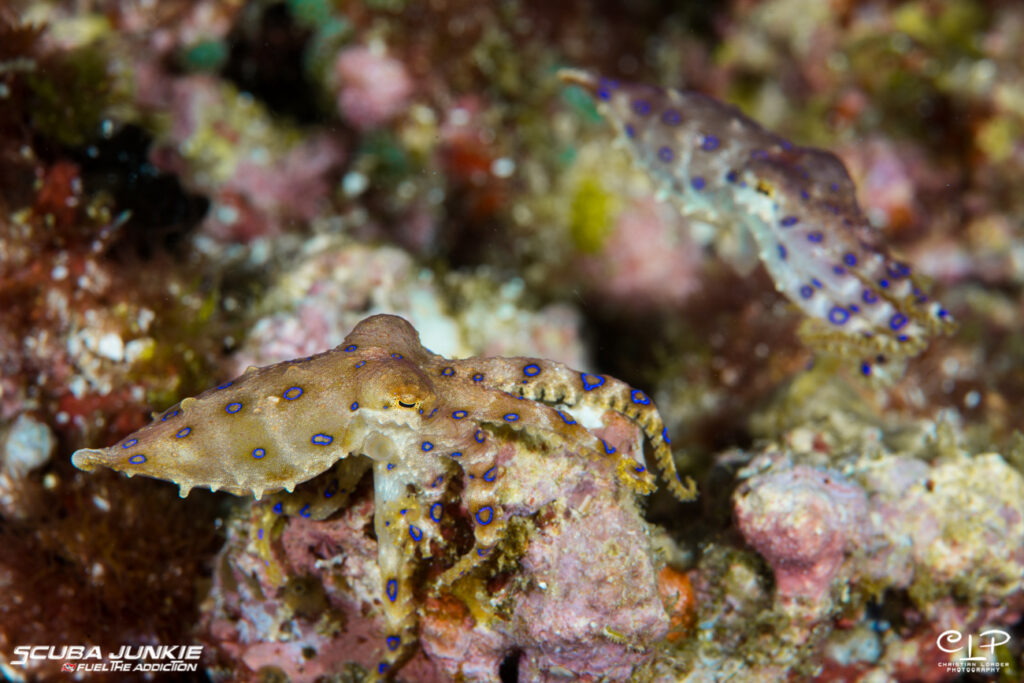
Blue Ring Octopus are incredible creatures and a true sight to behold underwater! So many divers ask to see them on their trips and photographers love to catch them in their full iridescent glory!
Next time you are in Komodo be sure to keep your eyes peeled in the cracks and crevices to see if you can find yourself a beautiful Blue Ring Octopus!
Here is a special tip from one of our favourite Divemasters Indra!
“Untuk cari Blue Ring itu harus di karang yang mati. Di situ tempat yang paling seringkali mereka ada. Seperti di Manta Point dan yang paling sering mereka keluar itu untuk mating dan hunting itu jam 2 sampai sore”
“To find Blue Rings you need to look in the dead coral. This where they are most often found. Like at Manta Point. The most frequent time for them to come out for mating & hunting is from 2pm into the afternoon!”
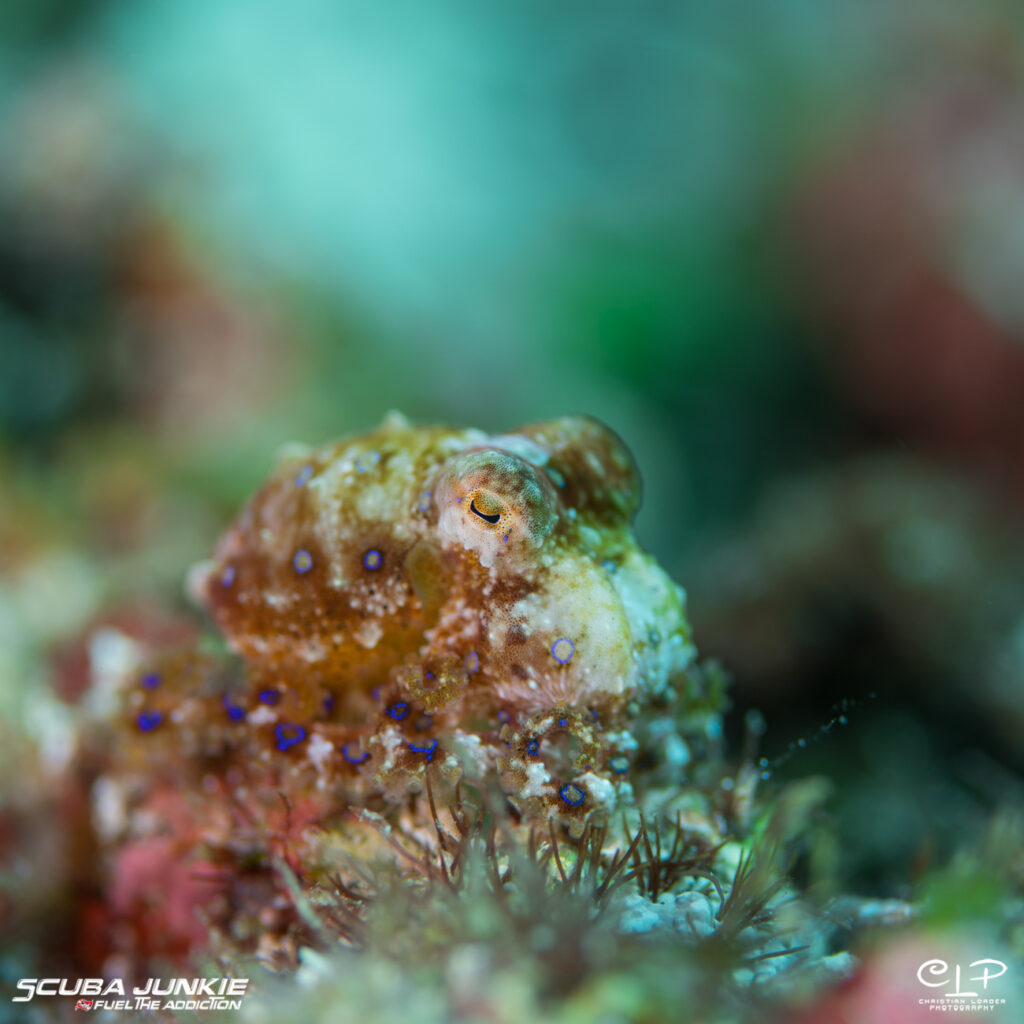

All photos courtesy of Christian Loader
Komodo National Park is famous for our healthy population of reef mantas, the number of reef sharks and turtles and the stunning reef-scapes, but did you know that we also can see the elusive, and almost mythical – Dugong!!!
Over the years we have shared videos and photos of our various encounters and many of our guests ask us how and when is the best time to see these incredible mammals. We will get to that, but first lets learn a little more……..
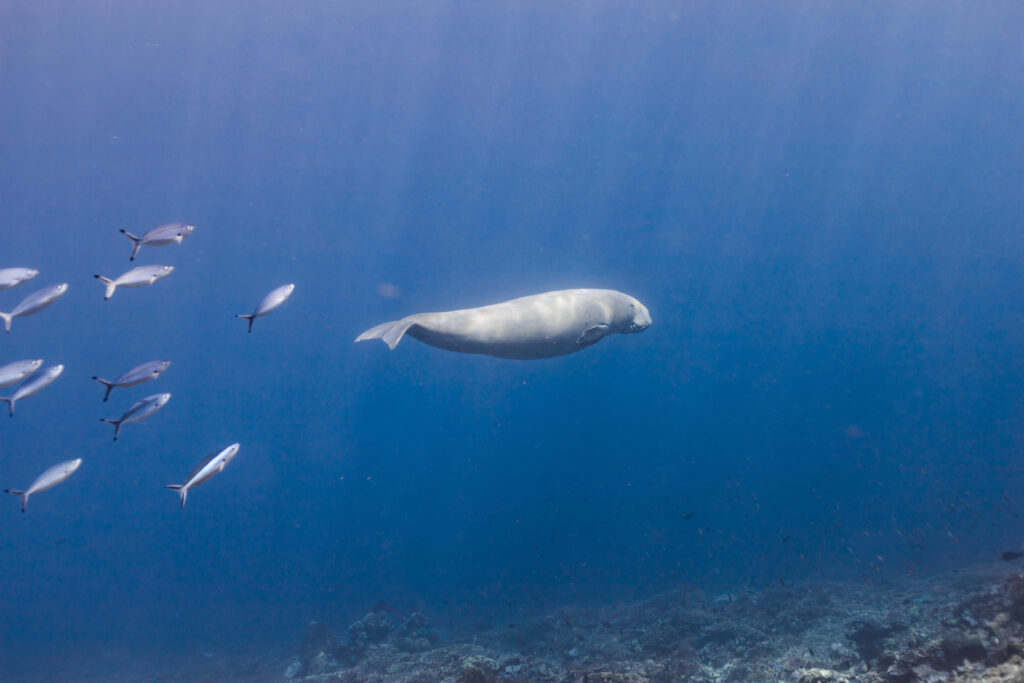
What is a Dugong?
Dugongs are part of the animal order Sirenia. Their scientific name is the ‘Dugong Dugon.’ The Sirenian family is made up of 4 large aquatic mammals – 3 species of manatees and 1 Dugong. The family was first classified in 1776!! There was a 5th species (another Dugong species) that was originally the largest of this family.
The Stellar’s Sea Cow in the Bering Sea was formally identified in 1742, but it was completely wiped out by humans within just 30 years of being scientifically identified.
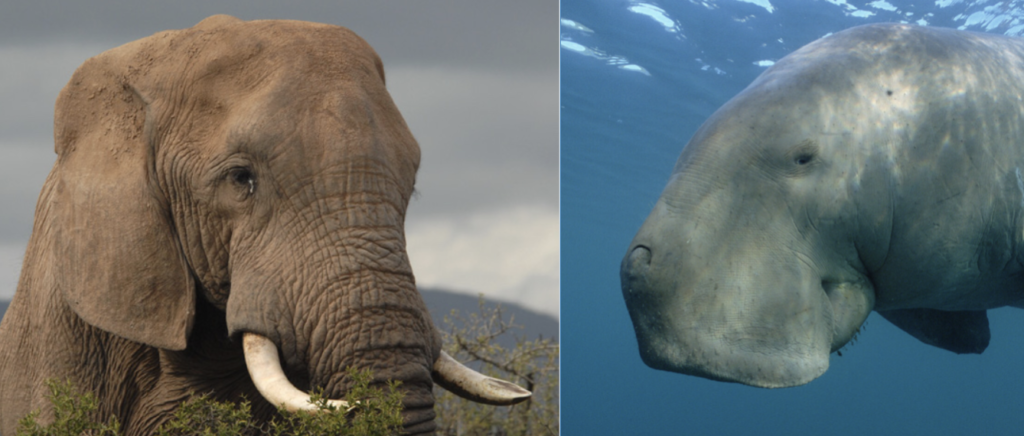
It is believed that the Sirenian order has been around for 40 million years. They are classified in the same groups as Tethytheres which means they are connected to Elephants! Can you see the resemblance?!
A Couple of Fun Facts
Dugongs are usually nomadic and solitary, but can be seen in small groups or ‘herds.’ The largest herd seen at one time estimated to be 450 individuals. They may be solitary but they are very good mothers and stay with the offspring for about the first 18 months of their live.
Reproduction
There is no obvious way to tell the sex of these animals. They take about 10 years to reach sexual maturity and gestation lasts 12 months. They are thought to give birth every 3-7 years and as mentioned will stay with their young for the first year and half of their little life!
When a Dugong gives birth the first thing the mother does is push her baby to the surface so it can take its first breath. The mum will do this a couple of times until the baby gets it’s bearings and can do this itself! New borns already way about 30kg and are about 1 meter long.
Swimming / Movement
These large mammals often appear docile and slow moving, but don’t be fooled as they can swim fast! They have been recorded swimming at speeds of 22km per hour when needed!! We, divers, will not be able to keep up!
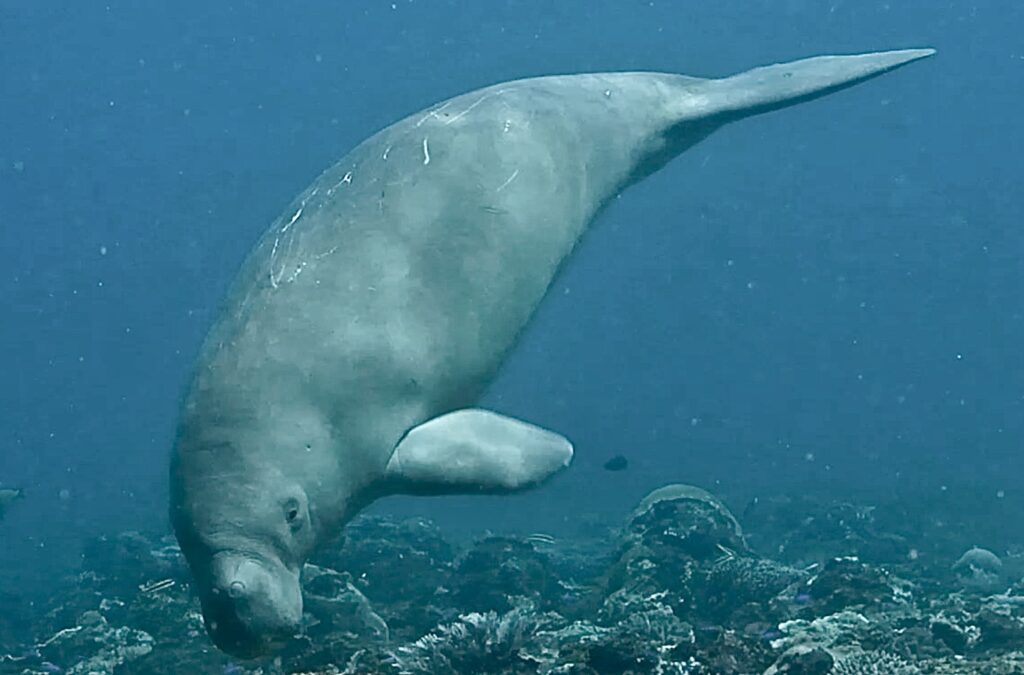
When sleeping these gentle giants go into a trance like state and can look as if they are just ‘hanging’ in the water. Dugongs never fully ‘sleep’, but do actually go into a trance like state where the rest parts of their brain to rest. During this time they will be perfectly still, but as they are not fully asleep they can rouse quickly if any danger is close by.
Seagrass
Dugongs main source of food is seagrass which is commonly found in Indonesian costal waters. Seagrass makes up 0.2% of the world’s oceans. It is found in shallow areas with low turbidity. There are 60 known species of seagrass of which 24 of these are found in the Indo-Pacific region.
Seagrass is known to have an important role in carbon storage, accounting for 10% of the annual carbon sink capacity of the oceans.It has been estimated that a hectare of the most effective seagrass areas exceed more than 10 times the carbon sink capacity of the famous Amazonian forest.
Dugongs in Indonesia
General population numbers in Indonesian waters remain unclear. Estimates range from 1,000 – 10,000 individuals, but we don’t really know as there is little scientific data to note.
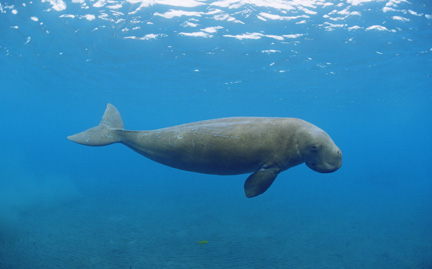
However Dugongs are protected by National Legislation in Indonesia and there has been a National Conservation Strategy specifically running for Dugongs since 2009. Dugongs are commonly sighted in
Nusa Tenggara Timur, Sumatra, Java, Kalimantan, Sulawesi, Bali, Baluku and Papua Barat.
The Dugong & Seagrass Conservation Project covers 8 countries and represents the first coordinated approach toward the conservation of Dugongs & Seagrass. It runs projects in Indonesia, Madagascar, Malaysia, Mozambique, Sri Lanka, Solomon Islands, Timor-Leste and Vanuatu.
Cultural Significance in Indonesia
The Indonesian word for ‘Dugong’ is ‘Duyong’ which actually translates to ‘mermaid’. These creatures are mythical in their history and mermaid stories from sailors are thought to have been inspired by Dugongs who were often seen in shallow waters and are able to turn upright in the water to put their heads out of the water. There are even tales of tribes covering sick Dugongs in cloths to cover their modesty when found in shallow water.
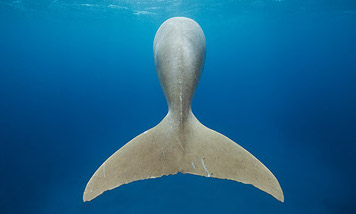
In Indonesia Dugongs are also revered and protected by many communities as they are thought to represent re-incarnated women, but for others their teeth, tusks, teats, and even their tears were considered to have magical properties so they were often used for healing or to produce religious artifacts.
Dugong Etiquette while Diving
We can see Dugongs pretty often in Komodo and although many will tell you, there is not really a ‘season’ for them, but what we do find is that when we spot 1-2 they will tend to hang around and be frequently sighted for a couple of weeks before ‘disappearing’ again! We see Dugongs at a couple of different dive sites here. Just recently they have been seen at The Cauldron (aka Shotgun), Polis Point and Tatawa Kecil. We also have a very special dive site here where we do see them a lot, but we prefer not to share the name so we can protect this area! We will take you if you visit though!!
Dugongs have very poor vision due to tiny ears, but they are acutely sensitive to sound with very narrow sound thresholds. This all just means they do not like sound!
The most important rule when looking for Dugongs is not to make any sound underwater – so we will always brief you that if we are searching it is very important not to use any tank bangers or clickers as there is a high probability this will scare them away!
It’s also important that there are no boat engines nearby as that will also spook them.
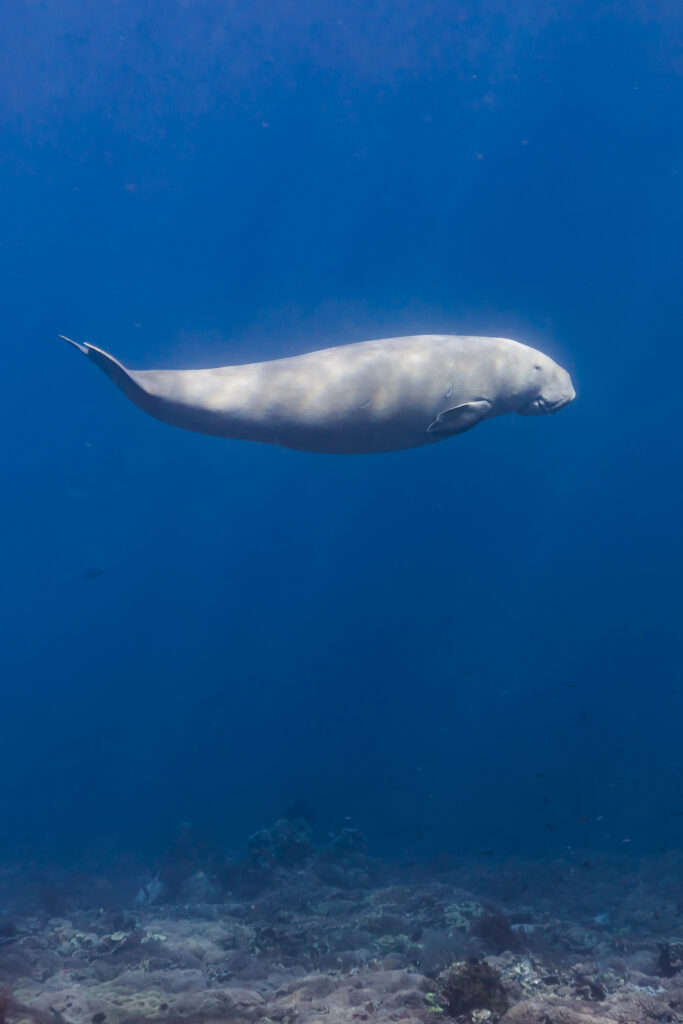
Dugongs are incredibly majestic animals that are on many divers’s bucket list! Here in Komodo we are lucky to be able to spot them on different dive sites and we would love you to come and see them with us!