
Menu
Other locations
Dive Komodo as a beginner??? Is it ok? This is a question many people ask us when considering a diving holiday to Komodo. A very fair question given the reputation that Komodo has! We welcome divers of all levels here at Scuba Junkie and to dive Komodo does not require hundreds of dives as many are led to believe.
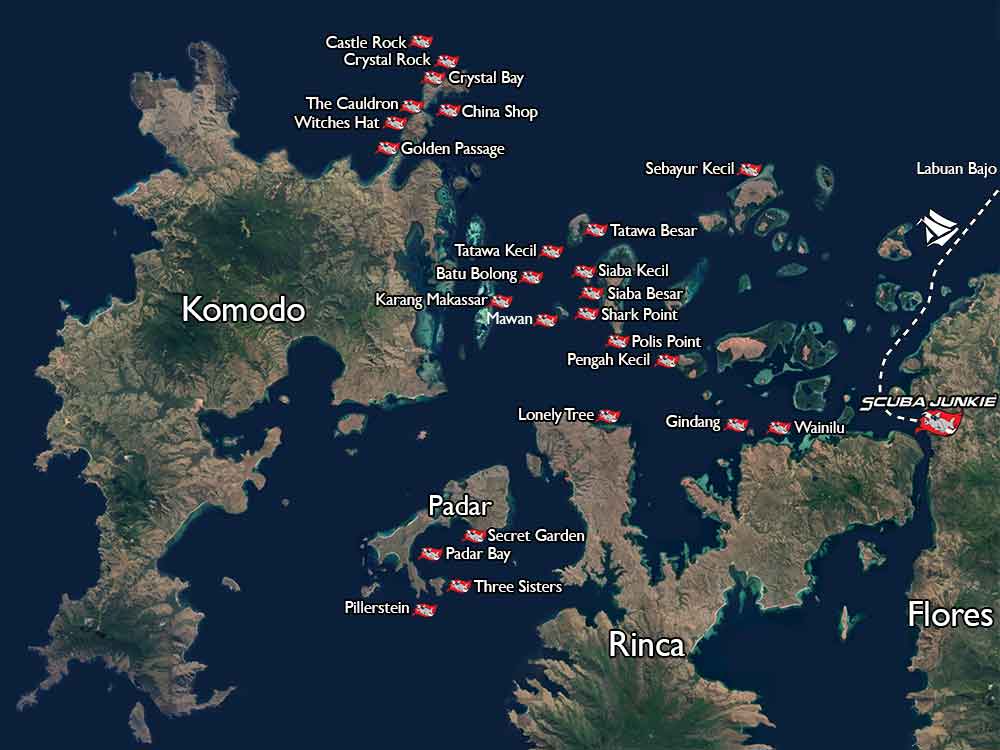
We teach PADI courses here from DSD all the way through to Divemaster. If you can learn to dive here in Komodo then you can come and fun dive Komodo just as easily!! There are so many dive sites in Komodo that each and everyone offers something different to every one. Not just in terms of what you can see, but also the conditions that you might expect to get when in the water.
Komodo National Park offers world class diving on stunningly beautiful coral reefs with the chance to see a huge array of megafauna, fish life and macro treasures on almost a daily basis. What makes this area so incredibly healthy and vibrant is a combination of factors.
Komodo (although a lot more accessible than it used to be) is found between the islands of Flores and Sumbawa where historically there has been minimal boat traffic & human settlements of any great size. The remote location has mean the region has been unimpacted by humans for many years.
More importantly Komodo sits on the shelf of the Indonesian archielpelago between the Pacific and Indian Ocean. The Indonesian Throughflow Current runs right through this area. That coupled with the fact that Trade Winds and currents run in opposite directions here all add to the strong currents that we get in this region. You can read a little more about this here.
The strong currents ensure fresh nutrient rich water is constantly running in and out of the region and continue to keep the area vibrant and healthy for marine life and coral reefs to be able to thrive.
One of the first questions newer divers ask is can I dive Komodo as a beginner? If you have wondered this you are not alone.
Komodo is widely known to have some of the most challenging diving in the world and this can be the case, but every dive is different and the way in which we choose to dive different sites impacts greatly on the experience of our guests underwater. Many of our guests expect to having super strong currents on every single dive, but once you have been here and dived Komodo for yourself you realise that this is not the case!
Scuba Junkie Komodo has been around since 2015!! Our beautiful resort situated on the coast of Flores and overlooking the islands of Komodo National Park has been catering for all levels of divers for 10 years now. We recently just celebrated our 10th anniversary and we pride ourselves on being long standing experts in this region. If you want to dive Komodo who better to dive with than the people who have worked and lived in this region for such a very long time!!
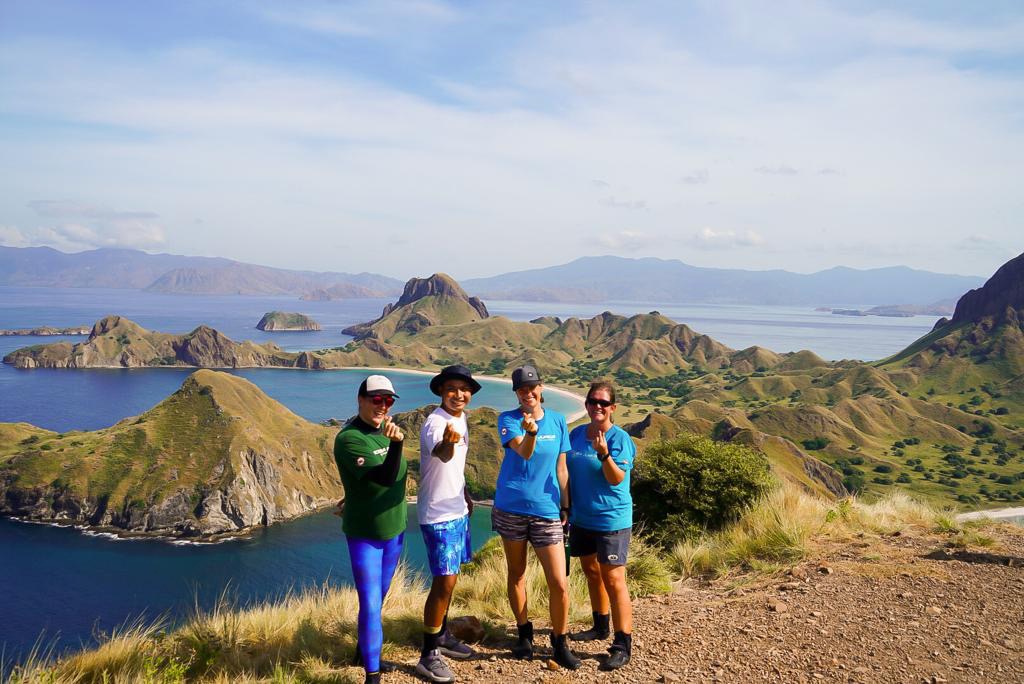
Our Dive Crew know these waters very well and many of our crew have worked for us for years now. The majority of our crew are local to the area and have grown up living on the waters of Komodo National Park. When we say they know the waters like the back of their hand we are not exaggerating! We are very proud of our crew and the knowledge they have about this area.
Some familiar faces such as Yadi, Fauji, Indra and Rahma are all from the region. Yadi & Fauji are both from the island of Komodo, Indra is from Rinca Island and Rahma is from Warloka Village. These 4 Dive Guides, along with others, were born here and have grown up on these waters.
Many of our Dive Crew are Scuba Junkie trained – We offer both Divemaster and Instructor Training across our locations and many of our Dive Guides & PADI Instructors have completed their training with us. This ensure that right from the start our staff are trained to meet the high standards that we expect from all of our Crew.
Here are Scuba Junkie safety is of paramount importance to us and we have an expemplerary safety record. We want to ensure that our guests not only have an unforgettable experience but that you can do so in a safe and enjoyable way! As standard we keep our dive groups small with no more than 4 guests to 1 guide. We also ensure that divers of similar experience levels are grouped together. This allows our guides to have much better control over the safety of our guests and will only add to your enjoyment underwater with having small groups.
Komodo is famous for its currents and it’s one of the main reasons why we have such a wide diversity of healthy marine life here as well as some of the very best coral reefs you will see anywhere in the world! The constant movement of water helps to keep the area nutrient rich and healthy. Some of the dive sites we do in Komodo we deliberately time it so we are jumping in when there is a good strong current, but there are plenty of other sites where we are deliberately diving and timing it in a way to totally avoid the current and for some dive sites there is no current at all.
Dive sites such as The Cauldron / Shotgun and Siaba Kecil are fun to dive with current because that is where the thrill comes from! The adrenaline rush of cruising along a reef and watching the world go by is a feeling like no other! Another famous Komodo dive site is Batu Bolong. Also known for strong currents this pinnacle sits in the middle of the Lintah Strait. Yes the current can be strong, but here we always dive the lee side which means we are diving the side that is protected or hidden from the current.
The way we choose the dive sites depends very much on what the current is doing. We are able to understand what the current will be doing each day as our dive boats are out in the National Park every day of the year so our dive crew & boat crew know what to expect. Anyone who knows Komodo and does dive Komodo on a regular basis will tell you that the currents here are predictable.
Of course nature can surprise us, but it is possible to understand the water flow and current movement to be wellable to predict what will be happening on the individual dive sites. This knowledge and experience of our Dive Crew makes it easy for you to dive Komodo in a safe and enjoyable way without having to worry about what is going to happen.
Things YOU can do if you are feeling nervous to dive Komodo:
As we mentioned we do teach Open Water Courses here in Komodo and we have many guests come to dive with us that have very little diving experience so you are not alone in terms of your experience levels and I can assure you that our dive guides will take excellent care of you!
Komodo is famous for the currents we get here, but as we have said not all dives are crazy, current dives! We will never ask you to dive a site that you do not feel comfortable with. Ultimately it is your choice if you feel ready, but we can assure you that if you choose to come diving with us in Komodo we will take excellent care for you and the time you spend here will give you memories that will last a lifetime!!
To find our more about diving in Komodo and the packages that we offer please get in touch.
The Blue Ring Octopus is on almost every diver’s bucket list and if it isn’t on yours it should be!!
This small octopus is without doubt a stunning creature to see and many divers choose to go to special places just to see them. So let’s dive in and learn a little more about these incredible animals!
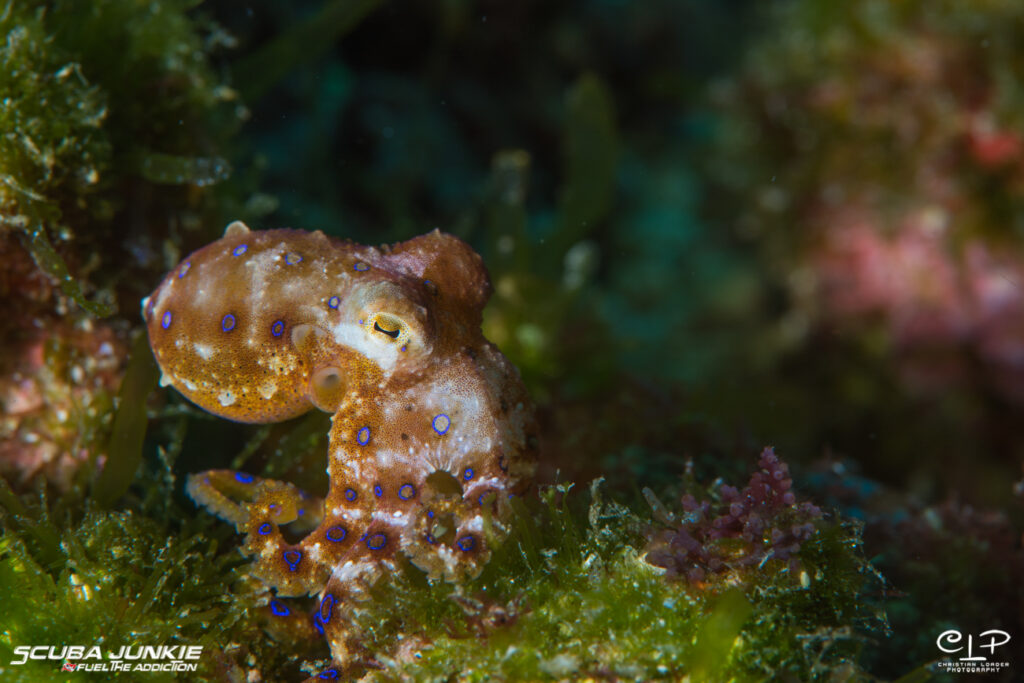
Blue Ring Octopus are part of the genus; Hapalochlaena and actually refer to a group of species rather than a single one.
They are part of the Class Cephalopodea. The name Cephalopod comes from the Greek words ‘kephalos’ for head and ‘podos’ for foot. They that get their name because their limbs are attached to their head!
These small octopus get their name from the iridescent blue rings that cover their body. When they feel under threat these blue rings flash to ward off predators. These blue rings are an example of aposematism, where animals use bright colours to warn off other animals / predators, but unlike other animals that posess this method of defence the rings of the Blue Ring Octopus only light up & flash when they feel under threat. The remainder of the time they are still visible, but just barely. (If you can get close enough for a look!)
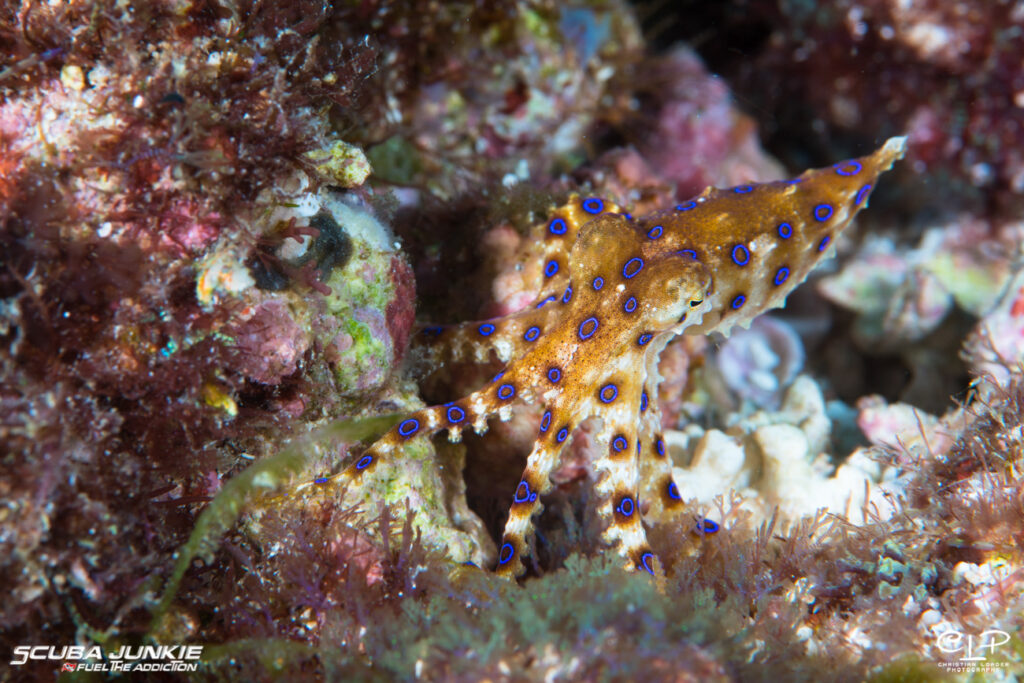
Blue Ring Octopus have been found in the Pacific and Indian Oceans and tend to inhabit rocky or algae areas so are most commonly found on dive sites that we would class as muck-diving or macro sites. Here in Komodo we tend to see Blue Rings on the dive sites of Karang Makassar (or Manta Point), Gindang & Waenilu, but we have also spotted them at Batu Bolong and Shark Point!
Blue Ring Octopus are small so it really does take a keen eye to spot them. They tend to be nocturnal in nature often coming out at night to hunt. They spend a lot of time tucked under algae, or hiding under crevices to avoid being seen by potential predators.
Did you know there is more than just one Blue Ring Octopus?! There is thought to be 10 different species of Blue Ring Octopus, but only 4 have been named.
The Greater Blue-Ringed Octopus (Hapalochlaena Lunulata)
This is the one we see here in Komodo. It is found, not only here in Indonesia but also, in the Philippines, Vanuatu, Solomon Islands and Papua New Guinea. It tends to prefer the shallows can is found up to about 20m deep.
The Southern Blue-Ringed Octopus (Hapalochlaena Maculosa)
This Blue Ring lives in water up to 50 m deep. They have only been seen along the Southern coast of Australia and Tasmania. This Blue Ring is much bigger than the Greater Blue-Ringed Octopus (even though the name would suggest otherwise) as it can be about 22cm long (including the legs). The Greater Blue-Ringed Octopus is about 12cm.
The Blue-Lined Octopus (Hapalochlaena Fasciata)
This one is a little different as it has iridescent lines alone it’s mantle (the back of the head that gives it the octopus shape), but it still has the classic blue rings on its limbs. This octopus is found in Eastern Australia and is about 15cm long.
Hapalochlaena Nierstraszi (No common name)
This species of Blue Ring has only ever been recorded twice. The first time in 1938 in the Andaman Islands and then a second time in 2013 in Southeast India. There is very little know about it.
As I have said this animal gets its name from the iridescent blue rings on its body. These beautifully vibrant rings are not just for show. They are a warning. If the warning is not heeded the Blue Ring Octopus can release tetrodotoxin (TTX) from its salivary glands. TTX is neurotoxic & blocks the transmission of nerve impulses. This stops muscles being able to contract and can have a deadly outcome for the victim. Paralysis will occur as the toxin takes affect and death is due to respiratory failure as the muscles fail to work. This can occur in just a few minutes of exposure.
Some studies state that TTX is 1000 times more toxic than cyanide. Blue Rings can inject this into their victims through a bite. There is no known antidote for TTX.
Thankfully incidents of humans being bitten by Blue Ring Octopus are very rare, with most of these little creatures choosing to move away and hide away from danger rather than aggressively attack!

Blue Ring Octopus feed on smaller animals such as small crabs and shrimp. They are masters of camouflage & ambush. They will hide until their prey is within reach and then the will ‘leap’ out and wrap around them with their limbs. They make a small hole in the shell and inject venom (different to what they use for predators) into the hole causing paralysis of the victim. This allows the octopus to suck out the tasty meal and leave the empy shell or exoskeleton behind.
Mating is quite a sad affair as it results in the death of both the male & the female. Blue Ring Octopus live for about 2 years and like with other octopus they usually reach sexual maturity before 1 year. One of the limbs of the male is specially adapted for mating. The male inserts this into the oviduct of the female to release the sperm. Once this is complete the male dies.
The female will then carry the sperm until she is ready to lay her eggs. When the female has laid her eggs she will guard them until they hatch. This usually takes about 50 days. Once the eggs hatch the female usually dies too as she does not hunt or eat during this time putting all of her energy into protecting her eggs.
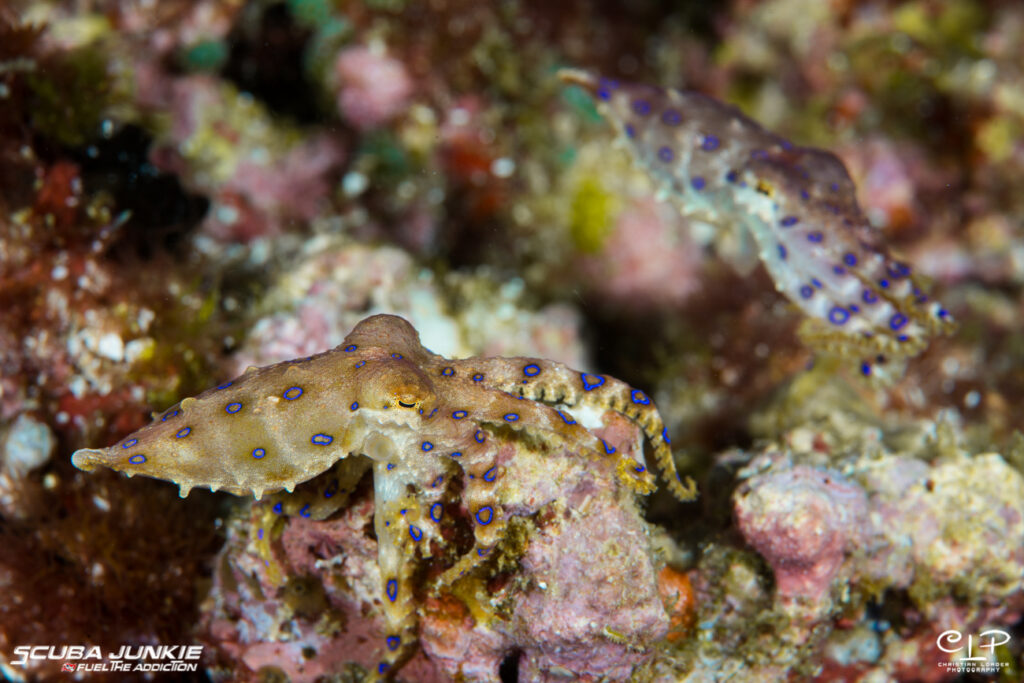
Blue Ring Octopus are incredible creatures and a true sight to behold underwater! So many divers ask to see them on their trips and photographers love to catch them in their full iridescent glory!
Next time you are in Komodo be sure to keep your eyes peeled in the cracks and crevices to see if you can find yourself a beautiful Blue Ring Octopus!
Here is a special tip from one of our favourite Divemasters Indra!
“Untuk cari Blue Ring itu harus di karang yang mati. Di situ tempat yang paling seringkali mereka ada. Seperti di Manta Point dan yang paling sering mereka keluar itu untuk mating dan hunting itu jam 2 sampai sore”
“To find Blue Rings you need to look in the dead coral. This where they are most often found. Like at Manta Point. The most frequent time for them to come out for mating & hunting is from 2pm into the afternoon!”
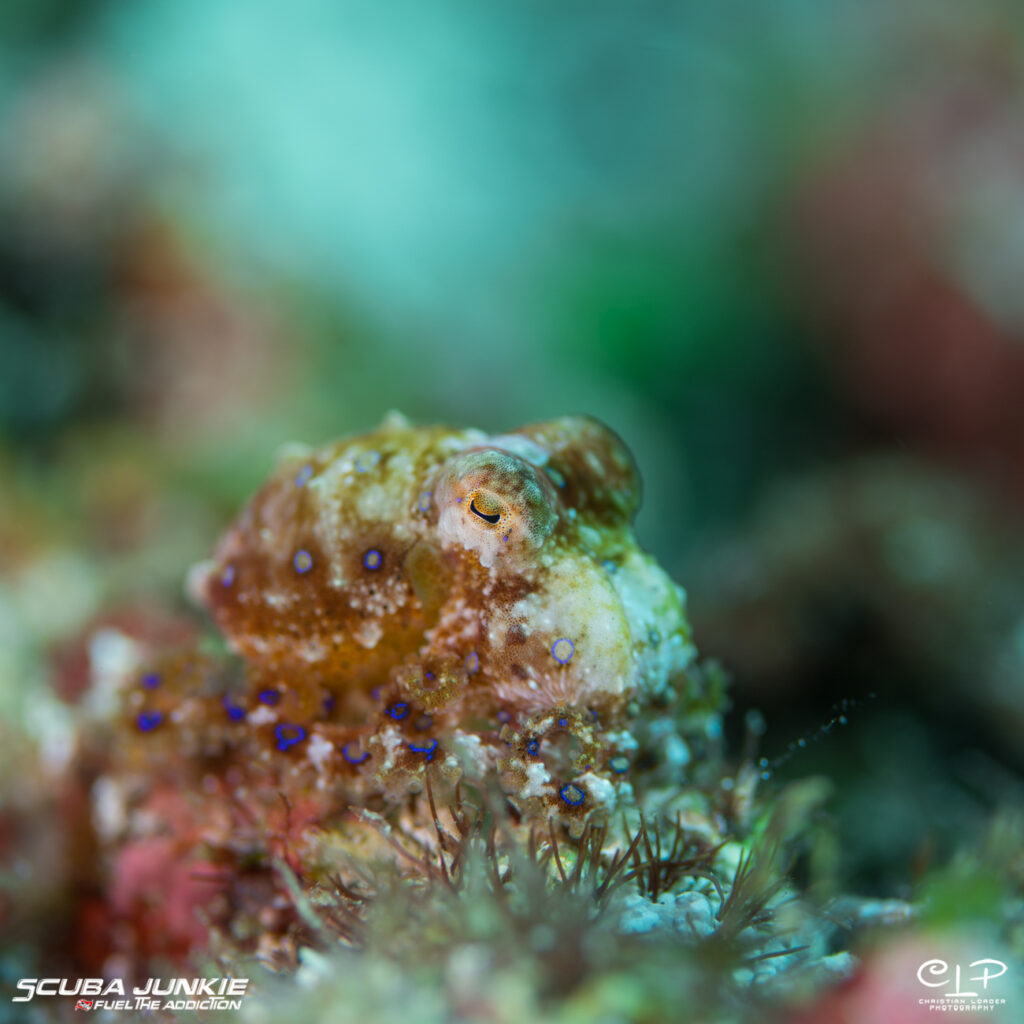

All photos courtesy of Christian Loader
Komodo National Park is famous for our healthy population of reef mantas, the number of reef sharks and turtles and the stunning reef-scapes, but did you know that we also can see the elusive, and almost mythical – Dugong!!!
Over the years we have shared videos and photos of our various encounters and many of our guests ask us how and when is the best time to see these incredible mammals. We will get to that, but first lets learn a little more……..
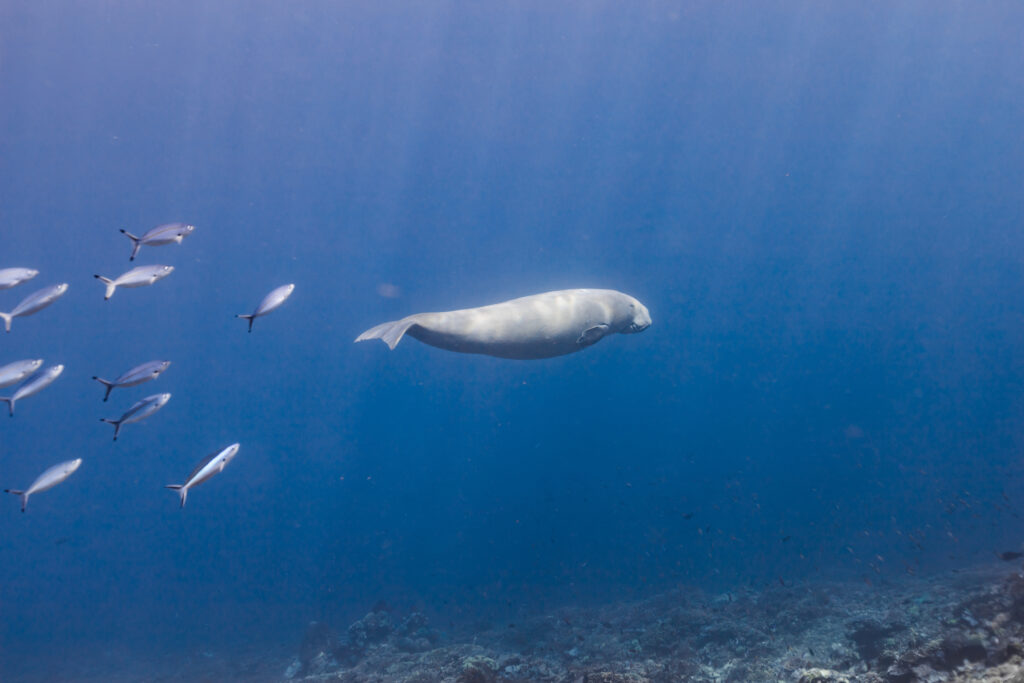
What is a Dugong?
Dugongs are part of the animal order Sirenia. Their scientific name is the ‘Dugong Dugon.’ The Sirenian family is made up of 4 large aquatic mammals – 3 species of manatees and 1 Dugong. The family was first classified in 1776!! There was a 5th species (another Dugong species) that was originally the largest of this family.
The Stellar’s Sea Cow in the Bering Sea was formally identified in 1742, but it was completely wiped out by humans within just 30 years of being scientifically identified.
It is believed that the Sirenian order has been around for 40 million years. They are classified in the same groups as Tethytheres which means they are connected to Elephants! Can you see the resemblance?!
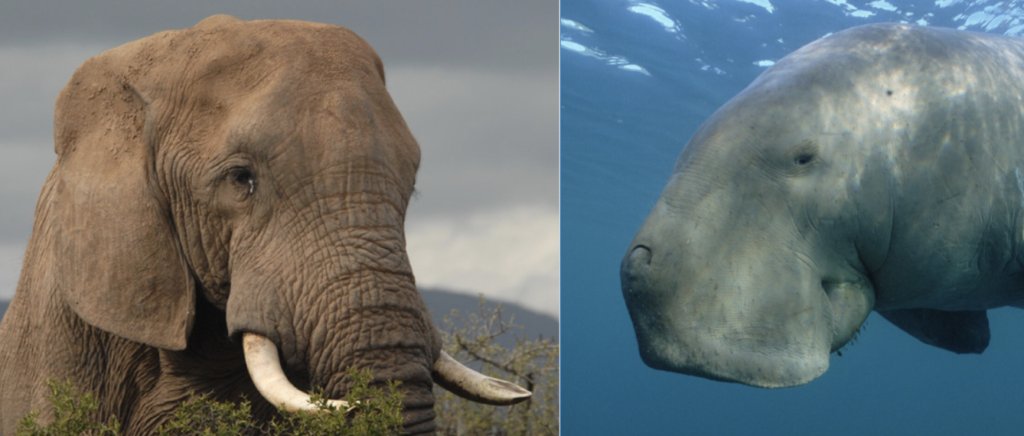
A Couple of Fun Facts
Dugongs are usually nomadic and solitary, but can be seen in small groups or ‘herds.’ The largest herd seen at one time estimated to be 450 individuals. They may be solitary but they are very good mothers and stay with the offspring for about the first 18 months of their live.
Reproduction
There is no obvious way to tell the sex of these animals. They take about 10 years to reach sexual maturity and gestation lasts 12 months. They are thought to give birth every 3-7 years and as mentioned will stay with their young for the first year and half of their little life!
When a Dugong gives birth the first thing the mother does is push her baby to the surface so it can take its first breath. The mum will do this a couple of times until the baby gets it’s bearings and can do this itself! New borns already way about 30kg and are about 1 meter long.
Swimming / Movement
These large mammals often appear docile and slow moving, but don’t be fooled as they can swim fast! They have been recorded swimming at speeds of 22km per hour when needed!! We, divers, will not be able to keep up!
When sleeping these gentle giants go into a trance like state and can look as if they are just ‘hanging’ in the water. Dugongs never fully ‘sleep’, but do actually go into a trance like state where the rest parts of their brain to rest. During this time they will be perfectly still, but as they are not fully asleep they can rouse quickly if any danger is close by.
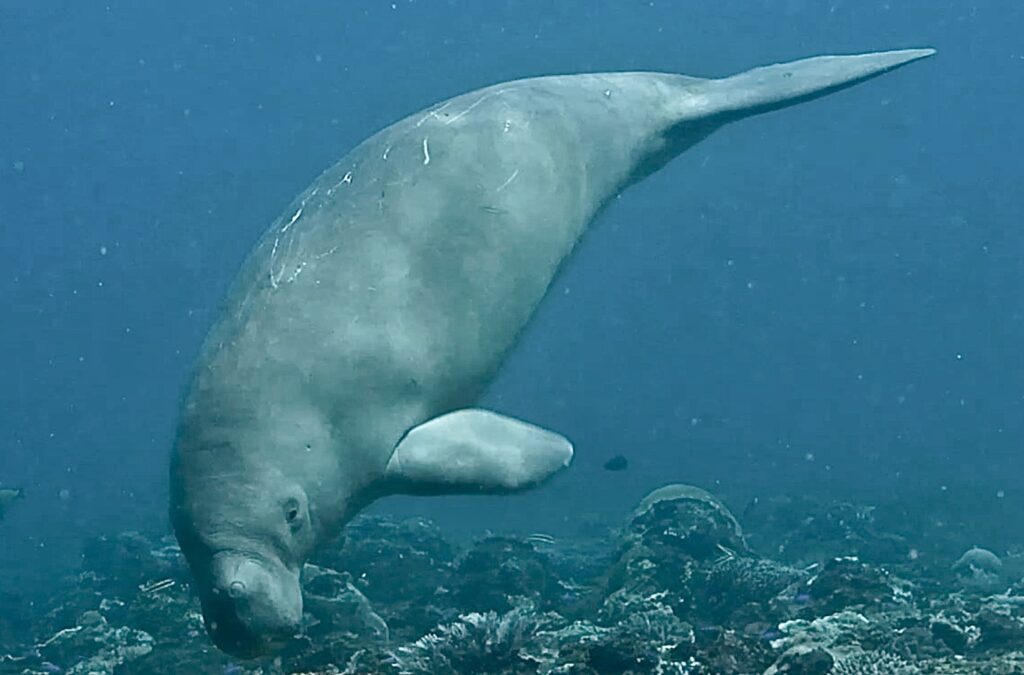
Seagrass
Dugongs main source of food is seagrass which is commonly found in Indonesian costal waters. Seagrass makes up 0.2% of the world’s oceans. It is found in shallow areas with low turbidity. There are 60 known species of seagrass of which 24 of these are found in the Indo-Pacific region.
Seagrass is known to have an important role in carbon storage, accounting for 10% of the annual carbon sink capacity of the oceans.It has been estimated that a hectare of the most effective seagrass areas exceed more than 10 times the carbon sink capacity of the famous Amazonian forest.
Dugongs in Indonesia
General population numbers in Indonesian waters remain unclear. Estimates range from 1,000 – 10,000 individuals, but we don’t really know as there is little scientific data to note.
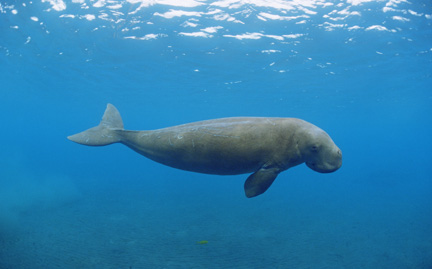
However Dugongs are protected by National Legislation in Indonesia and there has been a National Conservation Strategy specifically running for Dugongs since 2009. Dugongs are commonly sighted in
Nusa Tenggara Timur, Sumatra, Java, Kalimantan, Sulawesi, Bali, Baluku and Papua Barat.
The Dugong & Seagrass Conservation Project covers 8 countries and represents the first coordinated approach toward the conservation of Dugongs & Seagrass. It runs projects in Indonesia, Madagascar, Malaysia, Mozambique, Sri Lanka, Solomon Islands, Timor-Leste and Vanuatu.
Cultural Significance in Indonesia
The Indonesian word for ‘Dugong’ is ‘Duyong’ which actually translates to ‘mermaid’. These creatures are mythical in their history and mermaid stories from sailors are thought to have been inspired by Dugongs who were often seen in shallow waters and are able to turn upright in the water to put their heads out of the water. There are even tales of tribes covering sick Dugongs in cloths to cover their modesty when found in shallow water.
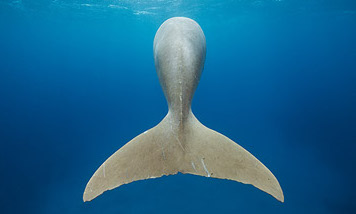
In Indonesia Dugongs are also revered and protected by many communities as they are thought to represent re-incarnated women, but for others their teeth, tusks, teats, and even their tears were considered to have magical properties so they were often used for healing or to produce religious artifacts.
Dugong Etiquette while Diving
We can see Dugongs pretty often in Komodo and although many will tell you, there is not really a ‘season’ for them, but what we do find is that when we spot 1-2 they will tend to hang around and be frequently sighted for a couple of weeks before ‘disappearing’ again! We see Dugongs at a couple of different dive sites here. Just recently they have been seen at The Cauldron (aka Shotgun), Polis Point and Tatawa Kecil. We also have a very special dive site here where we do see them a lot, but we prefer not to share the name so we can protect this area! We will take you if you visit though!!
Dugongs have very poor vision due to tiny ears, but they are acutely sensitive to sound with very narrow sound thresholds. This all just means they do not like sound!
The most important rule when looking for Dugongs is not to make any sound underwater – so we will always brief you that if we are searching it is very important not to use any tank bangers or clickers as there is a high probability this will scare them away!
It’s also important that there are no boat engines nearby as that will also spook them.
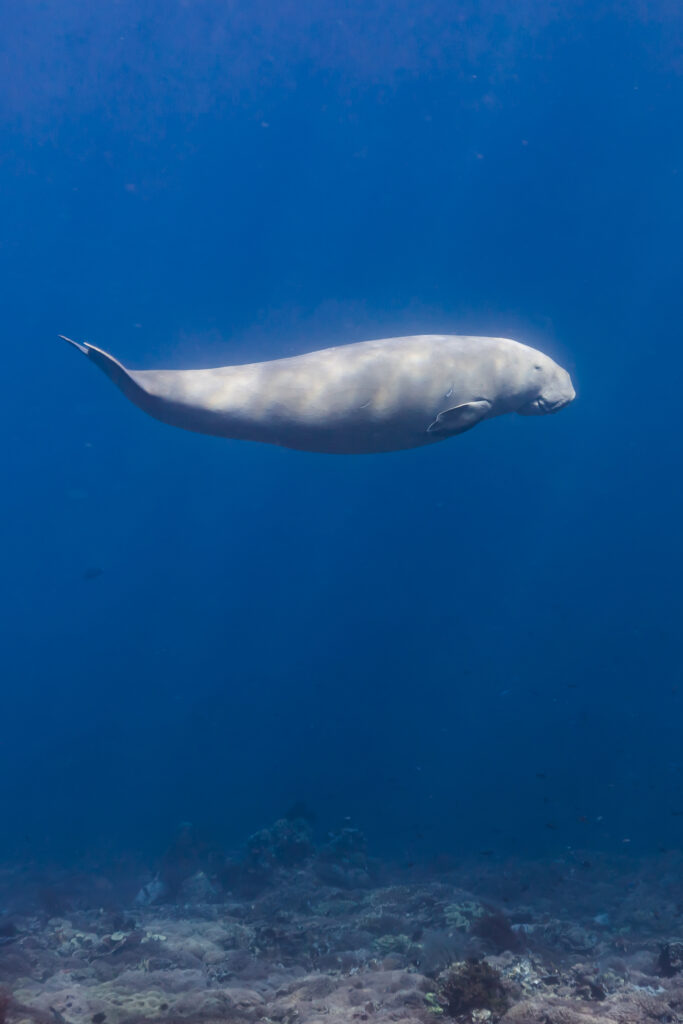
Dugongs are incredibly majestic animals that are on many divers’s bucket list! Here in Komodo we are lucky to be able to spot them on different dive sites and we would love you to come and see them with us!
The Mantas of Komodo National Park are a popular reason to visit this incredible area! They love to hang out in the waters surrounding Komodo and our resident population continues to grow year on year!
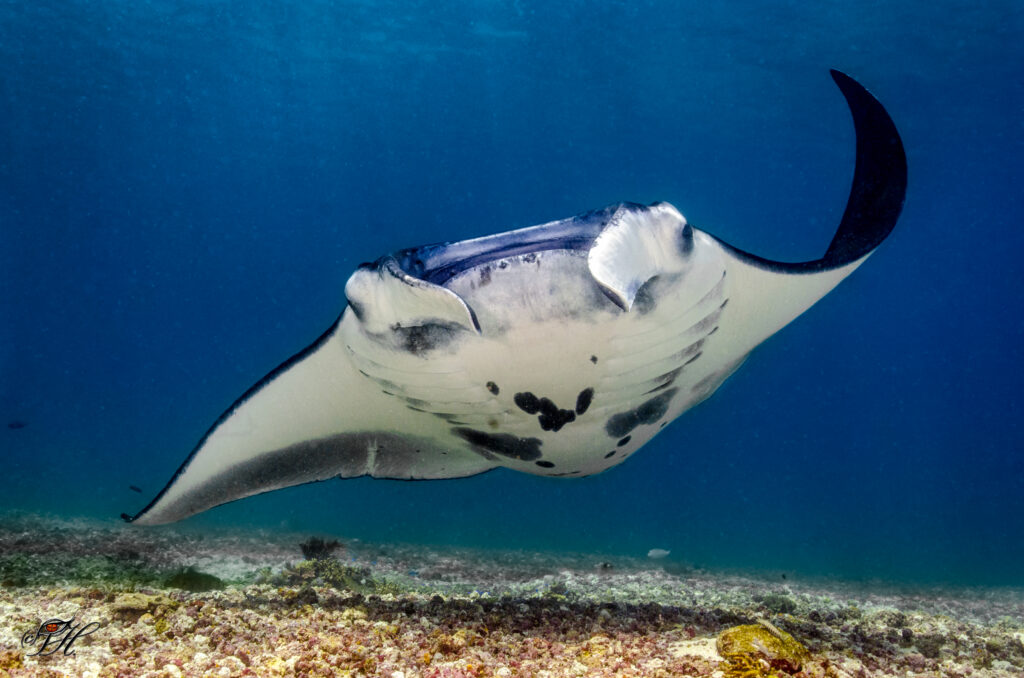
Mantas are part of the Eslamobranch Family. This is the same family as sharks and skates and is due to their cartilaginous skeletons. Sharks have been around for over 500 million years while this younger relative has only been around for about 5 million years.
Mantas are actually formally called Mobulids and were officially renamed a couple of years ago, but for us they will always be Mantas!!
These graceful animals are smart too! They have the largest brain of all fish making them highly intelligent creatures. Studies have been conducted using mirrors in what is called a Mirror Self-Recognition Test (MSR). This is used to see if an animal is self aware. Cats & dogs for example don’t recognise their own reflection and act as if they are meeting another cat or dog! Other animals that have ‘passed’ the MSR tests are dolphins, elephants and primates. MSR is tricky underwater, but mantas have excellent vision compared to other fish.
When studied in front of a mirror mantas have been seen to spend more time in front of the mirrors than in other areas and they were observed to perform repetitive and unusual behaviours that is known as “contingency checking” in other words – checking themselves out! They do not respond to their reflection as if there is another buddy around. Like primates & elephants they are thought to be able to recognise themselves. Self-awareness / self recognition is a fundamental factor when determining intelligence in animals.
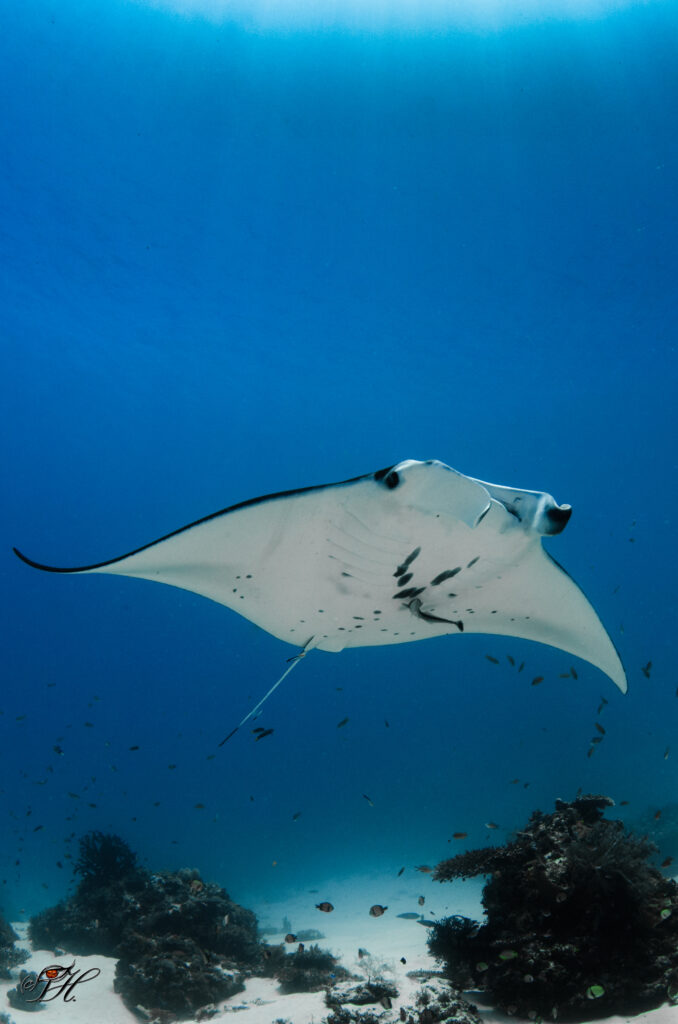
These flying giants live a life of perpetual motion – meaning they always keep moving. They must constantly keep swimming over the course of their lifetime. In fact, the only time they stop swimming (briefly) is during copulation (sexual activity). Mantas are very heavy with the biggest known specimen weighing 2 tonnes! So when they stops swimming they are negatively buoyant and will start to sink.
There are 2 types. (A potential third kind is currently being studied by scientists, but yet to be formally announced).
Here in Komodo we get the Manta Alfredi or Reef Manta. These are the smaller of the two, but can still grow very big with an average wingspan of 4 metres! Reef Mantas prefer shallow reef waters and can be easily identified by the belly spots between their gill slits.
The second kind is the Manta Birostris or Oceanic! These are HUGE with an average wingspan of 8 metres and are more commonly found in deeper waters in places such as the Galapagos and Socorro Islands, but they are also commonly seen in Raja Ampat. Oceanics can be identified by their huge size, but also by their belly spots which are found outside of their gill slits.
Here in Komodo we have a resident population of just over 1200 Alfredi individuals. These individuals have all been uniquely identified by their belly spots.
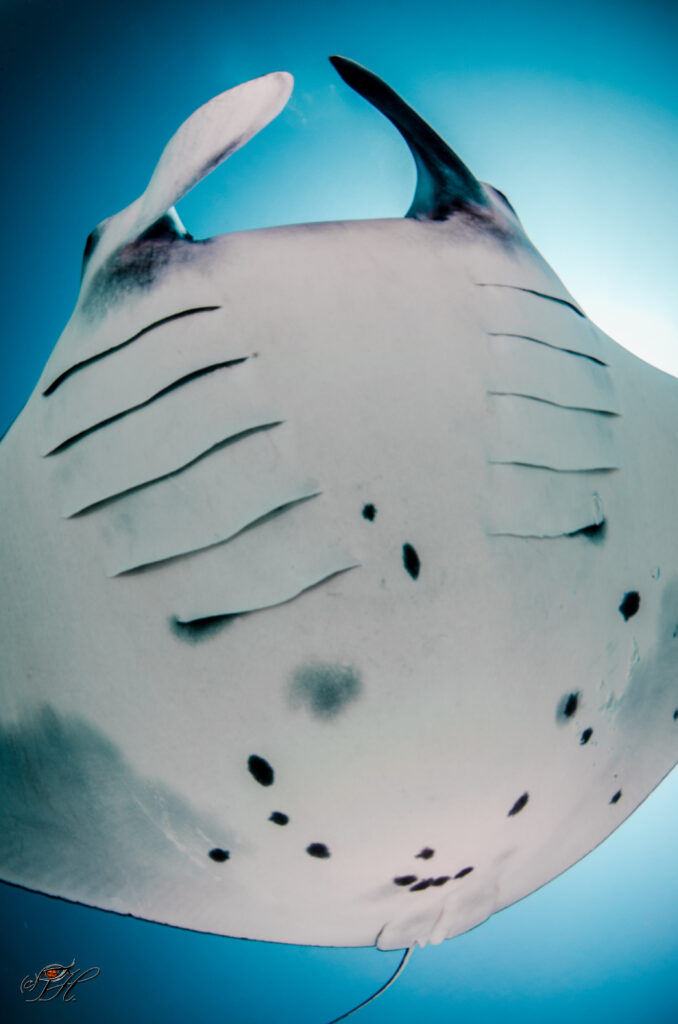
Did you know every manta has unique spot patterns on their bellies, which is just like the human fingerprint. These patterns are what is used to identify and track individuals. This is why citizen science and photos / videos are so so important. Scientists use this information to identify, track and monitor individuals and populations.
Manta Matcher is a fantastic online resource where you can upload your images of different manta bellies & the information will be added to the database to help track the different individuals.
So far there have been over 12,500 individuals identified using Manta Matcher.
Here in Komodo we have our own adopted manta called Gizmo! Gizmo is melanistic (or ninja!!) and was first identified in August 2011. Gizmo has been regularly seen over the years cruising around Mawan and Karang Makassar in Komodo. She is not thought to travel much further than Komodo and seems to be a like spending her time around here! The last time Gizmo was formally identified was in 2023 so perhaps you can help us find her again this year!!
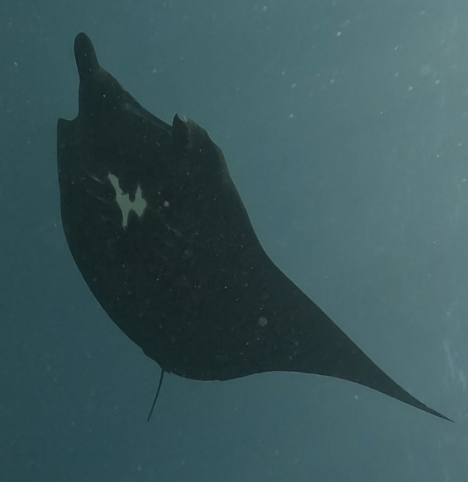
Over at Scuba Junkie Penida they also have adopted an individual called – Mola The Manta. Mola the Manta, like Gizmo, is also melanistic and was first identified in March 2014.

These melanistic beauties are still Manta Alfredi or Reef Mantas. The Melanism is a genetic colour morph that results in a “switch” of colours. Melanistics are commonly referred to as Ninjas and are a really special sight to see!! The darkness of the black is like nothing you will see! Ninjas make up about 10% of the populations in Komodo and Penida so make sure to keep your eyes peeled next time you visit us.
Mantas can be seen in Komodo all year around with them being seen in bigger numbers at dive sites such as Karang Makassar (Manta Point – not to be confused with the dive site at Nusa Penida), Mawan and Manta Alley. If you really want to increase your chances of seeing these magnificent giants in big numbers the best time to visit is September – October & January – April. These are the months when the seasons are changing and they can often be seen feeding, cleaning and mating around the central dive sites! They can still be seen throughout the rest of the year, but usually in smaller numbers.
If you would like to find out more about the best time to visit us if you are looking for your megafauna fix then please get in touch here.
The team of the multi-award winning Scuba Junkie are proud to introduce the KLM Eliya. Eliya is our newest liveaboard that will be sailing in the waters of Komodo National Park starting in April of this year. Are you ready to experience a new type of scuba diving with Scuba Junkie?!
As many of you know Scuba Junkie has a long history of scuba diving in Komodo and our award winning resort is a popular choice for people wanting to come and dive in one of the world’s best diving destinations! Many of our guests return again and again to dive with us and the decision to launch our first liveaboard in this incredible destination was an easy one!!

The National Park is home to incredible dive sites! We might be a little bias, but the stunning coral reefs offer a variety and diversity of marine life that is hard to beat!! Diving here offers something for everyone – Stunning coral reefscapes, a resident population of mantas, reef sharks, turtles, schools of fish & much more.
KLM Eliya’s design and build has been directly overseen by the Scuba Junkie Team to ensure that Komodo’s newest liveaboard will deliver comfort and safety while offering the same world class diving you have become accustomed to with Scuba Junkie.
KLM Eliya will depart on her maiden voyage at the end of April. This trip is already fully booked, but rest assured we have a fantastic opening offer for the month of May to really get you excited! Eliya can cater for 14 guests and has twin / double and triple share cabins.
Be one of the first guests to step foot on our Komodo liveaboard and grab the chance to get 30% off our published prices. This offer is available for all trips departing in May 2024. If May is a little soon for you we are also offering 20% off all of our trips departing in June 2024.
Our 6 Day / 5 Night trips will depart every Wednesday from the main harbour in Labuan Bajo and will include 20 dives in the National Park as well as land based tours to see the infamous Komodo Dragons and give you the opportunity to enjoy some of the stunning scenery that this region has to offer. You can take a closer look at our trip itinerary here.
For many travelers it is great to be able to spend a little time on land as well as onboard a liveaboard. We are also offering a very special Komodo Combo Deal if you would like to combine some time on our liveaboard with a couple of nights at our oceanside resort which is nestled right on the edge of the National Park.
As our valued guests we can help create a bespoke package – if you book a trip onboard Eliya and a diving package at our resort we will offer you 5% off your Eliya package & 10% off your resort package. (This offer applies to all Komodo Resort packages including the 4 Day / 3 Night options). Should you book a package in the resort that is 5 Nights or longer this will increase your Eliya discount to 10%!!
We also have really amazing Combo Deals with all of our other locations too – Scuba Junkie Penida, Scuba Junkie Sangalaki & Scuba Junkie Sipadan. The more locations you add the greater the savings! (Terms & Conditions Apply to all Combo Deals)
The crew of Scuba Junkie Eliya are ready and waiting to take you on the adventure of a lifetime. So what are you waiting for?! Get in touch now to find out more
It is often the case that the Manta Rays get all the attention, and whilst we love them and their graceful ways, there are many other marine species that are equally as fascinating to look at and that we see regularly in the Komodo National Park.
Take for example…THE TURTLE!! Known by many as the chilled out surfer type from Finding Nemo, these guys were perfectly cast in the role. What else do we know about this amazing marine creature?
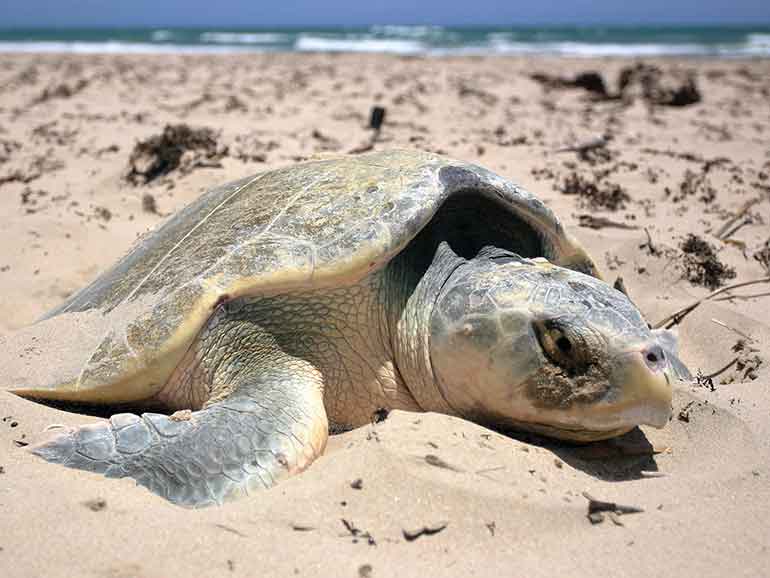
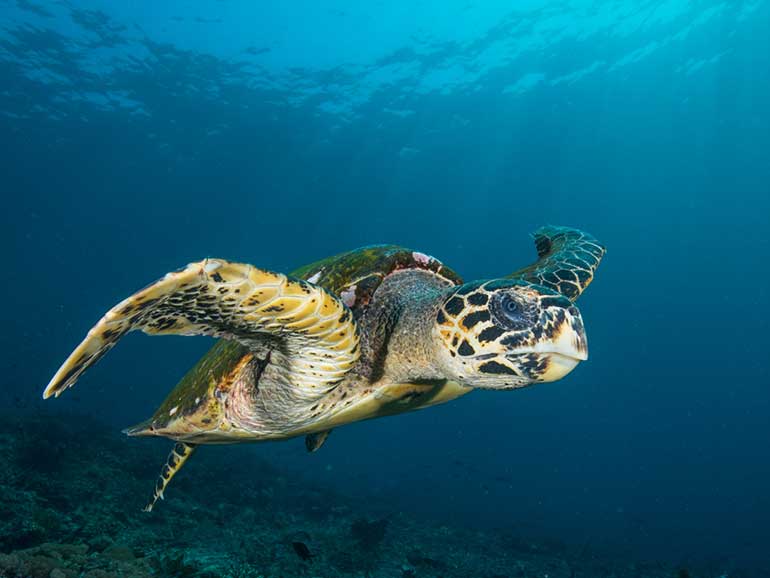
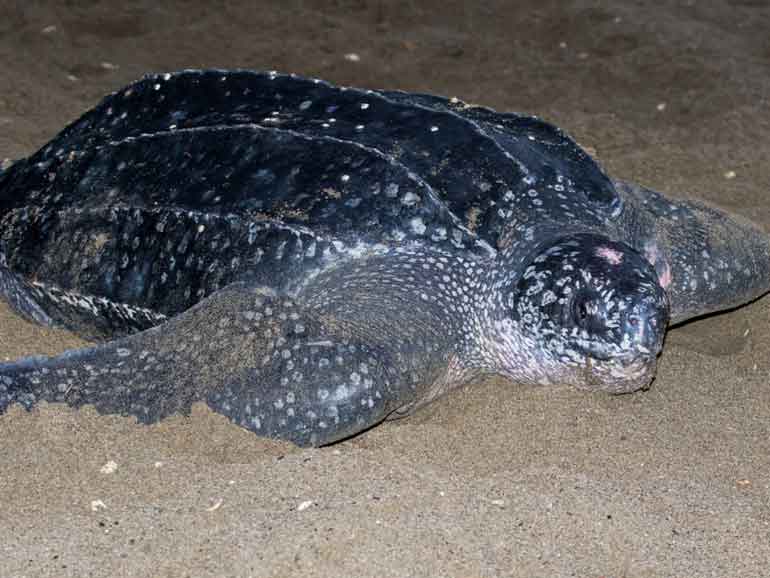
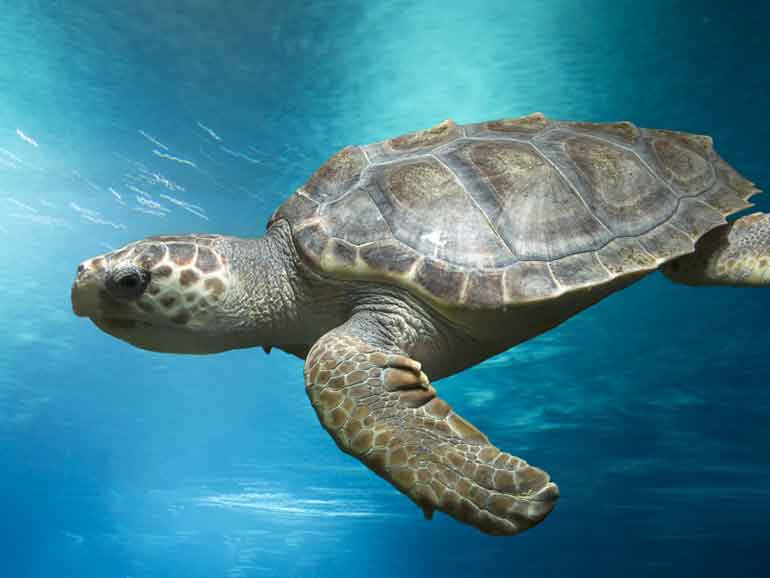
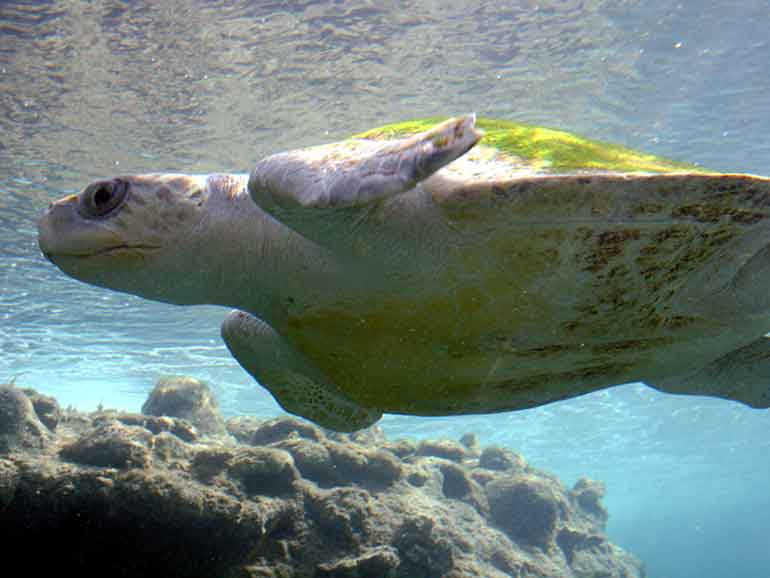
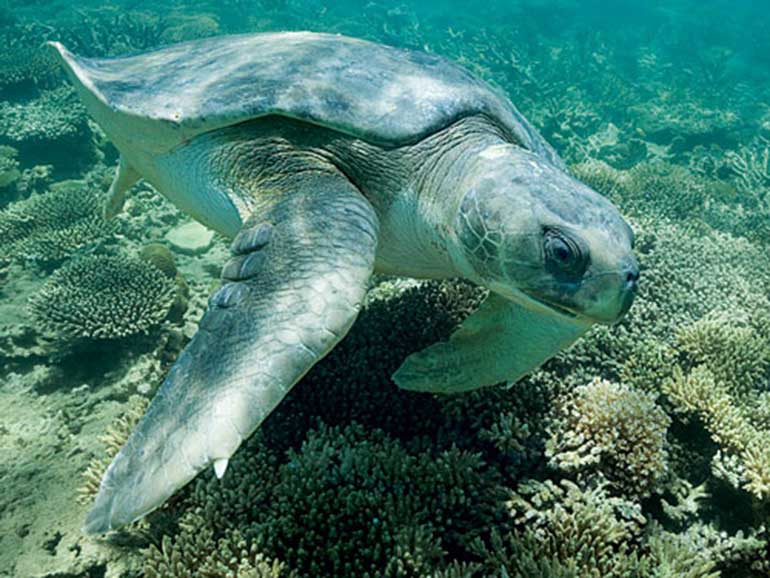
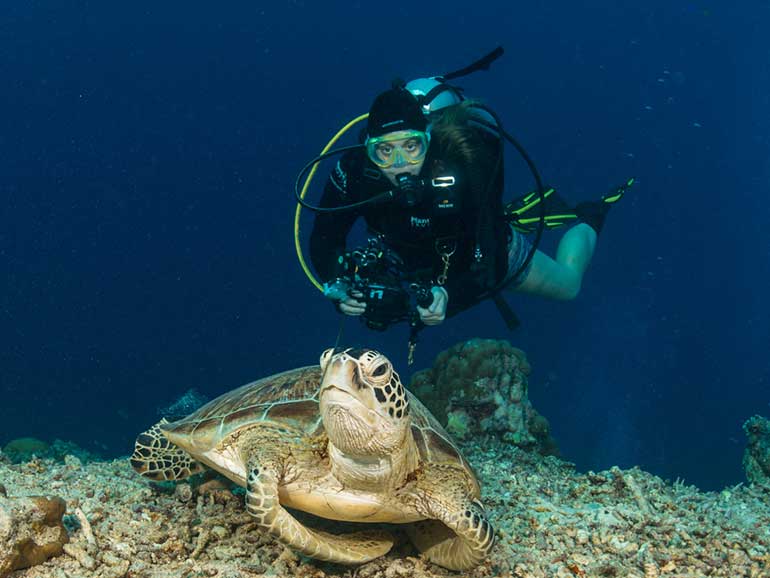
All species of turtles are endangered or critically endangered – you can check out the IUCN red list for more information about this.
We are lucky enough to see three species of turtle in the Komodo National Park – Green Turtles, Hawksbill Turtles and Loggerhead turtles. With the area being protected we hope that numbers of turtles in the area, and across the globe, will start to increase.
Thank you to google for some of the photos!