Starting your scuba diving journey is incredibly exciting, but it can also be overwhelming – especially when it comes to picking the right diving gear. With so many options available, it’s easy to get lost in the sea (pun intended!) of brands, models, and different features. The good news is we have you covered! You don’t need to buy everything at once, and making informed choices now will lead to more enjoyable and safer dives down the line. Dive shops will always have rental gear available, so you don’t need to spend fortune in one go and it also works as a good opportunity to try different styles and brands before you buy.
Like most divers though you will eventually want your own diving gear! You can choose what you want & get the size that fits you perfectly. You can get what works for you!
In this guide, we’ll break down the essentials and help give you some tips in choosing the best scuba diving gear for your needs as a new diver. (It’s not all about the colour!!)
1. Prioritise the Basics
When you’re just starting out, focus on buying diving gear that impacts comfort, fit and safety:
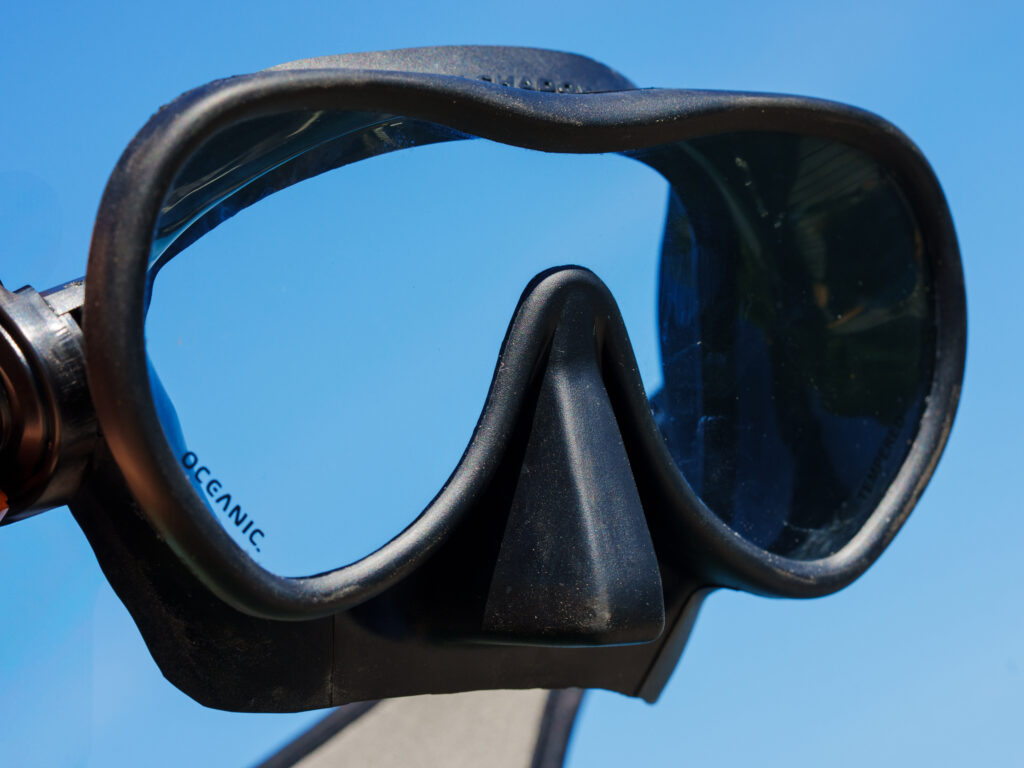
Mask
I think every diver would say this is your most important first buy!! A comfortable mask can make or break a dive!
- Fit is everything. A leaky mask can feel like a disaster underwater! If you have had it happen to you, you know exactly what we mean. It can ruin a dive and make an incredible dive feel frustrating instead of exhilarating. We all have different head shapes so it is important to get something that you feel comfortable with.
- Look for: Tempered glass, a wide field of view, low-volume design, and silicone skirts.
- Tip: Try a mask in the water before you buy if it is possible. Lots of shops have training pools onsite. It might seem extreme but ask if you can jump in and give it a try.
Otherwise perform a ‘fit test’ – place the mask on your face without the strap, inhale gently through your nose, look towards the ground and see if it stays in place. If it feels comfortable and doesn’t fall off it is a good fit for you!
Snorkel: A basic snorkel is fine. Dry or semi-dry snorkels are great for beginners as they prevent water from entering the tube.
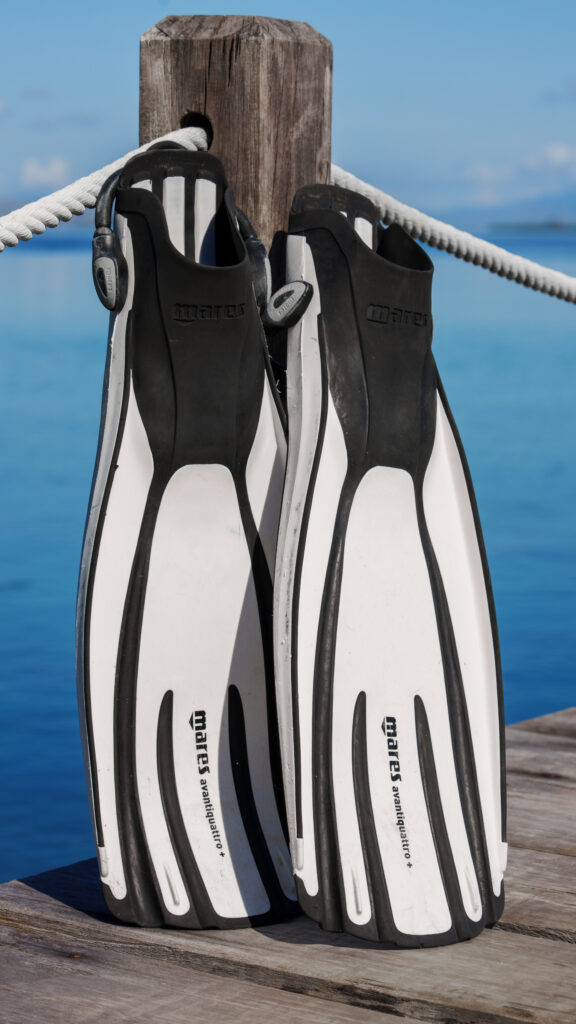
Fins
Closed-heel vs. open-heel:
- Closed-heel fins fit on like shoes, are ideal for warm water and snorkeling. They surround your foot and heel, hence the name.
- Open-heel fins (with booties) are better for cold water or rougher conditions. A lot of divers find them more secure for diving in current as well as there is less risk of rubbing and getting blisters with booties on.
- Look for: Comfort, proper fit, and ease of kicking. Think of it like trying on a pair of shoes.
- Tip: Split fins are popular, but less efficient in current and don’t tend to offer quite as powerful a kick.
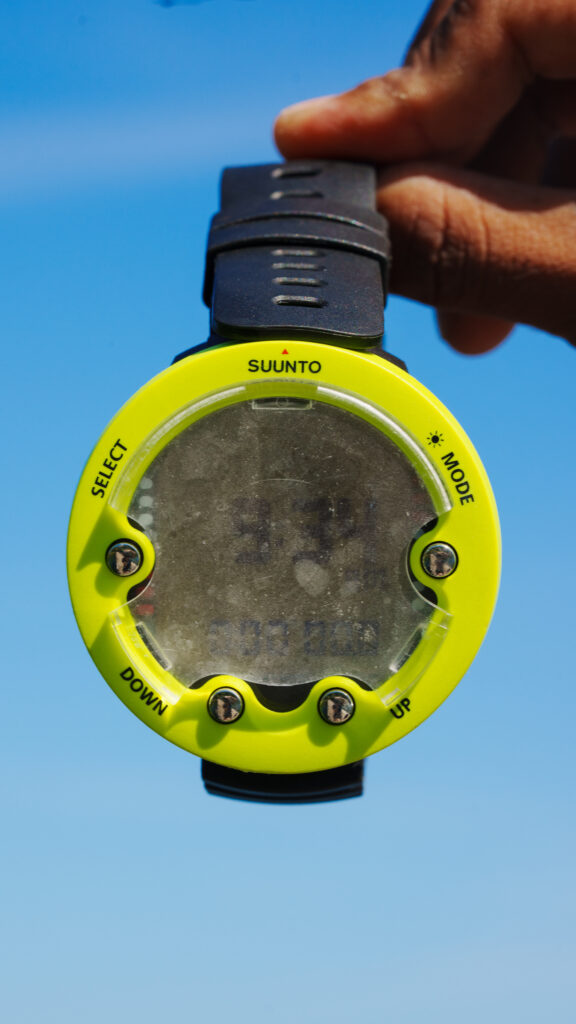
Dive Computer
Dive Computers are an essential piece of dive gear that we would always recommend new divers to aim to buy sooner rather than later. When you first learn to dive you are taught all about the basics of diving and the safety elements you need to consider. Diving with a computer is an essential part of this.
Although dive computers (even the entry level styles) can be expensive they are so important if you are someone that sees lots of diving in your future.
Why it’s worth it: Computers track your current depth, your maximum depth, your bottom time, your NDLs (No-decompression limits). They will let you know your ascent rate, when you need to do a safety stop, monitor your surface interval times, no fly times and so much more.
Computers can help keep you safe while diving and are an essential piece of diving gear.
Like with everything some models are more affordable than others and will cover all you need when starting out. Suunto Zoop & Mares Puck Models are popular choices along with other great brands such as Garmin & Shearwater.
2. Invest in Your Comfort and Safety
Temperature controlling diving gear
- A 3mm wetsuit works for tropical water; 5mm–7mm suits are better for cooler climates. For cold or extended dives, a drysuit is a must (and requires training).
- Here in Komodo we provide 3mm long wetsuits for our guests.
- If you get cold more easily consider an extra vest or hood. Layering up can be really helpful.
- Just a reminder: gloves are not allowed here in Komodo and we don’t recommend them except for very cold water diving.
- Gear like this should be snug but not restrictive. Avoid gaps where water can flush through as this will not keep you warm! Other things to consider are zip position and flexibility of movement.
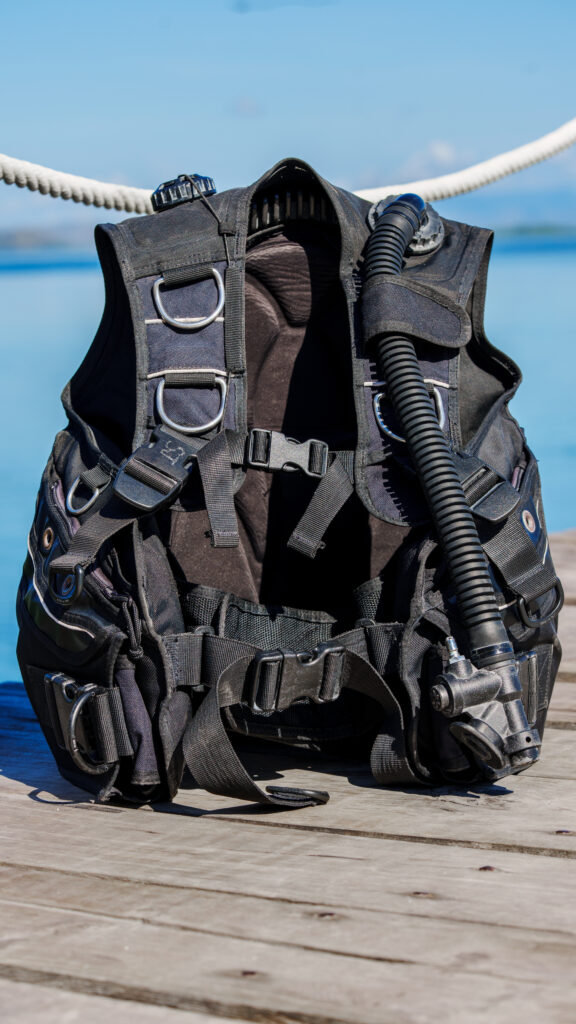
Buoyancy Control Device (BCD)
- A BCD helps you control your buoyancy. It is where you tank attaches. Diving without it is impossible!!
- BCDs come in many different styles – Integrated weight systems, multiple D-rings, different lift capacity, and a comfortable fit.
- Jacket-style BCDs are great for beginners due to familiarity and ease of use and this is often what you will learn in as they are still the standard rental gear in most dive centres.
- Backplates & Wings used to be more commonly in technical diving, but now many recreational divers choose these options for comfort and ease of use. The technique is a little different with these and like with all dive gear we would suggest trying before you buy if possible.
Regulators
- Don’t compromise here. Your regulator delivers air—you want it to be reliable and comfortable offering ease of breathing and consistent performance.
- Choose reliability and performance over price. There are many affordable regular setups that deliver a high level of consistency & performance.
- Choose a balanced diaphragm regulator for ease of breathing.
- Consider an environmentally sealed regulator if you plan to dive in colder water.
- Choose a brand that is easy to service in your area. Make sure you follow the service recommendations to keep your regulator in tip top shape.
3. Consider Your Diving Style and Future Goals
- Are you planning to travel frequently? Look for lightweight diving gear that is easy to pack and won’t eat up all your luggage allowance.
- Planning to dive locally in cold water? Invest in warmer wetsuits, hoods and booties. Look for environmentally sealed regulators.
- Thinking you might be interested in technical diving? Consider a dive computer that can cover different gas mixes.
- Keen on underwater photography? Make sure you look at BCDs/ wings with lots of d-rings to attach your expensive camera gear!
4. Don’t Forget These Extras
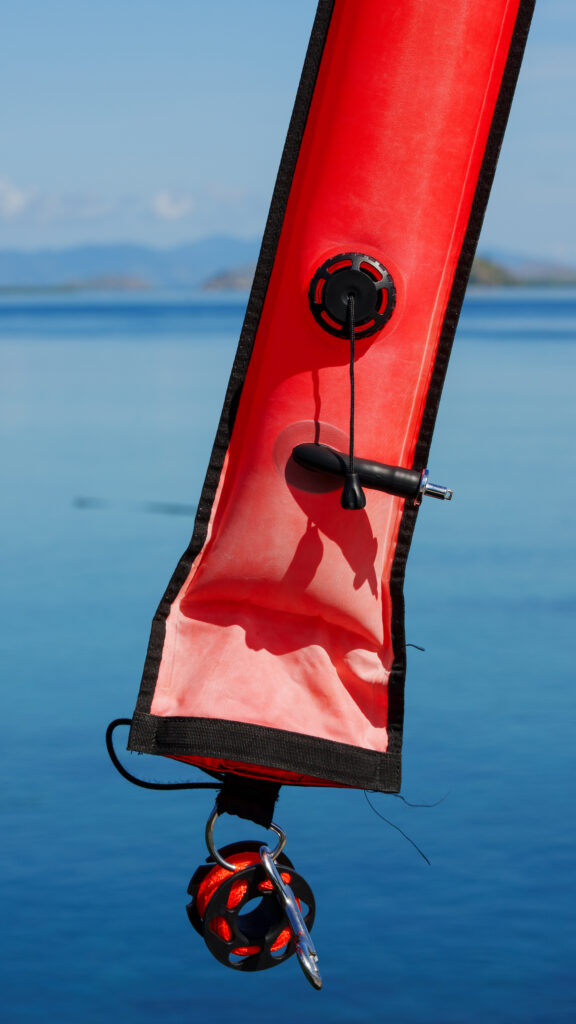
Surface Marker Buoy (SMB) & Reel
- For safety and signaling boats when surfacing.
- Essential for boats to be able to see you as you are coming to the surface and for your dive boat to be able to pick you up in a timely manner.
- Ensure you have a reel that is long enough for what you need! Some people keep the line short for ease of use. Others prefer longer lines that they may need for using the SMB at deeper depths.
Pointy stick / Tang Banger
- This is useful for getting someone’s attention underwater or pointing at smaller creatures on the reef.
TIP: Please remember though there is basic pointy stick / tank banger etiquette!!! Don’t bang lots. People don’t like lots of noise underwater!! Use it for something extra cool that your buddies might miss otherwise or if you need help. A pointy stick is used to point at at things. Don’t use it to poke and prod animals on the reef, don’t use it ‘bounce’ along the reef or use it as an ‘anchor’.
Other Useful Items
- Dive Torch: For night diving or peeking into crevices—even in daylight, a good torch makes a difference even in the day time if you want to bring out the colours of marine life & corals at deeper depths
- Double ended clips / bungee cords: Essential for attaching items such as your camera, smb & reel to your BCD.
- Diving Bag: Strong and sturdy – To be able to fit all of your diving gear and keep it secure while travelling.
5. Try Before You Buy (When Possible)
Many dive shops allow you to rent or test gear before purchasing. Take advantage of this! Real-world experience with diving gear will tell you more than specs and someone’s opinion ever will.
6. Stick with Reputable Brands and Local Shops
While online deals can be tempting, nothing beats the guidance, service, and warranty support of a local dive shop where you can see, feel and try out the different diving gear in real life. Brands like Aqua Lung, Scubapro, Mares, Cressi, Apeks have solid reputations and wide availability of parts and servicing across most corners of the globe.
Final Thoughts
Choosing scuba diving gear is quite personal – what works for one diver might not work for another. Start with the essentials, focus on safety, fit and comfort. Build your diving gear slowly so you can choose what you want and need rather than impulse buying and regretting it later.
The right diving gear won’t just make diving more fun – it will make you safer and help you become a more confident diver.
If you would like any advice about diving gear or want to find out what we have for sale at our office and resort, please do drop us an email. We have you covered!