Diving in currents can feel intimidating for beginner scuba divers — and for good reason. Currents can change the pace, direction, and difficulty of a dive in ways that demand respect and preparation. But with the right techniques and mindset, diving in currents can also be one of the most exhilarating and rewarding underwater experiences. In our previous blog we talked about whether it it possible to Dive Komodo as a beginner. From that we had a lot of questions for more tips on what to do. So here are some extra tips for Diving in Currents as a newer diver.
1. Know Before You Go
Before the dive, ask your dive guide about the expected current conditions. Is it a drift dive? Will there be a down current, could there be up current? Knowing what to expect helps you mentally prepare for the dive and reduce the risk of surprises underwater! It can also help you to choose the right equipment and ensure the right kind of exposure protection. Pay close attention to the briefing as our Dive Crew will give you lots of tips during this.
2. Streamline Your Gear
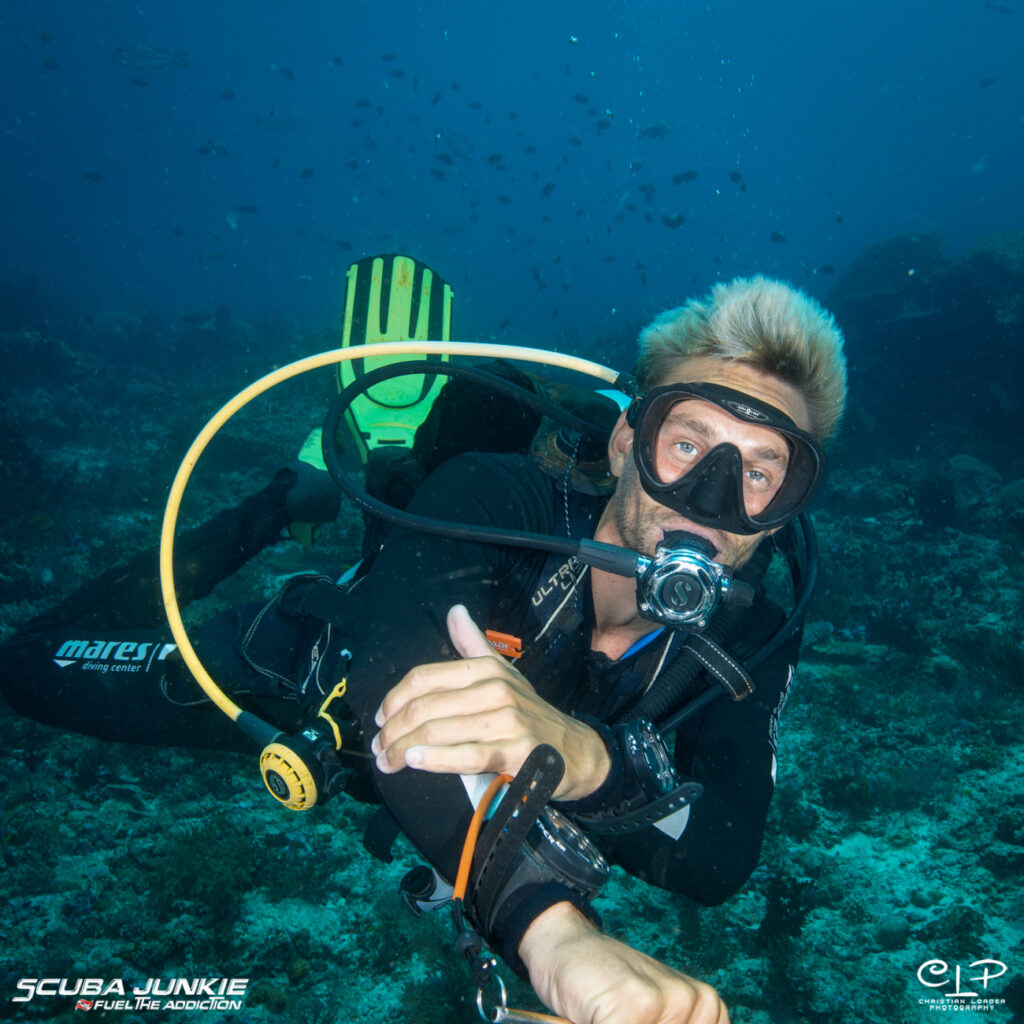
Currents love to grab anything that sticks out or hangs loosely. Minimize drag by securing gauges, hoses, and accessories close to your body. Make sure straps are tight and everything feels secure. A streamlined profile reduces resistance. This helps to conserve energy and can also improve air consumption.
3. Use the Right Entry Technique
If it’s a strong current, your entry needs to be quick and controlled. Giant strides should be done promptly, and you should descend immediately with your group. Don’t linger on the surface, where the current is usually strongest. Our Guides will always check that everyone is fully kitted up, buddy checked and ready to go. They will give the ‘OK’ and jump into the water. Once they are in the divers need to jump in quick succession. Once everyone is in there will be a quick ok and we will all descend to see the magic below the surface!
4. Descend Quickly and Calmly
The faster you get to depth, the more stable your dive will feel. ALWAYS follow your guide. Equalise early and often. As soon as you start to descend remember to equalise – gently and often. Never force equalisation and don’t forget to do it right from the beginning of your descent. Do not wait until you feel pain or discomfort.
5. Stay Close to the Reef or Bottom
Currents are generally slower near the bottom and closer to the reef. By staying low and close to the reef (without touching it!), you can find natural protection and avoid being swept away. Hiding behind bommies or rocks can aso offer added protection.
6. Use Proper Kicking Technique
Use slow, deliberate frog kicks or modified flutter kicks to conserve energy. Don’t fight the current — instead, work with it. If it’s a drift dive, let the current carry you and enjoy the ride! Watch your guide, they won’t kick very much on a drift dive! The more you kick the faster you will go. Get streamlined. Stay controlled and this will help you all to move at the same speed as everyone else in your group.
7. Keep an Eye on Your Air and Depth
Fighting a current or swimming against it can cause you to use more air. Monitor your air consumption closely and stay within your limits. Inform your buddy or guide early if you’re using air faster than expected. This applies to every dive, but especially when there are stronger currents.
8. Use Visual References
When it feels like the water is moving around you, it’s easy to become disoriented. Keep your eyes on the reef, sand, or nearby divers to maintain a better sense of direction and depth. This will also help you to feel more in control.
9. Practice Good Buoyancy
Neutral buoyancy is your best friend when diving in currents. Overweighting makes you work harder, while being too light may cause you to drift unpredictably. Great bouyancy will also result in improved air consumption. It will make diving in all conditions easier and result in more enjoyable diving not just when you are diving in currents.
These courses is a valuable way to learn more about diving in currents, improving your skills and awareness underwater, perfecting your bouyancy and positioning as well as much more. We offer both of these courses here in Komodo. eLearning is sent to you in advance and the practical elements are taught here at dive sites in the Komodo National Park.
You can also speak with our Dive Crew. Ask for tips and tricks. Watch what they do underwater. Watch their positions and try to replicate it!!
Bonus Tips:
Stay Calm and Breathe
Diving in Currents can be surprising, especially for the first time, but panic is your biggest enemy. If you feel overwhelmed, stop, take deep breaths, and signal your buddy. Trust your training and take things one kick at a time. Soon diving in currents will feel natural and easy.
Consider your Gear
Consider purchasing an SMB (Surface Marker Buoy) and learn how to use it. We give all of our guests SMBS with their dive gear, but we would always encourage you to have your own. If you don’t know how to use an SMB with a reel, then chat to our Dive Crew and they will be happy to show you.
Final Thoughts
Diving in currents for the first time does not have to be a scary experience. Do your research. Ask questions. Be prepared. Currents are a natural part of the ocean’s rhythm — and learning to dive in them opens up incredible dive sites around the world. With good preparation, strong buddy communication, and a calm approach, you’ll find yourself gliding with the current instead of fighting it.
Stay safe, stay aware, and enjoy the ride!
Have you got any tips questions about diving in currents? Contact us now and we can help answer any questions you may have.
about us
We provide daily dive trips and dive courses around the Komodo National Park.
Looking for tips and tricks about diving, marine life or what to do in Indonesia? Follow us on our blog for weekly updates from the team!