Dive Site of the Month – Manta Point aka Karang Makassar
1. Location & Overview
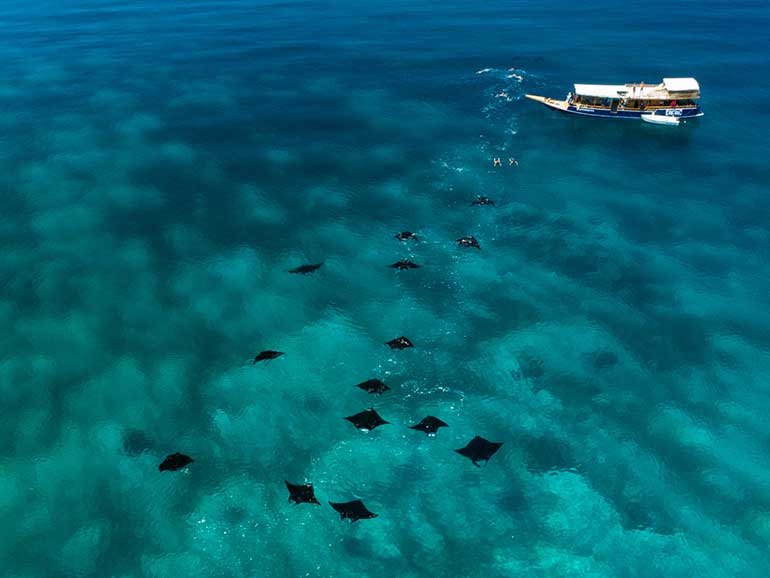
Manta Point Komodo is one of the most famous dive sites in Komodo National Park! This dive site is in fact called ‘Karang Makassar’ which means Makassar Reef, but over the years the sheer abundance of mantas has transformed the name of this dive site into Manta Point!
Manta Point Komodo is not to be mistaken with the Manta Point that can be found at Nusa Penida. If you want to read more about Manta Point Nusa Penida check out this informative blog written by our Scuba Junkie Penida location – 7 Key Insights for Diving Manta Point
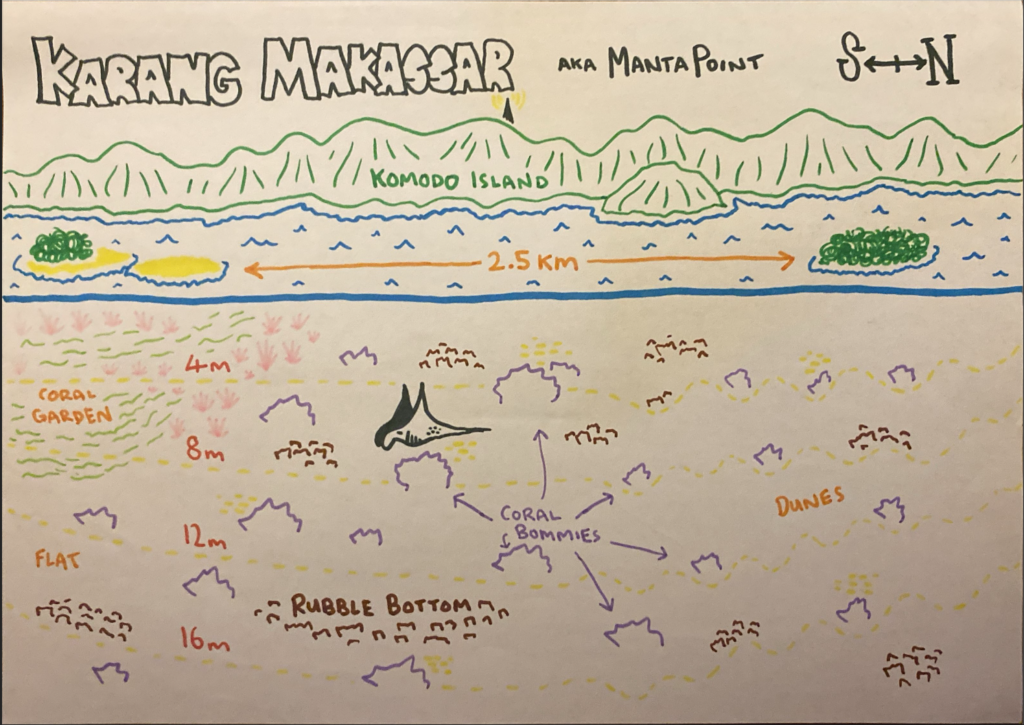
Back to Manta Point Komodo! Manta Point is situated in the center of Komodo National Park and stretches 3 km along the eastern coast of Komodo Island. This also makes it the longest dive site in the National Park!
2. Topography & Depth
Manta Point Komodo is a relatively flat and shallow dive site with depths ranging from 5 – 18m although we often tend to stay in the 8 – 14m range. As we said this dive site is the longest in Komodo National Park and runs in a north – south direction. The depth remains relatively consistent until you reach ‘the end’ of the site in both the mostly northerly & southerly points as this is when the depth starts to drop off again.
The bottom is made up of mostly broken rubble coral, which may seem strange at first, but as you drift across the bottom it feels like you are flying across the moonscape! Interspersed throughout the dive site are areas of coral bommies and small coral gardens. This is where we tend to find the mantas pausing and cleaning!
Visibility here varies throughout the year with it maxing out at 25 – 30 metres in the drier season while dropping to 5 – 8m in the wetter season. However this visbility change is also linked to the amount of food and nutrients in the water column so often in the lesser visibility months we see significantly more mantas around!
3. Currents & Dive Strategy
Currents are a key feature of Manta Point Komodo and can range from mild to strong. Most dives here are drift dives and we follow the current to find the mantas! Luckily navigating this dive site is relatively easy in that the current either moves in a North to South direction (Falling tide) or South to North (Rising tide).
Although the dive site is quite “straight” it is about 500m wide so you will notice that our dive guides tend to lead you zig-zagging across the bottom to cover more area and also to make sure you pass by the coral bommies that are popular with the mantas for cleaning.
Tips to Stay Safe:
Listen closely to your dive site briefing – the guide will talk about the currents and what to expect.
Stay behind your guide at all times
Stay at the same level as your dive guides – quite easy here due to the flat bottom, but if you are drifting higher in the water column you will drift faster than the rest of the group
Stay close to your guide – it is easy to loose focus here as you scan for mantas!
Stay close to the reef – this will help control your speed
Follow any instructions your guide gives you underwater
Maintain neutral buoyancy, watch where your fins are, try not to touch the reef. Although the bottom here looks like a lot of broken rubble it is teeming with life!! Nudibranchs, blue ring octopus and lots of other tiny animals find their home here.
4. Marine Life & Biodiversity
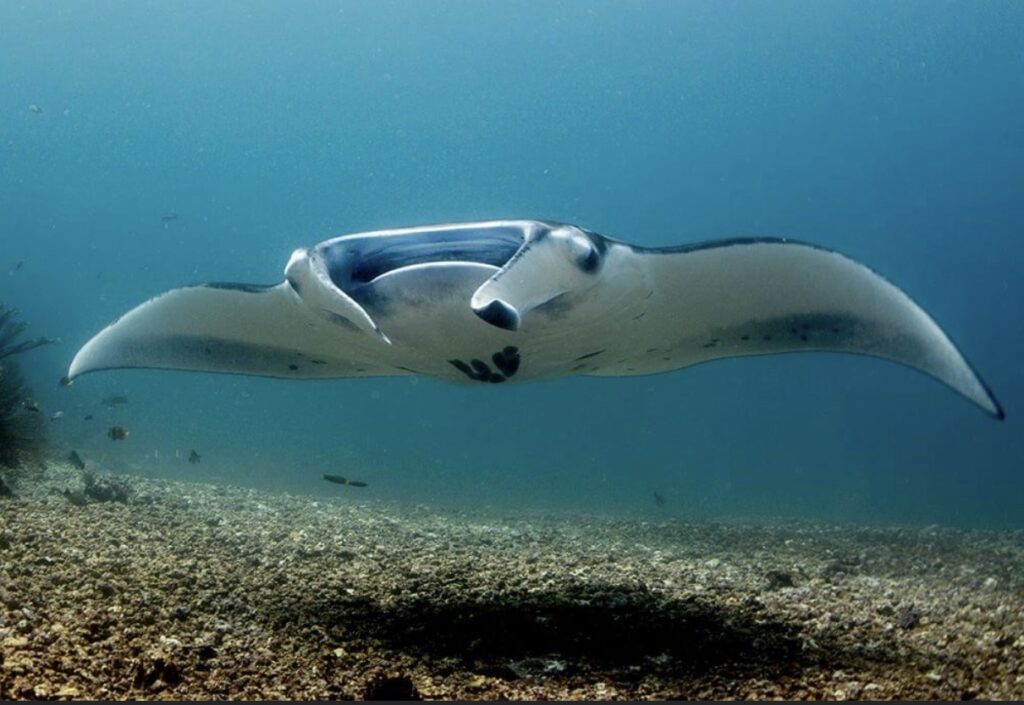
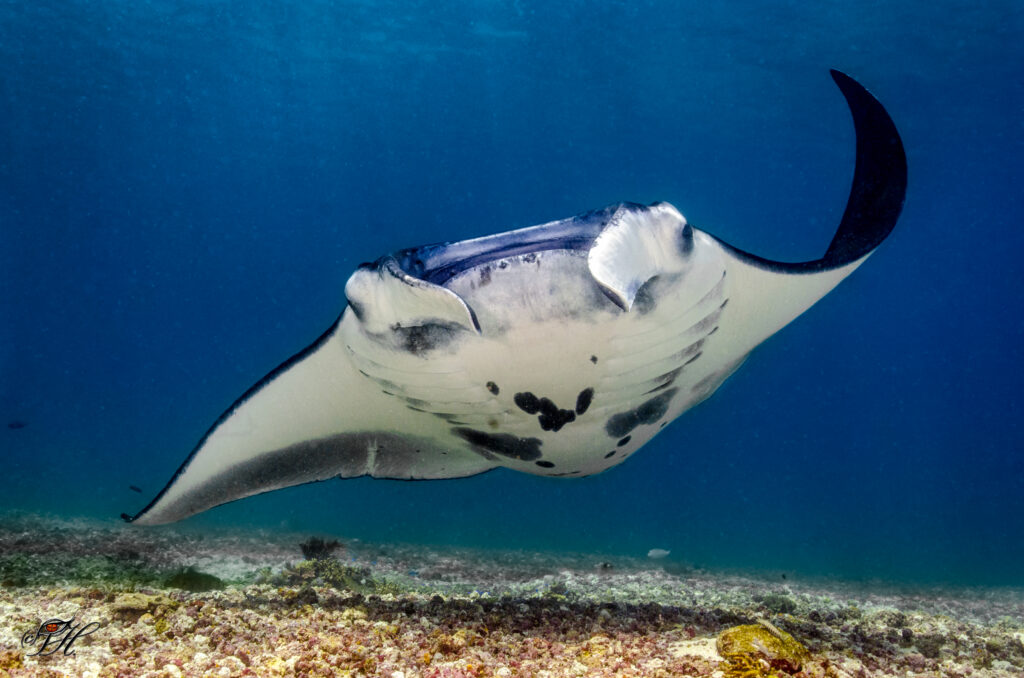
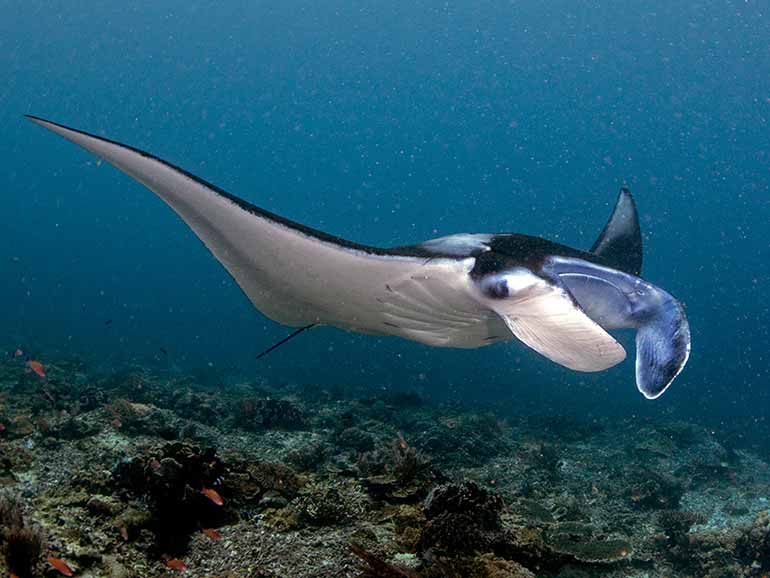
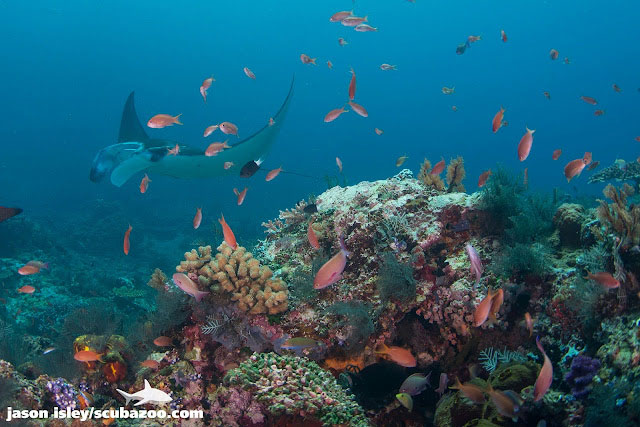
Manta Point Komodo has of course been made famous by it’s famous residents the Mantas!! Mantas frequent this dive site as they like to find the coral bommies that are scattered throughout the 3 km and clean here. Mantas have been proven to return again and again to their favoured coral bommies for cleaning and the bommies at Manta Point Komodo are full of cleaner fish to help them with this process.
We can often spend a dive just “sitting” and watching these mantas glide in and out of a cleaning station one after the other!
Large pelagics:
Mantas – Mostly Reef mantas here. These are Mobula Alfredi. Although possible it is rare to see Mobula Birostris ( the oceanic mantas) in Komodo
Reef sharks – White Tip Reef Sharks can often be seen cruising around the bottom!
Bamboo sharks are also a common sight here
Eagle Rays – love to scuttle around in the rubble looking for the perfect snack! The Eagle Rays we see at Manta Point Komodo are often flying solo and are more than happy for divers to get close for the perfect moment!
Marble Rays – stunning to watch gliding across the ocean floor
Turtles:
Green Turtles are very common at the Southern end
There is also a resident Loggerhead that enjoys the cabbage coral garden in the South.
Reef fish and macro life:
Small schools of fusiliers in the shallows
Cleaner wrasse
Butterflyfish
Parrotfish
Octopus – Blue Ring, Mosiac, Long Arm….
Lots of nudis and cretaceans
The Rare Something Special:
Javanese Cow Nose Rays
Devil Rays
5. Ideal Conditions & Timing
Best season: April to November – The dry season provides the best visibility. However, November – April is when we often see Mantas in bigger numbers.
Visibility: 15–30 metres in dry season. 10 – 20 metres in wet season.
Water temperature: 26 – 29°C
Final Thoughts
Manta Point Komodo is a thrilling dive and a must see for those of you that want to experience the joy that is diving with these majestic giants. Their effortless movements and magnificent presence cause the kind of awe that only wildlife can give!
If you really want to increase your chances of seeing these magnificent giants in big numbers the best time to visit is September – October & January – April. These are the months when the seasons are changing and they can often be seen feeding, cleaning and mating around the central dive sites!
Even when mantas aren’t around (or don’t show up – it is the ocean after all!!), our experienced guides make it worthwhile — pointing out macro life, reef creatures, turtles and other marine animals that thrive on the sand/rubble and bommie areas.
No blog about mantas can leave out the correct diver etiquette to not only protect these amazing creatures, but enhance our experience with them underwater. You can also find some more nuggets of information about mantas in our Fun Facts.
Dive Tips & Etiquette
Do not chase, try to touch or swim after Mantas
Approach gently, stay low and horizontal in the water — avoid sudden movements.
Drift with the current — many cleaning stations are on the path of the natural flow, and mantas often return to the same bommies again and again.
Patience and calm make for the best encounters.
As you will hear our dive guides say again and again stay calm, stay low, don’t move too much and let the Manta control the interaction – We guarantee you will be rewarded.
If you’re visiting Komodo and only have time for a few dives, Manta Point Komodo should be near the top of your list. Whether it’s the awe of gliding mantas overhead, graceful eagle rays drifting by, curious turtles exploring the sand flats — or simply the thrill of a gentle drift dive over a vast underwater plateau that looks like the moonscape — this site captures what makes diving in Komodo so special. With Scuba Junkie Komodo, you get not just the dive, but the guidance, timing, and local knowledge to turn your underwater dreams into reality.
Quick Reference Table
Feature
Details
Location
Central Komodo
Depth
5 – 16 meters
Currents
Mild to strong. Usually dived as a drift dive
Marine Life
Mantas, Rays, Turtles, Reef sharks, macro
Topography
A moonscape of coral rubble broken up with coral bommies offering an array of marine life
Vis & Temp
Visibility ~ 15–30 m Temp ~ 24–29 °C
Best Time
All year around, but we see mantas in bigger numbers November – April
2 comments on “Manta Point Komodo— Komodo’s Incredible Manta Highway”
This hidden gem brings such a warm community feel to online gaming. Whether I am chasing jackpots or just relaxing with slot classics, the experience stays top notch every time. Highly recommend it to anyone tired of clunky interfaces. Come hang out at mytown33my







This hidden gem brings such a warm community feel to online gaming. Whether I am chasing jackpots or just relaxing with slot classics, the experience stays top notch every time. Highly recommend it to anyone tired of clunky interfaces. Come hang out at mytown33my
Pretty straightforward and honest platform. No fake promises, just good games and decent wins. I will keep using ph59ph for a while.